73% of small businesses invest in social media marketing as their primary way to reach customers, yet only 22% feel they’re doing it effectively. That gap between effort and results costs business owners thousands of dollars and countless hours every single year.
Most business owners feel overwhelmed by online marketing options. Should you focus on Facebook or Instagram? Do you need a blog? What about paid ads? The confusion keeps many people stuck, doing nothing while their competitors grab customers online.
This guide breaks down exactly what works and what doesn’t when you market a business online. You’ll learn practical, affordable strategies you can start using today, even if you’ve never done digital marketing before. No complicated jargon, no expensive software required, just real tactics that bring in customers.
Why Online Marketing Matters For Your Business
Buying behavior has changed completely over the past decade, with recent consumer buying behavior research showing that the majority of purchase decisions now begin with an online search. Before someone buys almost anything, they search online first. They read reviews, compare prices, and check out business websites from their phones while sitting on the couch.
Your competitors are already there waiting for these customers. If you’re not visible online, you’re invisible to most potential buyers. A great product or service means nothing if people can’t find you.
Here’s the good news: online marketing costs less than traditional advertising like newspaper ads or billboards. You can start with zero budget on many platforms and scale up as you see results. Plus, you can measure everything you do and know exactly what’s working.
Take Maria’s bakery as an example. She spent years relying on foot traffic and word of mouth. When she started posting photos of her cakes on Instagram and collected email addresses at checkout, her monthly revenue doubled within six months. She didn’t hire an agency or spend thousands on ads. She just showed up online where her customers were already looking.
Create A Website That Actually Works

Your website is your digital storefront, and it needs to work hard for your business. A confusing or slow website sends potential customers straight to your competitors, while a good one turns visitors into paying customers.
What makes a good business website? First, it needs to load fast because people won’t wait more than three seconds. Make sure it looks good and works perfectly on phones since most people browse on mobile devices. Put your contact information where people can easily find it, and make navigation simple enough that a child could use it.
Every page should have a clear call to action telling visitors exactly what to do next. Whether that’s “Call Now,” “Get a Quote,” or “Shop Our Products,” make the next step obvious. Include customer testimonials and trust signals like security badges or industry certifications to show you’re legitimate.
You don’t need to be a tech expert to build a website. Platforms like WordPress, Wix, or Squarespace make it simple with templates you can customize. Keep your design clean and focused on what customers want to know, not what you think looks cool.
Update your website regularly with fresh content so search engines know your business is active. Add new photos, update your services, and fix anything that breaks. A website is never truly finished because your business keeps growing and changing.
Master Search Engine Optimization
Search engine optimization means making your website show up when people search Google for what you sell. This matters because 75% of people never scroll past the first page of search results. If you’re not there, you might as well not exist online.
SEO sounds technical, but the basics are simple enough for anyone to do. Start by researching keywords your customers actually use when searching. Don’t guess at this. Use free tools like Google’s Keyword Planner to see what people type into search engines.
Write helpful content that answers their questions. If you sell plumbing services, create pages explaining common problems like “how to fix a leaky faucet” or “signs you need a new water heater.” Use your keywords naturally in titles and headings, but write for humans first, not robots.
Get your business listed on Google My Business right away. This free tool puts you on Google Maps and local search results. Fill out every section completely and add photos of your business, products, or team. Ask happy customers to leave reviews because these boost your rankings and convince new customers to choose you.
Make sure your website loads quickly by compressing images and using good hosting. Get other legitimate websites to link to yours by creating content worth sharing or partnering with local organizations. These backlinks tell Google your site is trustworthy and important.
Focus on local SEO if you serve a specific area. Include your city and neighborhood names in your content. Create separate pages for each location if you have multiple stores. Join your local chamber of commerce and get listed in online business directories.
SEO takes time but pays off long term. You might not see results for three to six months, but once you rank well, you get free traffic for years. Avoid common mistakes like stuffing keywords unnaturally, hiding text, or buying sketchy backlinks that can get you penalized.
Free tools like Google Analytics and Google Search Console show you what’s working. Check them monthly to see which pages get traffic, where visitors come from, and what keywords bring people to your site.
Build Your Social Media Presence
You don’t need to be on every social platform. Spreading yourself too thin means you do everything poorly instead of one thing well. Choose platforms where your customers actually spend time.
Facebook works for broad audiences and local businesses because almost everyone uses it. Instagram suits visual products and younger customers who love photos and short videos. LinkedIn is perfect for business to business companies selling services to other professionals. TikTok reaches younger audiences with entertaining short videos, while Twitter works for news and real time updates.
Creating content that people actually want to see is simpler than you think. Show behind the scenes of your business so customers feel connected to real people. Share customer success stories that prove your product or service works. Post helpful tips related to your industry that make people’s lives better.
Respond to comments and messages quickly because social media is about conversation, not broadcasting. Be consistent with your posting schedule so followers know when to expect new content. Posting three times a week consistently beats posting daily for two weeks then disappearing.
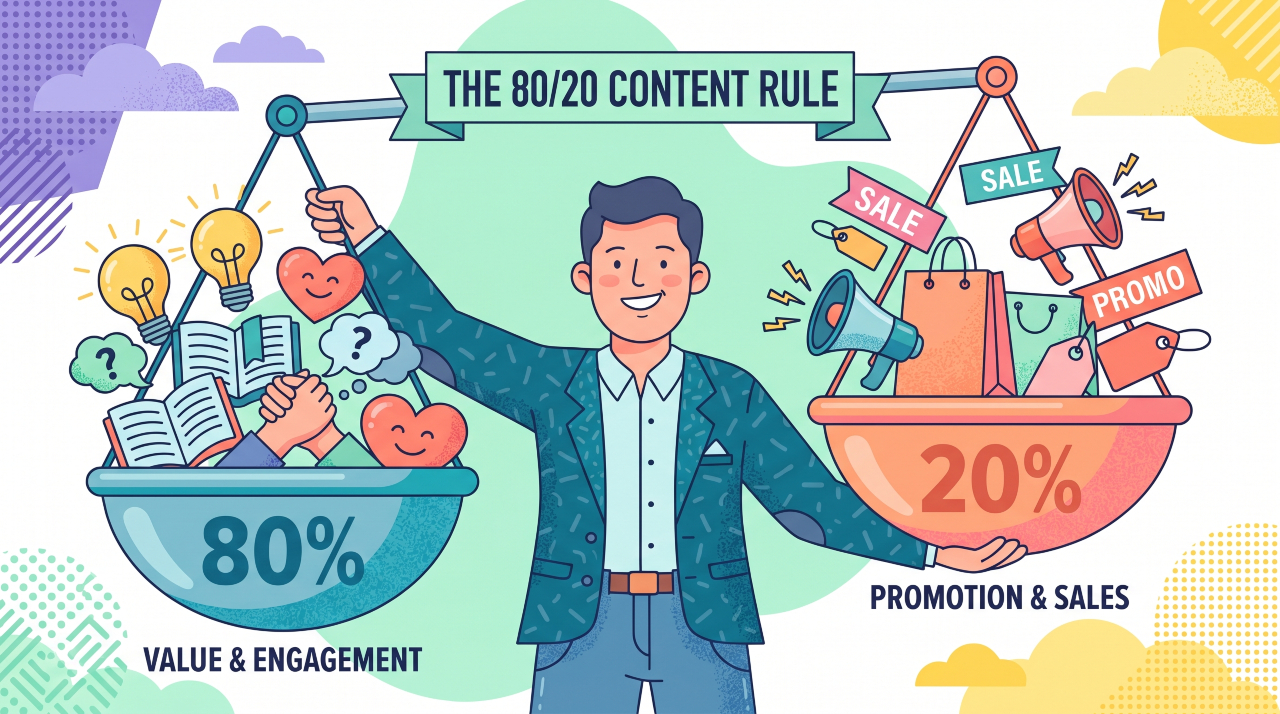
Follow the 80/20 rule: make 80% of your content helpful or entertaining, and only 20% directly selling your products. Nobody follows a business account to see ads all day. They want value, entertainment, or useful information.
Use high quality photos and videos because blurry images make your business look unprofessional. You don’t need fancy equipment, just good lighting and a steady hand. Modern smartphones take perfectly good photos for social media.
Engage with your followers regularly by asking questions, running polls, and responding to their content. Social media rewards engagement, so the more you interact, the more your posts get shown. Run contests and giveaways occasionally to boost engagement and attract new followers.
Track what works by checking your analytics. Every platform shows you which posts get the most engagement, what times your audience is active, and who your followers are. Do more of what works and stop doing what doesn’t.
Social media management tools like Buffer or Hootsuite let you schedule posts in advance and manage multiple accounts from one place. This saves hours every week and keeps you consistent even when life gets busy.
Consider a local coffee shop that posts daily photos of their specialty drinks and features regular customers. They respond to every comment and share user generated content when customers tag them. Their follower count isn’t huge, but those followers actually come in and buy coffee regularly. That’s what success looks like.
Start Email Marketing The Right Way
Email still works better than social media for making sales. Recent statistics show email returns $42 for every $1 spent, making it one of the best marketing investments you can make. You own your email list, but you don’t own your social media followers.
Building your email list without being annoying starts with offering something valuable for free. This could be a discount code, a helpful guide, a checklist, or exclusive content. Put signup forms on your website homepage, blog posts, and checkout page. Collect emails in person at your physical location if you have one.
Never buy email lists. These people didn’t ask to hear from you, they’ll mark you as spam, and email providers will block your messages. Every subscriber should choose to join your list.
Send welcome emails to new subscribers immediately. Thank them for joining and deliver whatever you promised. Tell them what to expect and how often you’ll email them. First impressions matter in email marketing just like everywhere else.
Weekly or monthly newsletters keep your business top of mind. Share helpful tips, company updates, customer spotlights, and relevant industry news. Keep emails focused on one main topic instead of cramming in everything. Make them short enough to read in two minutes or less.
Special offers and promotions work great in email because subscribers expect occasional deals. Announce new products, seasonal sales, or exclusive discounts for email subscribers only. This rewards people for joining your list.
Write subject lines that get opened by being specific and creating curiosity. “Your receipt” gets ignored, but “You left something in your cart” or “This week only: 30% off” gets clicks. Avoid spammy words like “free money” or excessive exclamation points.
Always include a clear next step in every email. Want people to shop? Add a bright button saying “Shop Now.” Sharing information? End with “Reply and tell me what you think.” One focused call to action per email works better than multiple competing options.
Send emails consistently but don’t spam. Once a week is perfect for most businesses, though twice a month works too. Sending daily annoys people unless you run deals sites where subscribers expect it. Find a schedule you can maintain long term.
Best email platforms for small businesses include Mailchimp, ConvertKit, and Constant Contact. They offer free plans for small lists and provide templates that look professional without design skills. Most integrate with your website and other tools.
Mobile optimization matters because 60% of emails are opened on phones. Your email platform should automatically make emails mobile friendly, but always send yourself a test first. Long paragraphs look terrible on small screens, so keep them short.
Test different send times to see when your audience opens emails most. Tuesday through Thursday mornings often work well, but your audience might be different. Try a few times and check your open rates.
Track open rates and click rates to measure success. A good open rate is 20% or higher, and click rates above 3% mean people find your content valuable. If numbers are low, test different subject lines or content types.
Create Content That Attracts Customers
Content marketing means creating helpful stuff people want, not just ads for your products. According to content marketing ROI statistics, businesses that prioritize blogging are 13 times more likely to see positive return on investment. A hardware store that publishes home repair guides attracts people searching for solutions. Some of those people become customers.
Blog posts answering common questions work incredibly well for SEO and establishing expertise. What do customers ask you repeatedly? Turn each question into a helpful article. If you’re a tax accountant, write about “tax deductions small business owners miss” or “when to hire an accountant versus doing taxes yourself.”
How to videos and tutorials show your expertise while helping people. These rank well on YouTube and Google. A landscaper filming “how to fix brown patches in your lawn” attracts homeowners who might hire them for bigger projects. Keep videos short and get to the point quickly.
Case studies showing real results prove your service works. Interview happy customers about their problems, your solution, and the results they got. Include specific numbers and details that make the story believable and compelling.
Infographics explaining complex topics get shared widely on social media. People love visual content that teaches them something useful. Break down industry statistics, step by step processes, or comparison guides into eye catching graphics.
Podcasts work for industries where people want to learn while driving or exercising. You don’t need expensive equipment to start. A decent microphone and free editing software like Audacity are enough. Interview experts, share tips, or discuss industry trends.
Focus on solving problems your customers actually have. Don’t create content about what interests you unless it also interests them. Every piece should answer “what’s in it for me?” from the reader’s perspective.
Answer questions before people ask them. Think about every stage of the customer journey and create content for each. Someone just learning about your industry needs different information than someone ready to buy.
Share your expertise freely without holding back. Some business owners worry that giving away free information means people won’t hire them. The opposite is true. Helpful content proves you know what you’re doing and builds trust before people buy.
Make your content easy to find and share. Use descriptive titles with keywords, add social sharing buttons, and promote new content across your channels. Great content that nobody sees helps nobody.
Use stories to make points memorable. Facts tell but stories sell. Instead of saying “our customers save money,” tell the story of one specific customer and exactly how much they saved.
Quality beats quantity every time. One excellent blog post per month outperforms four mediocre ones. Take time to research, write well, and add value. Tools like Grammarly catch spelling and grammar mistakes that make you look unprofessional.
Add images to break up text and keep people reading. Screenshots, photos, custom graphics, or stock images all work. Just make sure you have the right to use any images you didn’t create yourself.
End every piece with a clear call to action. After someone finishes reading your helpful article, what should they do next? Read another article, download your guide, schedule a consultation, or shop your products? Tell them.
Repurpose content across different platforms to multiply your effort. Turn one blog post into a video, an infographic, five social media posts, and an email. Each platform reaches different people, and repetition helps your message stick.
Use Paid Advertising Strategically
You can start with small budgets and test what works before spending serious money. Paid advertising speeds up results compared to waiting for SEO or organic social media to build momentum. But you need to be strategic or you’ll waste money fast.
Google Ads puts you at the top of search results instantly. When someone searches for what you sell, your ad appears above organic results. You only pay when someone clicks, and you can set daily budget limits. This works best when people are actively searching for your product or service.
Facebook and Instagram ads let you target specific audiences by age, location, interests, and behaviors. Show your ad only to women aged 25 to 40 within 10 miles who are interested in yoga if that’s your target customer. This precision means your budget goes further.
LinkedIn ads work well for business services because you can target by job title, company size, and industry. They cost more per click but reach decision makers. If you sell accounting software to small businesses, you can show ads specifically to CFOs at companies with 10 to 50 employees.
Retargeting ads remind people who visited your website but didn’t buy. These work because people rarely purchase on the first visit. Showing them ads as they browse other sites keeps your business top of mind. Retargeting typically converts better and costs less than regular ads.
Start small and test everything before scaling up. Run three different ad versions with different images or headlines. See which gets the best results, then put more money behind the winner. Never assume you know what will work.
Target specific audiences carefully instead of trying to reach everyone. Narrower targeting usually performs better because your message resonates more. An ad for luxury watches should target different people than an ad for budget watches.
Use compelling images and clear copy that explains the benefit immediately. People scroll fast, so you have one second to grab attention. Show your product in use, include faces for emotional connection, and make text readable on small screens.
Send people to relevant landing pages, not your homepage. If your ad promotes a specific product, link directly to that product page. If you’re offering a free guide, send them to a page where they can download it. Every extra click loses potential customers.
Track conversions, not just clicks. Lots of clicks mean nothing if nobody buys. Set up conversion tracking to see which ads actually produce sales or leads. Turn off ads that get clicks but don’t convert.
Set daily budget limits so you never spend more than planned. Start with $5 or $10 per day and increase as you prove ads work. Small budgets take longer to gather data but protect you from expensive mistakes.
Google Ads works best when people are actively searching because they already have intent. Social media ads work better for building awareness and reaching people who don’t know they need you yet. Both have a place in a complete strategy.
Video ads often perform better than static images because they’re more engaging. Keep them under 15 seconds for social media. Show your product in action, include captions since many people watch without sound, and grab attention in the first three seconds.
Use A/B testing to improve results continuously. Change one element at a time like the headline, image, or call to action. Compare results and keep the better performer. Small improvements compound over time into dramatically better results.
Consider hiring an expert if your ad budgets get bigger. Managing $50 per month yourself makes sense, but at $500 or more monthly, a specialist often gets better results that justify their fee. Look for someone with proven experience in your industry.
Leverage Online Reviews And Reputation
Reviews influence 93% of purchasing decisions, making them one of your most powerful marketing tools. People trust other customers more than they trust your advertising. A product with 50 positive reviews outsells an identical product with no reviews.
Ask happy customers to leave reviews right after they’ve had a great experience. Timing matters because people forget or get busy. Send a text or email within 24 hours saying “We loved serving you. Would you mind leaving a quick review?” Make it easy by including direct links to your review profiles.
Respond to all reviews, both good and bad. Thank people for positive reviews and show you appreciate their business. This encourages more people to leave reviews when they see you actually read and respond.
Address negative reviews professionally and quickly. Apologize for their experience, explain what happened if appropriate, and offer to make it right. Other people reading the review judge you by your response more than the complaint itself. A professional response to a bad review can actually improve your reputation.
Show you care about customer satisfaction by fixing problems publicly. When someone complains online, solve their issue and ask them to update their review. Many will change a one star review to four or five stars after you made things right.
Display reviews on your website so visitors see social proof immediately. Use a widget that automatically pulls in your latest Google or Facebook reviews. Feature your best testimonials prominently on your homepage and product pages.
Review platforms that matter vary by industry. Google My Business reviews show up in search results and Maps, making them critical for local businesses. Facebook recommendations appear when people research your business on social media. Yelp matters for restaurants and local services. Find industry specific review sites like Avvo for lawyers or Houzz for contractors.
Never buy fake reviews because platforms detect and remove them, often penalizing your entire profile. Fake reviews also violate Federal Trade Commission guidelines and can result in serious fines. Building real reviews takes longer but lasts.
Use reviews in your marketing materials with permission. Feature testimonials in emails, social posts, and ads. Video testimonials have strong impact because they’re harder to fake and show real emotion.
Build a system to consistently get reviews. Train staff to ask in person. Add a request in your post purchase email sequence. Put a QR code on receipts that links to your review page. Make it part of your standard process so it happens automatically.
Partner With Influencers And Other Businesses
You don’t need celebrity influencers with millions of followers. Micro influencers with 5,000 to 50,000 engaged followers often work better because their audience trusts them more and they charge less.
Look for people your target customers already follow and trust. A local fitness influencer makes sense for a healthy meal prep company. A parenting blogger fits a children’s clothing brand. Relevance matters more than follower count.
Partner with businesses that serve the same customers without competing directly. A wedding photographer could partner with florists, venues, and caterers. They all serve engaged couples but don’t compete. Cross promote each other through social media shoutouts, email mentions, or package deals.
Guest posting on popular blogs in your industry reaches new audiences and builds backlinks for SEO. Find blogs that accept guest posts and pitch specific article ideas. Make your content genuinely helpful, not just a sales pitch.
Podcast interviews let you reach engaged audiences who already trust the host. Pitch podcast hosts in your industry with an interesting angle or unique expertise. Most podcasters constantly need guests and appreciate good pitches.
Joint webinars or events combine audiences from both businesses. A financial advisor and an estate attorney could co host a webinar on retirement planning. Both benefit from exposure to each other’s audience.
Affiliate programs where partners earn commissions for sales they refer can build a sales force of motivated promoters. Make the commission generous enough that people actively promote you. Track everything with unique links so you know who referred each customer.
Keep partnerships simple and mutually beneficial. Complex arrangements fall apart. The best partnerships feel easy and natural for both sides.
Build real relationships, not just transactions. Get to know potential partners as people. Support their business before asking for anything. Genuine relationships lead to better long term partnerships.
Track results from partnership efforts so you know what works. Use unique discount codes, specific landing pages, or tracking links. Invest more in partnerships that produce customers and let unsuccessful ones fade.
Track Your Results And Improve
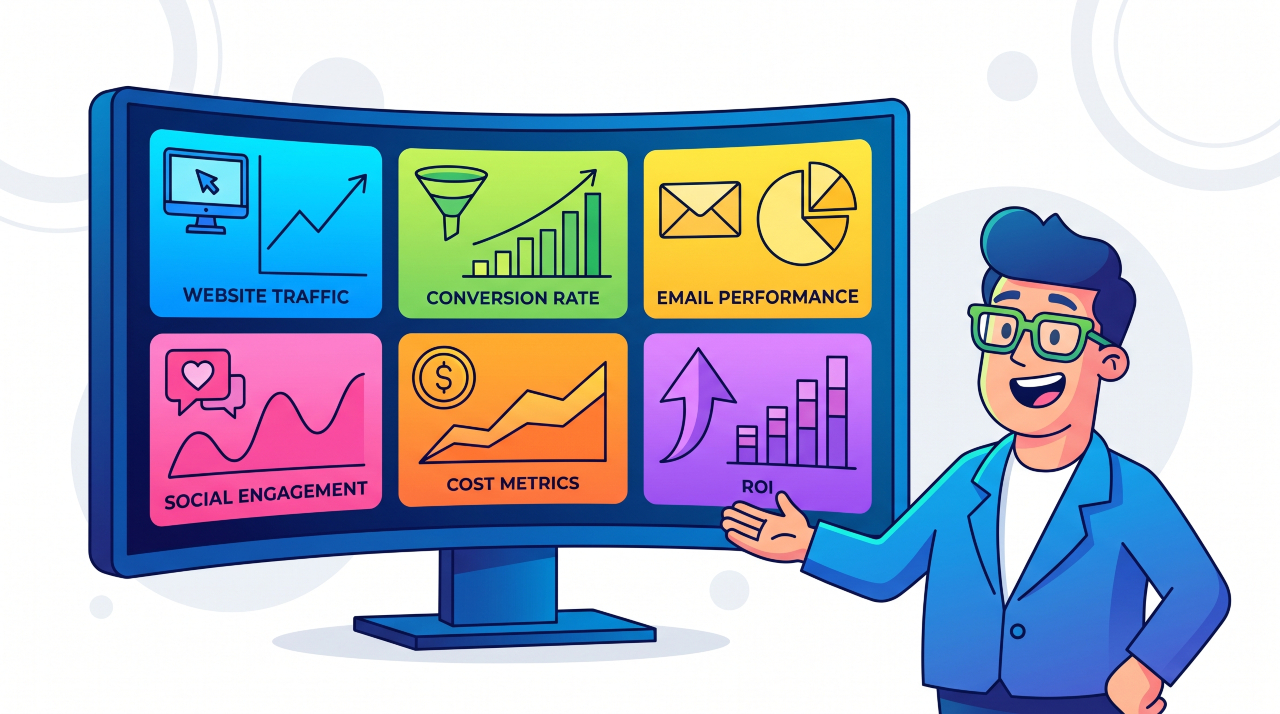
You can’t improve what you don’t measure. Too many business owners market blindly, never knowing what actually brings in customers. Tracking your results separates winning strategies from money wasters.
Key metrics that actually matter include website traffic and where it comes from. Are people finding you through search, social media, or ads? Which source brings the most visitors? Google Analytics shows all this for free once you install it on your website.
Conversion rates on landing pages tell you if your website actually works. If 100 people visit your contact page but nobody fills out the form, something is broken. Good conversion rates vary by industry but generally range from 2% to 5% for most businesses.
Email open and click rates show if people care about your messages. Low open rates mean bad subject lines or wrong send times. Low click rates mean your content isn’t compelling enough. Test changes and track if they improve results.
Social media engagement matters more than follower count. An account with 500 engaged followers who comment and share beats 5,000 followers who ignore everything. Track likes, comments, shares, and clicks to your website.
Customer acquisition cost tells you how much you spend to get each new customer. Add up all marketing expenses and divide by the number of new customers. If you spend $1,000 on ads and get 20 customers, your acquisition cost is $50. This needs to be less than your profit per customer or you lose money.
Return on ad spend measures if paid advertising works. If you spend $100 on ads and make $400 in sales, your return is 4 to 1. Anything above 3 to 1 usually works well, but it depends on your profit margins.
Revenue from each marketing channel shows where to invest more. Maybe email brings in 40% of sales, social media 30%, and search 20%. Focus your effort where results already exist instead of chasing new platforms.
Use Google Analytics to track website performance including pages people visit, how long they stay, and where they leave. Set up conversion tracking for sales and leads so you know which traffic sources produce customers, not just visitors.
Platform specific analytics for social media show what content resonates. Facebook Insights, Instagram Analytics, and LinkedIn Analytics all provide detailed data about your posts and audience. Check them monthly and adjust your strategy based on what works.
Review numbers weekly or monthly depending on your traffic volume. Daily checking creates anxiety without actionable data. Weekly reviews work for businesses spending on ads. Monthly works fine for organic strategies.
Double down on what works instead of spreading effort equally. If Instagram brings customers but Twitter doesn’t, focus on Instagram. This seems obvious but many people waste time on platforms that don’t work because they think they should be everywhere.
Cut what doesn’t produce results after giving it a fair test. Three months of consistent effort is usually enough to know if a strategy works. Don’t keep doing something just because a guru said it’s important.
Small improvements add up over time into dramatic results. Increasing your email open rate from 15% to 20% might not seem huge, but that’s 33% more people seeing your message. Improving your website conversion rate from 2% to 3% means 50% more customers from the same traffic.
Common Mistakes To Avoid
Trying to do everything at once spreads you too thin. Pick three strategies from this guide and master them before adding more. Quality execution of a few tactics beats poor execution of many.
Inconsistent posting and then giving up happens when people expect instant results. Social media and content marketing take months to build momentum. Posting daily for two weeks then quitting guarantees failure. Consistency over time wins.
Ignoring mobile users costs you customers since most internet browsing happens on phones. Test your website, emails, and ads on mobile devices. If something looks bad or doesn’t work on a phone, fix it immediately.
Talking only about yourself and your products bores people. Nobody cares about your business unless it solves their problem. Make your marketing about customers and their needs, not about how great you are.
Not having clear goals means you can’t measure success. Decide what you want before starting. More website traffic? More sales? Pick specific numbers and deadlines.
Buying followers or email lists seems like a shortcut but destroys your credibility. Platforms detect fake followers and reduce your reach. Bought email lists mark you as spam. There are no shortcuts to real marketing success.
Copying competitors instead of being authentic makes you forgettable. Learn from competitors but find your unique voice and angle. People choose businesses with personality over boring copycats.
Neglecting customer service online damages your reputation publicly. Response time on social media and review sites matters. Ignoring complaints or questions tells everyone you don’t care about customers.
Making your website too complicated confuses visitors who leave without buying. Simple navigation, clear calls to action, and focused pages convert better than fancy websites trying to be clever.
Not testing before spending big money wastes your budget. Always start small, prove something works, then scale up. Test different ad versions, email subject lines, and content types before committing serious resources.
Expecting overnight results leads to disappointment and quitting. Building an online presence takes months of consistent effort. Companies selling instant results are lying. Real marketing builds gradually.
Your Action Plan
Start with foundations before advanced tactics. A business without a website and Google My Business listing isn’t ready for influencer partnerships. Build basic pieces first.
Pick three strategies to focus on first. A good combination is website with SEO, one social platform, and email marketing. Master these before adding paid ads or content marketing.
Be consistent for at least 90 days before judging results. Marketing momentum builds slowly at first, then accelerates. Quitting at 60 days wastes the effort you already put in.
Adjust based on what your data shows after three months. If Instagram isn’t working but emails get great response, shift your time accordingly. Follow the results, not your assumptions.
Build systems so marketing runs smoothly without constant effort. Create templates for social posts, schedule content in advance, and automate email sequences. Systems free up time for strategy and growth.
Consider your time versus hiring help. If your time is worth $100 per hour but you spend 10 hours monthly on basic social media posting, hiring someone for $500 makes financial sense. Focus your time where only you can add value.
Marketing is ongoing, not a one time project. Your competitors never stop marketing, and neither can you. The businesses that win simply show up consistently while others quit.
Take Action Today
Online marketing is essential and accessible for every business. You don’t need a big budget, special skills, or years of experience to start. The strategies in this guide work for tiny local businesses and growing companies alike.
Consistency matters more than perfection. Your first blog post won’t be amazing, and your early social media posts might feel awkward. Do it anyway because experience teaches faster than research. Everyone starts somewhere.
Every business is different, so test what works for you. Your audience, industry, and competition create unique conditions. What works perfectly for one business might flop for another. Trust your data more than anyone’s advice.
Start simple and build from there. You don’t need a complete marketing machine on day one. Get a basic website up, claim your Google My Business listing, and start posting on one social platform. Add complexity as you grow.
Your customers are online right now searching for solutions you provide. Someone is typing your service into Google. Another person is scrolling Facebook looking for recommendations. If you’re not there, your competitors are winning those customers by default.
The best time to start was yesterday. The second best time is today. Every day you wait is another day your competitors build advantages. Stop planning and start doing.
Pick one strategy from this guide and start today. Set up your Google My Business listing if you haven’t. Post your first piece of helpful content. Send an email to your existing customers. Write one blog post answering a common question.
Small actions taken consistently create big results. A business posting three times weekly on Instagram for a year beats one posting daily for a month then quitting. Tortoise beats hare every single time in marketing.
What will you do first? Make that decision right now, schedule time on your calendar, and follow through. Your future customers are waiting to discover your business. Go market your business online and give them the chance to find you.