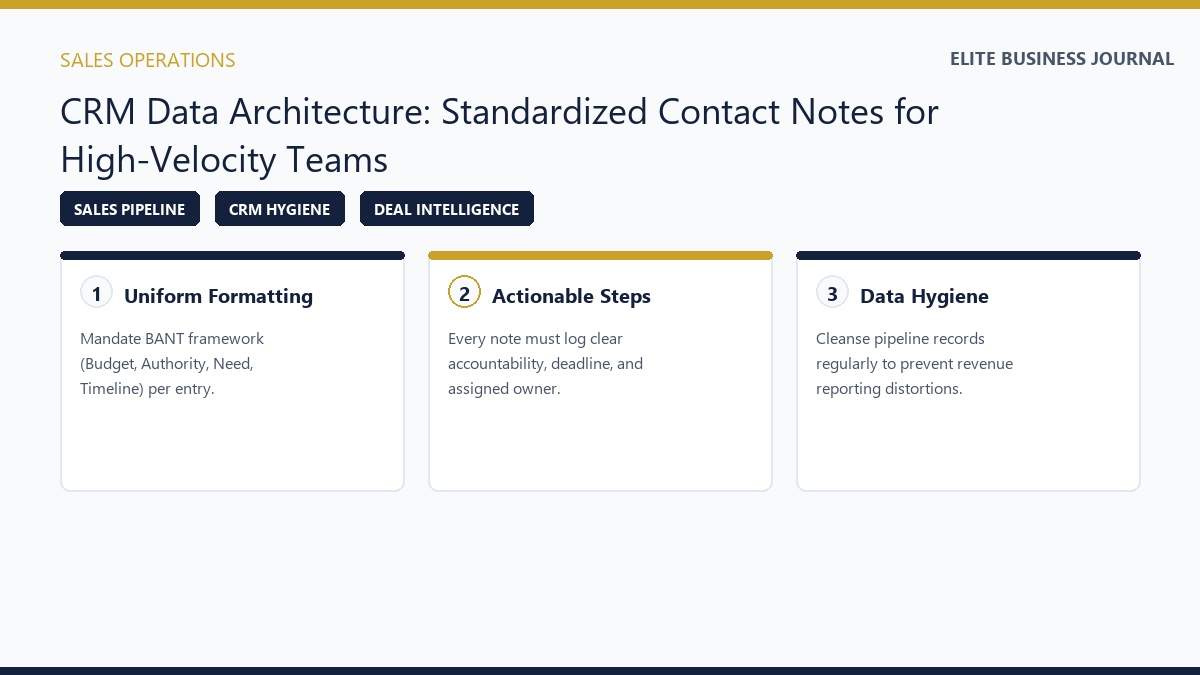
Research shows that sales reps spend 17% of their day searching for information in poorly organized CRM systems, costing companies thousands in lost productivity. That number gets worse when you factor in the deals lost because someone could not find crucial customer information buried in messy notes. The problem is not that teams are not taking notes. It’s that most contact notes are written poorly, inconsistently, and without any real structure.
Good contact notes are not just nice to have. They directly impact your bottom line. The difference between a disorganised CRM and a well-maintained one can mean hundreds of thousands in revenue.
This guide gives you a simple framework for structuring contact notes that anyone on your team can follow. You will learn exactly what to include, what to skip, and how to make your notes useful months or even years later. These are not complicated rules that require training sessions. They are practical guidelines you can start using today.
Why Contact Notes Matter More Than You Think
Most people treat CRM notes like an afterthought. They rush through them at the end of calls or meetings, typing whatever comes to mind just to check a box. This casual approach costs real money.
Consider what happens when notes are bad. A sales rep takes over an account and spends hours trying to piece together the customer relationship from cryptic entries. A support agent cannot find the context for a complaint and frustrates an already angry customer. A manager tries to coach someone on a deal but has no idea what actually happened in previous conversations. Every one of these scenarios wastes time and damages relationships.
Now think about what happens when notes are good. A team member goes on vacation and someone else picks up their accounts without missing a beat. A sales rep preparing for a call finds all the context they need in three minutes. A marketing team pulls accurate customer insights from CRM data because the information is actually reliable. Six months later, when a deal resurfaces, everyone knows exactly where things stand.
The impact shows up in metrics that matter. Deal cycles get shorter when information flows smoothly. Customer satisfaction improves when service feels personal and informed. Team productivity jumps when people stop hunting for basic information. One company found that standardizing their CRM contact notes cut their sales cycle by 23% just by reducing confusion and duplicate work.
The Five Essential Elements Every Contact Note Needs
Every contact note should include five core components. These elements create a complete picture without overwhelming readers with unnecessary detail.
First is the date and time of contact. This seems obvious but many CRM systems do not automatically timestamp notes in a visible way. Always include when the interaction happened, especially if you are writing the note hours or days later. Context about timing matters when someone is reviewing account history.
Second is the purpose of contact. Start every note by stating why the conversation happened. Was this a discovery call? A pricing discussion? A support issue? A contract renewal check in? One clear sentence about the purpose helps readers understand context immediately.
Third are the key discussion points. This is where you capture what actually happened in the conversation. Focus on information that affects the relationship or moves things forward. Customer pain points, budget signals, decision maker involvement, competitive mentions, and timeline clues all belong here.
Fourth are the next steps. Every contact note should end with what happens next and who owns it. Vague entries like “follow up soon” help nobody. Specific actions with owners and dates create accountability.
Fifth is contact sentiment. How did the conversation feel? Was the customer engaged and positive? Frustrated? Indifferent? A quick sentiment note helps the next person who contacts this customer calibrate their approach. You do not need fancy scoring systems. Simple terms like positive, neutral, or concerned work fine.
These five elements give structure without being rigid. They work for phone calls, emails, meetings, and any other customer interaction. Make them your foundation for structuring contact notes in your CRM.
Starting Strong: How to Write Better Opening Lines
The first sentence of your contact note sets the stage for everything that follows. A good opening line tells readers what they need to know immediately. A bad one wastes their time and buries important information.
Weak opening lines sound like this: “Had a good conversation with John today.” This tells you almost nothing. What kind of conversation? About what? Who is John in the organization?
Strong opening lines are specific: “Pricing call with John Stevens, VP of Operations, to discuss enterprise package for 50 user seats.” Now readers know exactly what happened before reading another word.
Your opening should answer three questions in one or two sentences. Who did you talk to and what is their role? What was the purpose? What type of interaction was it? This formula works for almost any contact note.
Here are more examples of strong openings. “Demo call with Sarah Chen, IT Director, showing integration capabilities with their existing Salesforce setup.” Or “Inbound support email from billing contact asking about invoice discrepancy from March statement.” Or “Quarterly business review meeting with decision making committee covering usage stats and renewal timeline.”
Notice how each opening immediately orients the reader. Even someone who knows nothing about the account can understand the context. This matters because the person reading your note six months from now might not be you. Write openings that work for anyone on your team.
Capturing Conversation Details That Actually Help
Knowing what details to include separates useful notes from cluttered ones. The goal is capturing information that affects decisions or relationships, not transcribing entire conversations.
Start with pain points and challenges the customer mentions. These drive everything in the relationship. If a prospect says their current solution takes too long to generate reports, that is worth noting. If they mention their team struggles with adoption, write it down. Pain points tell you what matters to them and how to position your solution.
Budget signals deserve their own line in your notes. Did they mention an approved budget? Ask about pricing ranges? Reference what they currently spend? Any indication of financial capacity or constraints helps with forecasting and deal strategy.
Decision maker involvement is critical information. Note who has authority, who influences decisions, and who will actually use your product or service. When a contact says “I will need to run this by Sarah in finance,” you just learned Sarah matters. Add her name, role, and level of involvement.
Timeline clues help with deal management. Phrases like “we need something in place before Q4” or “our contract renews in June” or “not urgent right now” all signal when this opportunity might close. Capture these references even if they seem casual.
Competitive mentions matter too. If a customer compares you to another vendor, notes which one and what they said. If they are using a competitor now, document what they like and dislike about it. This intelligence shapes how you position your offering.
What should you skip? General pleasantries, weather chat, and other small talk rarely need documentation. Detailed play by plays of the entire conversation create clutter. Opinions and assumptions do not belong in contact notes unless clearly labeled as such. Stick to facts and direct customer statements.
The Right Way to Document Next Steps and Action Items
The next steps section of your contact notes creates accountability. This is where deals move forward or stall out, so clarity matters enormously.
Vague next steps kill momentum. Entries like “send information” or “follow up later” or “stay in touch” create confusion. Who is sending what information? When is later? What specifically are we staying in touch about? Vague language means nothing happens.
Instead of “send information,” write “I will email the case study from the healthcare client by Friday.” from healthcare client by Friday.” Instead of “follow up later,” write “Customer will review proposal with team and provide feedback by March 15.” and nstead of “stay in touch,” write “Schedule Q2 check-in call for April.”
Every next step should answer three questions. What is the specific action? Who owns it? When will it happen? This format leaves no room for confusion.
Use clear ownership language. If you own the action, say “I will” not “we should” or passive voice. If the customer owns it, say “Customer will” or use their name and if a teammate owns it, name them specifically. Accountability requires knowing exactly who is responsible.
Include dates or timeframes for every action item. “Next week” becomes meaningless after a few days. “By March 10” stays clear forever. Even estimates like “within two weeks” are better than nothing. Dates make next steps real instead of theoretical.
When multiple next steps exist, number them or list them clearly. This prevents items from being overlooked. It also makes it easy to check back later and confirm everything happened.
Using Consistent Formatting Across Your Team
Formatting consistency makes contact notes scannable and searchable. When everyone on your team structures notes the same way, information becomes predictable and easy to find.
Start with a standard order for your five essential elements. Always put purpose first, discussion points second, next steps third, and sentiment last. This predictable structure lets people skim notes quickly to find what they need.
Use consistent capitalization for important terms. If you capitalize job titles, always capitalize them. If you use all caps for company names, do it every time. Small consistency choices add up to much better readability across hundreds of notes.
Create team standards for common abbreviations. If everyone writes “demo” instead of “demonstration” and “SOW” instead of “statement of work,” great. Just make sure everyone uses the same shorthand. Nothing is more annoying than decoding different abbreviations from different team members.
Consider using simple markers to highlight critical information. Some teams use brackets for competitor names like [Competitor X]. Others use asterisks for urgent items. Pick one or two formatting conventions that draw attention to what matters most.
Paragraph breaks improve readability more than you might think. Break up long blocks of text into digestible chunks. Each major discussion point might get its own paragraph. Next steps might be separated from discussion details. White space helps tired eyes scan faster.
Tagging and Categorizing for Easy Search Later
Good tagging makes contact notes findable months or years later. Most CRM systems offer tags, categories, or custom fields. Use them strategically.
Create tag categories that match how your team actually searches for information. Common useful categories include interaction type, deal stage, topic discussed, and priority level. These dimensions help filter and find notes quickly.
Interaction type tags might include discovery call, demo, pricing discussion, contract negotiation, support issue, or check in. These tags let you pull up all demos across all accounts or see every pricing conversation a specific rep had.
Deal stage tags connect notes to your sales process. Tags like qualification, proposal sent, negotiation, or closed won help track where opportunities stand. Someone reviewing an account can immediately see progression.
Topic tags capture what was discussed. Tags like integration, pricing, features, timeline, or competition make specific subjects searchable. If you need to find every conversation where integration came up, topic tags make it possible.
Priority tags help with follow up. Simple tags like hot lead, warm, or cold help reps prioritize their time. Tags like urgent issue or at risk account flag situations needing immediate attention.
The key is limiting your tag taxonomy. Too many tags means inconsistent usage and analysis paralysis when choosing which to apply. Most teams work best with 15 to 25 total tags across all categories. More than that and people stop using them correctly.
Make certain tags required for certain note types. A demo note might require an interaction type tag and a deal stage tag at minimum. This ensures basic categorization always happens.
Review tag usage periodically. If nobody ever uses certain tags, remove them. If important information is not being captured, add new tags. Your tagging system should evolve with your needs.
Writing Notes Others Can Actually Understand
Your contact notes serve your entire team, not just you. Writing for others requires different habits than writing personal reminders.
The biggest mistake is using context only you have. References like “discussed the thing we talked about last week” mean nothing to teammates. Cryptic shorthand like “JB wants in by EOQ” leaves people guessing who JB is and what they want in on.
Always use full names the first time you mention someone, especially if they are new to the account. Instead of “talked to Mike,” write “talked to Mike Peterson, new Director of IT.” Later references can use just the first name, but establish who people are initially.
Spell out acronyms that might not be universally known. Your team might know that SOW means statement of work, but does everyone know your industry specific acronyms? When in doubt, write it out the first time.
Avoid insider references to previous conversations unless you briefly explain them. Instead of “followed up on the integration issue,” write “followed up on the API integration issue customer reported last week where data was not syncing properly.” The extra context takes five seconds but saves readers minutes of confusion.
Write in complete thoughts, not fragments. “Price too high” might remind you what happened, but it tells teammates almost nothing. “Customer said our enterprise pricing is 30% higher than their current vendor and asked if we can match” gives complete information.
Remember that someone reading your note might join the company next year. They will not have heard any of the conversations or know any of the history. Write notes that stand alone without requiring institutional knowledge.
How Much Detail Is Too Much Detail
Finding the right level of detail prevents both sparse useless notes and overwhelming novels. The Goldilocks principle applies. Not too little, not too much, just right.
For most interactions, 100 to 200 words captures sufficient detail. This is roughly two to four paragraphs. Enough to cover purpose, key points, and next steps without bloating your CRM with information nobody will read.
Discovery calls might run longer, maybe 250 to 300 words, because you are capturing lots of new customer information. Demos might need similar length to document what you showed and customer reactions. These are information rich interactions that justify extra detail.
Quick follow ups and short emails need far less. A 50 word note covers most brief interactions. “Email follow up confirming demo scheduled for March 15 at 2pm. Customer confirmed attendance and requested we focus on reporting features. I will send calendar invite and prep demo environment.”
Support interactions vary based on complexity. A simple question and answer might need only 30 words. A complex troubleshooting session might require 200 words to document the issue and resolution properly.
If you find yourself writing 500 plus words for a single contact note, you are probably including too much detail. Long notes do not get read. Important information gets buried. Edit ruthlessly to keep only what affects decisions or relationships.
Ask yourself what someone needs to know, not what you could tell them. The fact that the customer mentioned their kids play soccer is not relevant to the business relationship. The fact that their fiscal year ends in June absolutely is.
Details that affect deal strategy, customer satisfaction, or relationship management belong in notes. Everything else is clutter. Choose signal over noise every time.
Handling Sensitive Information in Contact Notes
Contact notes sometimes involve sensitive customer information. Handling this data responsibly protects both customers and your company.
First, know what legally counts as sensitive information in your industry and region. Financial details, health information, personal identifiers, and proprietary business data often have special protection requirements. Regulations like GDPR in Europe or HIPAA in healthcare set specific rules about documenting and storing certain information.
When you must reference sensitive information, include only what is necessary for business purposes. If a customer shared their budget, you might note the range without recording exact financial statements. If they mentioned a personal health situation affecting their timeline, note the impact on timeline without medical details.
Some information should not go in contact notes at all. Customer passwords, social security numbers, credit card details, and similar data need secure storage systems, not CRM notes. If a customer shares something like this, tell them you will handle it through proper channels and do not document it in regular notes.
Be aware that contact notes might be visible to more people than you think. Depending on your CRM settings, notes could be seen by your entire sales team, support team, or management. Write with this visibility in mind. Information that should stay between you and the customer should not go in shared CRM notes.
Consider using private note fields or restricted visibility features for truly sensitive situations. Most CRM systems let you mark certain notes as private or limit access. Use these features when appropriate but do not overuse them. Excessive private notes defeat the purpose of shared customer information.
When documenting complaints or negative situations, stick to facts without editorializing. “Customer expressed frustration with three week implementation timeline” documents the situation professionally. Adding your opinions about whether their frustration is justified does not belong in contact notes.
Common Mistakes That Waste Everyone’s Time
Certain contact note mistakes show up again and again. Recognizing them helps you avoid wasting your team’s time.
Duplicate information is a huge time waster. If your CRM automatically logs email subject lines, you do not need to rewrite them in your note. If call duration is tracked automatically, skip mentioning it. Focus your notes on information the system does not capture automatically.
Missing context makes notes useless. A note that says “sent proposal” without mentioning what the proposal included, what price you quoted, or when you need a response helps nobody. Always provide enough context that the note makes sense on its own.
Unclear ownership of next steps creates dropped balls. If your note says “need to follow up on pricing question” without specifying who needs to follow up, that item likely never gets done. Always assign clear ownership.
Burying important information in long paragraphs means people miss it. If a customer said they are ready to buy, that should be prominent, not buried in sentence seven of a long paragraph. Put critical information where it cannot be missed.
Using only private notes defeats the purpose of CRM. Some reps make everything private because they are protective of their accounts. This prevents team collaboration and creates problems when accounts need to be covered. Use private notes sparingly for truly sensitive items only.
Writing notes days later from memory results in missed details and inaccurate information. Notes written immediately after interactions are far more reliable. Make note taking part of ending each customer interaction, not something you batch at the end of the week.
Training Your Team on Note Standards
Getting your whole team aligned on contact note guidelines requires more than sending an email with rules. Real adoption needs a thoughtful approach.
Start by explaining why standards matter, not just what the standards are. When people understand that good notes help them personally by making account handoffs easier and information more findable, they buy in. Lead with benefits for them, not just benefits for management.
Involve the team in creating standards rather than mandating from above. Ask what frustrates them about current notes. Get input on what details matter most. People follow guidelines they helped create far better than rules imposed on them.
Provide clear examples of good and bad notes. Show real examples from your CRM with identifying details changed. Seeing the difference between a useful note and a useless one makes standards concrete instead of abstract.
Make templates and resources easy to access. If people have to hunt for the note template, they will not use it. Put guidelines in your CRM, in your team wiki, and anywhere else people look for help.
Do regular note reviews as a team. Pick a few notes each week to review together. Celebrate good examples and discuss how to improve weak ones. This ongoing reinforcement keeps standards front of mind.
Address pushback directly. Some reps will resist, saying notes take too much time or they have their own system. Show them data on how much time bad notes waste across the team. Emphasize that individual systems do not work in team environments.
Coach individually when someone consistently writes poor notes. Private conversations work better than public criticism. Focus on helping them improve rather than punishing mistakes.
Tools and Features That Help Structure Better
Most CRM systems include features that support good note structure. Using them makes following standards easier instead of adding work.
Custom fields let you capture structured information alongside free text notes. Create fields for interaction type, sentiment, and next step owner. When these are formal fields instead of buried in paragraphs, information becomes filterable and reportable.
Note templates built into your CRM eliminate the need to copy paste from external documents. Salesforce, HubSpot, and most modern CRMs let you create templates users can insert with one click. Make your most common note types available this way.
Required fields ensure minimum information gets captured. You might require interaction type and next step date for every note. This prevents people from saving notes that lack essential elements.
Quick text or text shortcuts let you insert common phrases instantly. If you frequently write certain types of notes, shortcuts save massive time. A shortcut like “demo1” might expand to your full demo note template.
Activity logging that automatically captures basic information means your notes can focus on what the system misses. If your CRM already logs that you had a 30 minute call at 2pm, your note can skip those details and dive right into discussion content.
Mobile apps make it easier to take notes immediately after interactions. If you wait until you get back to your desk, you will forget details. Good mobile note taking prevents this problem.
Voice to text features help some people capture notes faster. If you speak your notes after a call, you can capture more detail in less time. Just remember to edit for clarity before saving.
The best tools get out of your way and make good practices the path of least resistance. Configure your CRM to support your note standards, and following them becomes automatic.
Reviewing and Cleaning Up Existing Notes
If your CRM is full of poorly structured old notes, you face a choice. You can spend time cleaning them up or focus on improving new notes going forward. Usually the right answer is somewhere in the middle.
Prioritize cleaning up notes on active accounts first. Deals in progress and current customers deserve accurate, well structured information. Historical accounts that have not been touched in years can wait.
Focus cleanup efforts on high value accounts. Your top 20% of customers probably drive 80% of revenue. Making sure their account history is clean and complete delivers the most value.
Do not try to rewrite every old note perfectly. That takes too much time and the return diminishes quickly. Instead, add a summary note that consolidates important historical information if needed. A single well written summary can make messy old notes less critical.
As you interact with accounts, improve their notes incrementally. When you make a new contact, take two minutes to clean up or summarize what came before. This gradual improvement adds up without requiring dedicated cleanup projects.
Delete notes that add no value. If an old note just says “called, no answer” with nothing else, it clutters the record without helping. Removing genuine junk makes remaining information more visible.
Accept that your CRM will never be perfect. Historical data always has gaps and inconsistencies. Focus energy on making new information good rather than perfecting the past.
Measuring If Your Notes Are Actually Working
You need to know if your contact note guidelines are actually improving things. Simple measurement keeps you honest and shows ROI.
Time to find information is a key metric. Track how long it takes team members to get up to speed on an unfamiliar account. If your note standards are working, this time should decrease. Survey your team periodically about whether finding information is getting easier.
Deal handoff success matters if accounts move between reps. When territories change or someone goes on leave, how smoothly do transitions happen? Smoother handoffs with fewer customer complaints indicate better notes.
Team feedback provides qualitative insight. Ask regularly whether people find contact notes helpful. What information do they wish was captured better? What details are consistently missing? Listen to frustration points.
Manager review of note quality gives direct assessment. Have managers spot check notes weekly. Are the five essential elements present? Is formatting consistent? Are next steps clear? Track improvement over time.
Customer satisfaction can reflect note quality indirectly. When service improves because teams have better customer context, satisfaction scores often rise. While not a direct measure, it shows real world impact.
New hire ramp time might improve with better notes. If new team members can learn accounts faster from good documentation, their productivity increases sooner. Track how quickly new reps become effective.
Keep measurement simple. Pick two or three metrics that matter most to your team and track those consistently. Complicated measurement systems do not get maintained.
Conclusion
Good contact notes are not about perfection. They are about consistency and usefulness. When your team follows simple guidelines for structuring contact notes in your CRM, everything gets easier. Information becomes findable. Handoffs become smooth. Deals move faster because confusion disappears.
The five essential elements give you a foundation. Purpose, discussion points, next steps, sentiment, and timestamp create complete pictures every time. Strong opening lines provide instant context. Consistent formatting makes scanning effortless. Strategic tagging makes search powerful.
Small improvements create big results over time. You do not need to overhaul everything at once. Start with one guideline this week.</p>
The effort pays off quickly. Your team was
tes less time hunting for information. Your customers get better service because context is never lost and your deals close faster because momentum stays strong. The hour you invest in better notes this week saves dozens of hours across your team this month.
Pick one guideline from this article and implement it today. Get your team together and create your first note template. Review five notes from your CRM and improve them using these principles. Whatever you choose, start now. Your future self, your teammates, and your customers will thank you.