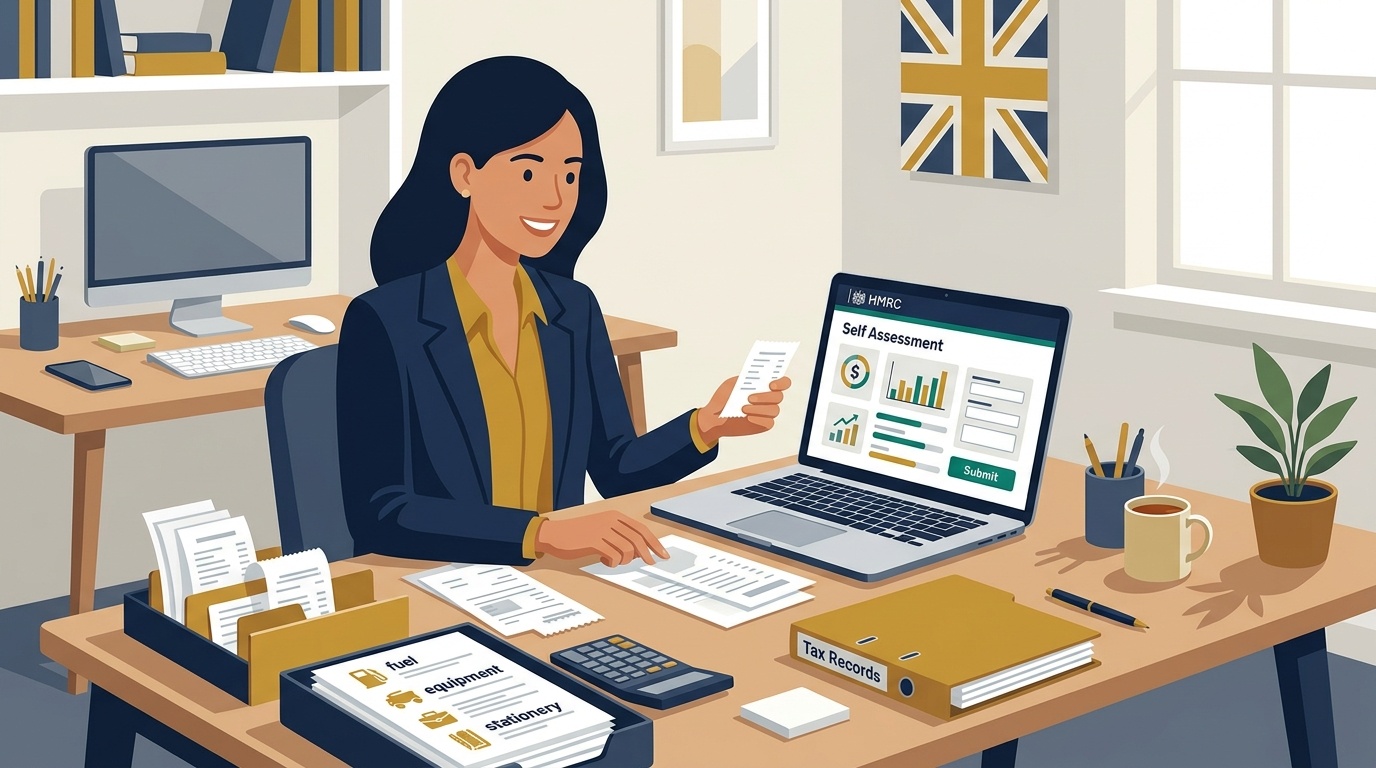
More than 1.1 million people missed the 31 January 2024 Self Assessment deadline — and HMRC issued automatic £100 fines to every single one of them. Most didn’t miss it because they were careless. They missed it because they didn’t know where to start.
If you’ve never filed a self assessment tax return in the UK before, or if you’ve been doing it for years but still feel uncertain, this guide covers every stage — from checking whether you actually need to file, to what you do after you’ve hit submit. You’ll also find out which expenses you can genuinely claim, what records HMRC expects you to keep, and the mistakes that quietly cost people money every year.
This is a practical guide. By the time you finish reading, you’ll know exactly what to do next.
Do You Actually Need to File a Self Assessment?
HMRC doesn’t send everyone a tax return. You need to file one if you meet at least one of these conditions in the 2026/27 tax year (6 April 2026 to 5 April 2027):
Calculate Your 2025/26 Self Assessment Tax Bill
Avoid surprises on January 31st. Input your turnover and allowable expenses to calculate your exact Income Tax and Class 4 National Insurance in seconds.
| Situation | Filing required? |
|---|---|
| Self-employed with income over £1,000 | Yes |
| Director of a limited company | Usually yes |
| Untaxed income over £2,500 | Yes |
| Total income over £100,000 | Yes |
| High Income Child Benefit Charge applies | Yes |
| Income from property | Yes (if over £2,500 untaxed) |
| Foreign income of any amount | Yes |
| Received a P800 notice from HMRC | Yes |
| Capital gains on shares or property | Yes |
| Partner in a business partnership | Yes |
If you received a notice to file from HMRC, you must submit a return even if you don’t think you owe any tax. Ignoring the notice still triggers a penalty.
Not sure if you need to file? Use HMRC’s official Self Assessment tool to check your status in under two minutes.
Key Self Assessment Deadlines You Cannot Miss
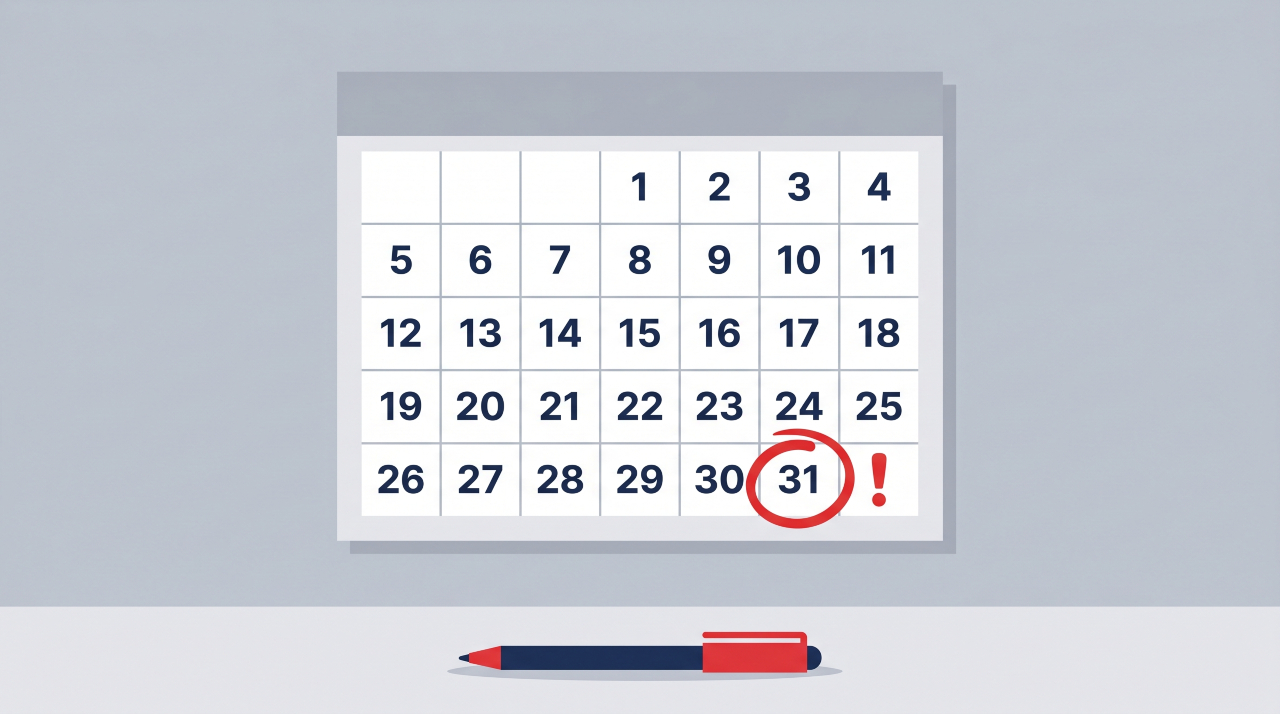
Missing a deadline costs you money immediately. Here are the dates you need to lock into your diary right now:
5 October — Register for Self Assessment if you’re filing for the first time. This applies to the previous tax year. So if you became self-employed in the current tax year, you must register with HMRC by 5 October.
31 October — Deadline to file a paper tax return. Almost nobody uses this route now, but it exists.
31 January — The critical date. This is the deadline to file your online return AND pay any tax owed for the previous year. For online returns and balancing payments, the deadline is midnight on 31 January following the end of the tax year (e.g. 31 January 2027).
31 July — Payment on Account second instalment (see the section below on payments).
Miss the 31 January deadline by a single day and you’ll get a £100 automatic penalty from HMRC. That’s before any tax is paid. Leave it three months and the penalty increases. Leave it twelve months and you could face a further 100% of the tax owed added on top.
HMRC’s penalty and appeals guidance outlines every fine in detail — it’s worth reading before January.
How to Register for Self Assessment
If this is your first time, registration comes before everything else. You can’t file without a Unique Taxpayer Reference (UTR) number, and HMRC takes up to 10 working days to send one by post.
Step 1: Go to HMRC’s Self Assessment registration page and choose the category that matches you — self-employed, not self-employed, or a partner in a partnership.
Step 2: Create or log in to your Government Gateway account. Keep your National Insurance number to hand.
Step 3: Complete the registration form. HMRC posts your UTR to your home address. It arrives on a letter — don’t lose it.
Step 4: Use your UTR to activate your online account once it arrives.
One thing that trips people up: if you were previously registered for Self Assessment and then stopped filing, your UTR still exists. You don’t need to re-register from scratch — you just need to re-activate your account.
How to Complete Your Self Assessment Tax Return
The return is split into a main form — the SA100 — and supplementary pages depending on your income sources. Most people filing online don’t see page numbers; they answer questions and HMRC’s system shows only the relevant sections.
Here’s what the main sections cover:
Personal details — Name, address, UTR, National Insurance number. These autofill if you’re using your Government Gateway account.
Income from employment — Even if you’re self-employed, you include any PAYE income here. You’ll need your P60 or P45.
Self-employment income (SA103) — This is where your trading income and allowable expenses go. If your turnover is below £90,000, you can use simplified expenses. Above that, full accounts are needed. The type of business structure affects your tax return significantly — sole traders file through Self Assessment, while limited company directors complete both a company tax return and a personal one.
Property income (SA105) — Rental income and associated costs. Include mortgage interest relief if applicable (now restricted to 20% basic rate relief for residential property).
Foreign income (SA106) — Any income earned overseas must be declared here, even if tax was already paid in that country.
Capital gains (SA108) — Profits from selling shares, second properties, or other assets. The annual Capital Gains Tax exempt amount is £3,000, so more people need to complete this section than before.
Gift Aid and pension contributions — These can reduce your tax bill, and you declare them in the return to claim relief.
Work through each section methodically. HMRC’s online system has help text on every question — use it. Tax charity TaxAid offers free guidance if you’re on a low income and find the form confusing.
Allowable Expenses: What You Can Actually Claim
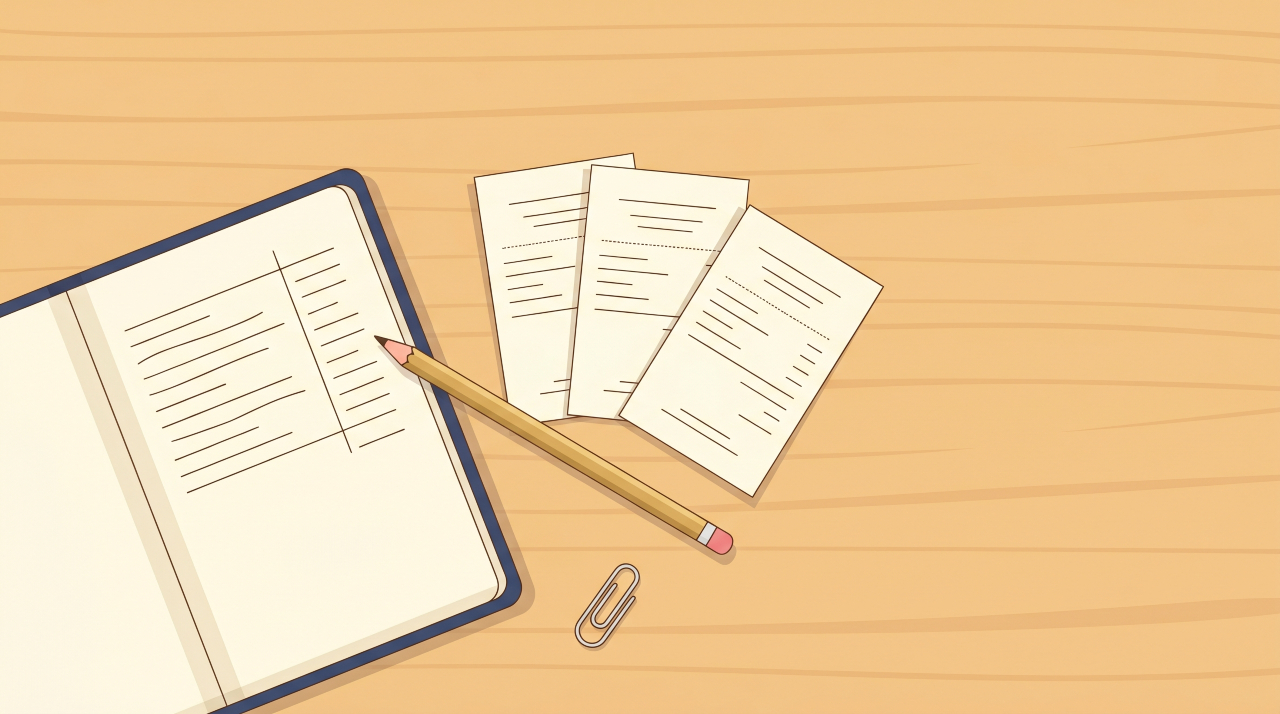
This is the section most people either miss entirely or get wrong. Allowable expenses reduce your taxable profit, which directly reduces your tax bill. You don’t claim them as a refund — you deduct them before working out what you owe.
For self-employed people, allowable expenses include:
- Office costs — stationery, printer ink, software subscriptions
- Travel costs — fuel, public transport, parking for business trips (not commuting)
- Clothing — only if it’s a uniform or protective gear, not regular clothes
- Staff costs — wages you pay to employees or subcontractors
- Marketing — advertising, website costs, business cards
- Professional fees — accountant fees, legal costs directly related to your business
- Phone and internet — the business proportion only
- Training — courses that update existing skills (not courses that qualify you for a new career)
The home office rule is often misunderstood. You can claim a flat rate of £6 per week without receipts (£312 per year). If your costs are higher, you calculate the business proportion of actual bills — but you must have a dedicated workspace, not just your kitchen table.
You cannot claim clothing purchases, personal phone bills, entertaining clients, or the cost of buying equipment you’ll use for years (though you can claim capital allowances on it instead).
A Year-Round Approach: What to Do and When
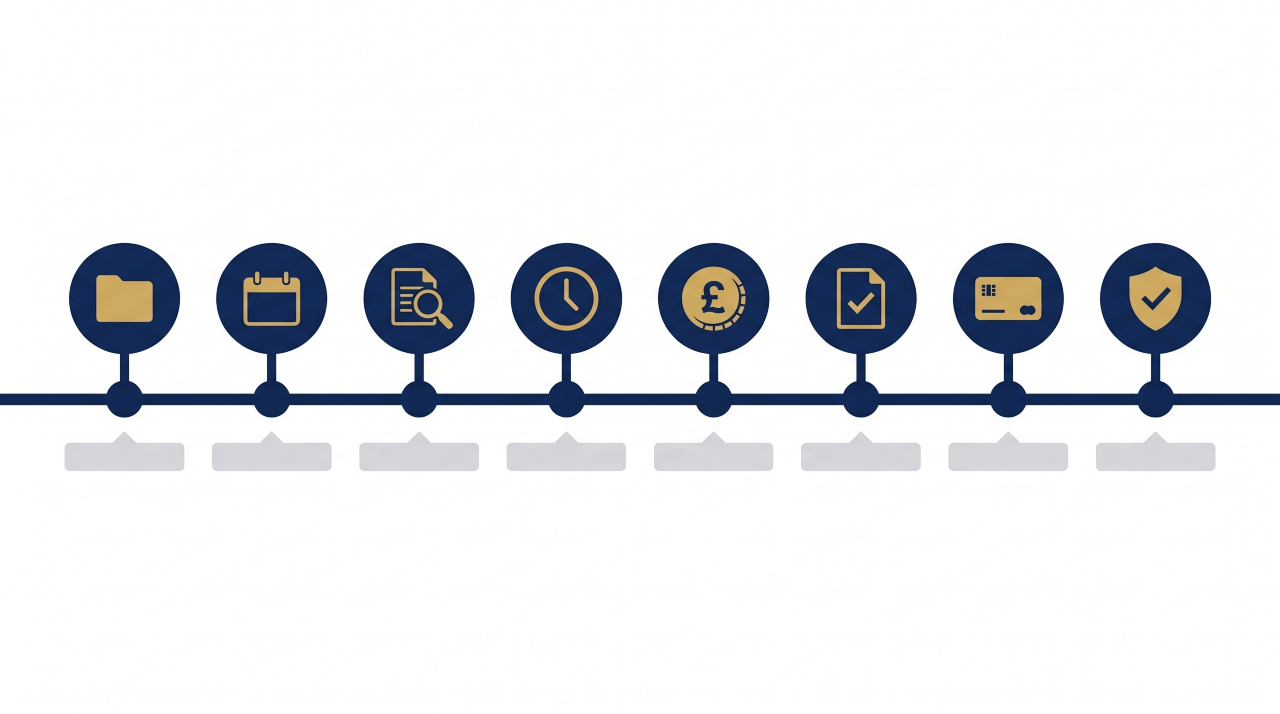
Most guides treat Self Assessment as a January problem. It’s not. It’s a year-round responsibility. Here’s a realistic timeline that keeps you in control:
April–June: When the new tax year starts, update your bookkeeping records. Create a folder — physical or digital — for receipts, invoices, and bank statements. Set up a separate business bank account if you haven’t already. This one habit alone saves hours in January.
July: Pay your second Payment on Account if required. Review your income so far and estimate whether you’ll earn significantly more or less than last year. You can apply to reduce your Payment on Account if your income has dropped.
August–October: Gather your records. Reconcile your income against bank statements. Check that your expenses have receipts to back them up. If you use accounting software, now is the time to run your reports.
October–November: File early. You don’t have to wait until January. Filing in autumn gives you exactly the same result — you just know your tax bill sooner and have more time to save for it.
December–January: Pay your tax bill before 31 January. Set up a budget payment plan with HMRC if cash flow is tight — you can pay weekly or monthly in advance using HMRC’s online system.
Payments on Account: The Surprise Many New Filers Get
If your Self Assessment tax bill exceeds £1,000 for the first time, HMRC assumes you’ll owe a similar amount next year. So they ask you to pay in advance — in two instalments called Payments on Account.
Each instalment is 50% of your previous year’s bill. The first is due 31 January (alongside your current year’s bill). The second is due 31 July.
Example: You file your return in January. If your balancing tax bill is £2,400. You pay that £2,400 plus a first Payment on Account of £1,200 — a total of £3,600 due on 31 January. Then another £1,200 in July 2025.
This surprises many first-time filers. Budget for it. If you earn less in the following year, you can apply to reduce your Payments on Account — but don’t just ignore them. Underpaying triggers interest.
You can manage your Payments on Account directly in your HMRC online account under the Self Assessment section.
What Happens After You Submit
Filing isn’t the end of the process. Once HMRC receives your return, a few things happen:
Your tax calculation is confirmed. You can view this in your Government Gateway account. If you believe it’s wrong, you can amend your return within 12 months of the filing deadline.
HMRC may open an enquiry. HMRC has the right to investigate any return within 12 months of submission. This doesn’t mean they will — but keep all your records for at least five years after the 31 January deadline as a minimum.
Your tax code may change. If you have employment income alongside self-employment income, HMRC may adjust your PAYE tax code to collect underpaid tax through your pay. Check your code each April.
Refunds are processed automatically. If you’ve overpaid, HMRC will contact you. You can request a bank transfer rather than a cheque by updating your details in your online account.
Common Mistakes That Cost People Money
Getting these wrong doesn’t just cause hassle — it costs you real money in penalties or overpaid tax:
Forgetting to declare all income. HMRC receives data from banks, employers, and platforms like eBay and Airbnb. If you earn from multiple sources, declare every one of them.
Claiming personal expenses as business. A portion of your mobile bill is claimable. Your entire contract isn’t. HMRC checks this.
Missing the registration deadline. If you became self-employed in the current tax year, you must register with HMRC by 5 October. Registering late is itself a reportable failure.
Confusing turnover and profit. Your tax is based on profit — income minus allowable expenses. Many first-timers enter their bank deposits as taxable income without deducting anything.
Not claiming pension contributions. If you pay into a personal pension, you get tax relief. Basic rate relief is added automatically by your pension provider. Higher rate relief — the extra 20% — only comes back through your Self Assessment return. Many people miss this every year.
FAQ
How do I do a self assessment tax return for the first time?
Register with HMRC by 5 October in the year after the one you’re filing for. You’ll receive a UTR number by post. Then log into your Government Gateway account, complete the SA100 form and any relevant supplementary pages, and submit online by 31 January. Pay any tax owed by the same date.
What is the deadline for the self assessment tax return in the UK?
The online filing and payment deadline is 31 January each year. This covers the tax year that ended the previous 5 April. The paper filing deadline is earlier — 31 October. If you’re filing for the first time, register by 5 October.
How much do you pay on self assessment?
You pay Income Tax on your taxable profit above the personal allowance (£12,570 in 2026/27). Self-employed people also pay Class 4 National Insurance at 6% on profits between £12,570 and £50,270, and 2% above that. The exact amount depends entirely on your income, expenses, and any reliefs you’re entitled to.
Can I do my own self assessment tax return?
Yes — most people do. The HMRC online system walks you through each section with help text. You don’t need an accountant unless your tax affairs are complex. However, if you have multiple income streams, foreign income, or significant capital gains, professional advice usually pays for itself.
What happens if I don’t do my self assessment?
HMRC issues an automatic £100 fine immediately after the deadline passes. Further penalties apply at three months (£10 per day, up to £900), six months (5% of tax owed or £300, whichever is greater), and twelve months (a further 5% or £300). Interest also accrues on unpaid tax from 1 February.
Do I need to do a self assessment if I only earn a small amount?
If your self-employment income exceeds £1,000 in a tax year, you must file a return — even if you don’t owe any tax. There is a Trading Allowance of £1,000, but you still need to declare it. If your only income is PAYE employment and you have no other taxable income, you generally don’t need to file.
Closing: Your Clear Next Step
The single most important thing you can take from this guide is this: Self Assessment is manageable when you work on it year-round rather than leaving it all to January.
Your next step is specific. Log into your Government Gateway account today — or create one if you don’t have it. Check whether you’re registered, whether your contact details are current, and whether any returns show as outstanding. That single action takes ten minutes and tells you exactly where you stand.
Don’t wait until December. The fines are real, the deadlines don’t move, and you now have everything you need to file with confidence.
For further guidance on related topics, read our guide on which structure affects your tax return.