There were 5.7 million private sector businesses in the UK at the start of 2025, according to the Department for Business and Trade’s official business population estimates. Around three quarters of them have no employees at all: one person, one idea and a registration with HMRC or Companies House.
Starting is the easy part. The ONS business demography figures show that only 38.4% of businesses born in 2019 were still trading five years later. This guide explains how to start a business in the UK in a way that improves those odds. It covers ten practical steps, the 2026/27 tax figures, real first-year costs and the mistakes that sink most new founders.
Quick Answer: How to Start a Business in the UK
To start a business in the UK, first test that people will pay for your idea, then choose a structure. Most first-time founders start as a sole trader, which is free. You register for Self Assessment with HMRC by 5 October after the tax year in which you earn more than £1,000. A limited company costs £100 to register online at Companies House, and every director must now verify their identity. Next, open a separate bank account and set aside 25% to 30% of profit for tax. Arrange the insurance your work needs and find a paying customer before spending on branding. A lean service business can launch for under £1,600 in its first year.
Key Takeaways
- Registering as a sole trader is free, while a limited company costs £100 online.
- The £1,000 trading allowance lets you test an idea before registering with HMRC.
- All new company directors must verify their identity with Companies House.
- VAT registration becomes compulsory above £90,000 of taxable turnover.
- Only 38.4% of UK businesses born in 2019 were still trading five years later.
Quick Answer: What Is the First Step?
The first step is not registration. It is proving that real customers will pay for what you plan to sell, at a price that covers your costs.
Once you have that evidence, the formal steps are quick. Most people can register, open a bank account and be ready to trade within a week.
🧮 Free Founder Tools
Plan your launch with real numbers
Budget your first-year costs, then see what you would take home as a sole trader or a limited company director at 2026/27 rates.
Start-Up Cost Estimator Sole Trader Tax Calculator Salary vs Dividends Calculator
Is Now a Good Time to Start a Business?
For many people, yes. Registration in the UK is fast and cheap, and you can start as a sole trader alongside a job. The £1,000 trading allowance also gives you room to test an idea before any tax paperwork.
The challenges are real too. Higher employer National Insurance, rising wages and cautious consumer spending squeeze margins, particularly in hospitality and retail. Service businesses with low set-up costs, such as consulting, trades and online services, tend to carry the least risk.
The best time to start is when you have evidence of demand and savings to cover several months of personal bills. You also need a plan for what happens if sales take longer than expected.
Step 1: Validate Your Idea Before You Spend
The most common reason new businesses fail is not poor marketing. It is building something customers do not value enough to pay for at a price that covers your costs.
Validation means collecting real commercial evidence before you commit money or time. Speak to 15 to 20 people who match your target customer, not friends or family. Describe the problem you solve, the result you deliver and a rough price, then note how many ask for more detail, offer a deposit or ask to start.
A second low-cost test is a simple landing page describing your offer, backed by a small paid ad budget of around £50. If nobody clicks or signs up, you have learned something valuable for very little.
UK detail: the trading allowance means you can earn up to £1,000 of gross self-employed income in a tax year without registering or paying tax on it. That gives you a legal window to sell a first few jobs and prove demand.
Step 2: Write a Simple Business Plan
You do not need a 40-page document. A business plan is your thinking on paper, and it helps you spot problems before they cost money.
Two pages is enough for most small businesses. Cover what you sell, who buys it, how you will reach them, what it costs to deliver, your prices and how many sales you need to break even.
Lenders and investors will want more detail later. Our guide on how to write a UK business plan sets out the sections they expect.
Step 3: Choose Your Business Structure
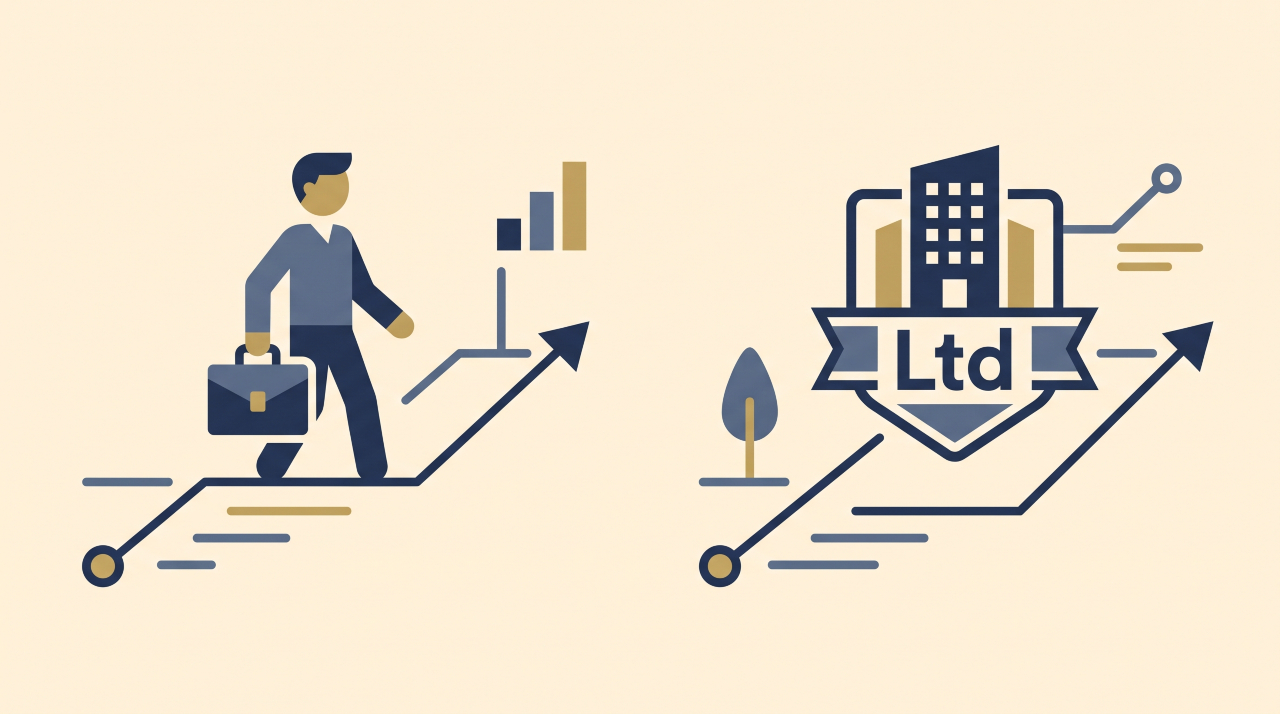
Your structure decides how you are taxed, how much personal risk you carry and how much admin you face. There are three main options for UK small businesses.
| Factor | Sole trader | Limited company | Partnership |
|---|---|---|---|
| Set-up cost | Free (HMRC registration) | £100 online at Companies House | Free (HMRC registration) |
| Personal liability | Unlimited | Limited to your investment | Unlimited and shared (limited for an LLP) |
| Main tax | Income Tax and Class 4 NI | Corporation Tax, then tax on salary and dividends | Income Tax and Class 4 NI for each partner |
| Annual admin | Self Assessment return | Accounts, Corporation Tax return and confirmation statement | Partnership return plus each partner’s return |
| Identity checks | Not required | Required for directors and PSCs | Required for LLP members |
| Usually suits | Freelancers and early-stage ideas | Higher profits, investors, regulated work | Two or more founders |
Sole Trader
You and the business are legally the same. It is the simplest and cheapest way to start. You file one Self Assessment return a year and pay Income Tax and Class 4 National Insurance on your profit.
The downside is unlimited liability. If the business owes money or is sued, your personal assets are at risk.
Limited Company
A company is a separate legal entity, so shareholders’ liability is limited to what they invest. It pays Corporation Tax on profits, and owners usually take a small salary plus dividends.
Companies have more paperwork, including annual accounts and a confirmation statement. Many founders switch from sole trader to company once profits pass around £30,000 a year, though the right point depends on your circumstances. Our comparison of limited company vs sole trader works through the numbers.
Partnership or LLP
Two or more people can run a business as an ordinary partnership, where each partner is personally liable for the business’s debts. A limited liability partnership (LLP) protects partners’ personal assets and is common in professional services. Always put a written partnership agreement in place.
Step 4: Register Your Business
Sole traders register for Self Assessment with HMRC. You must do this by 5 October after the end of the tax year in which your self-employed income passed £1,000. It is free and done online. Our step-by-step guide shows how to register as a sole trader.
Limited companies register with Companies House before trading. Online incorporation costs £100 (£124 on paper) and is usually completed within 24 hours. You need a company name, a UK registered office address, at least one director, shareholder details and a SIC code describing what the business does.
Identity verification: since 18 November 2025, verifying your identity for Companies House is a legal requirement for new directors and people with significant control. You can do it through GOV.UK One Login with photo ID, so allow time for it before you incorporate.
Trading names: you can trade under a name that differs from your own or your company’s name. Check it does not clash with an existing company or trade mark before you print anything.
Step 5: Open a Business Bank Account
Mixing personal and business money makes tax returns harder and weakens your records if there is ever a dispute or HMRC enquiry. Open a separate account before your first customer pays you.
A limited company needs an account in its own name, because it is a separate legal entity. Sole traders are not legally required to, but a separate account makes life far easier, and several digital banks offer free accounts. Compare options in our guide to the best business bank accounts.
Tax reserve habit: move 25% to 30% of every payment into a separate savings pot for tax. Self Assessment bills arrive each January, often with a payment on account for the following year, and having the money ready prevents a cash flow crisis.
Step 6: Sort Out Tax and National Insurance
The figures below apply to the 2026/27 tax year, from 6 April 2026 to 5 April 2027. Income Tax rates shown are for England, Wales and Northern Ireland, as Scotland sets its own.
| Tax or rule | 2026/27 figure | Applies to |
|---|---|---|
| Personal Allowance | £12,570 tax-free | Sole traders and directors |
| Income Tax | 20% to £50,270, 40% to £125,140, 45% above | Profit (sole traders) or salary |
| Class 4 National Insurance | 6% from £12,570 to £50,270, 2% above | Sole traders |
| Corporation Tax | 19% up to £50,000 profit, 25% above £250,000 | Limited companies |
| Dividend tax | 10.75% basic, 35.75% higher, 39.35% additional | Company owners |
| VAT registration | Compulsory over £90,000 taxable turnover | Any business |
| Making Tax Digital | Over £50,000 from April 2026, over £30,000 from April 2027 | Sole traders and landlords |
Sole traders file their Self Assessment return online by 31 January after the tax year ends. If your bill is over £1,000, you will usually also make payments on account for the next year. Estimate yours with our sole trader tax calculator.
Company owners decide how to pay themselves, and the split between salary and dividends makes a big difference. Our salary vs dividends calculator compares the options using the new 2026/27 dividend rates.
Making Tax Digital: sole traders with qualifying income over £50,000 must now keep digital records and send quarterly updates to HMRC. The threshold falls to £30,000 from April 2027 and £20,000 from April 2028, so choose compatible software early.
Step 7: Protect Your Business
Some protection is a legal requirement, and the rest is cheap compared with the cost of a claim.
- Employers’ liability insurance is compulsory as soon as you employ anyone, with at least £5 million of cover. Fines can reach £2,500 for every day you are not insured.
- Public liability insurance covers injury or damage to customers or the public, and is essential if you work on site or meet clients.
- Professional indemnity insurance covers claims that your advice or work caused a client a loss.
- Contracts should set out scope, price, payment terms and who owns any work you produce, before you start.
- Trade marks protect your brand name or logo. Registering a UK trade mark costs at least £205, depending on how many classes of goods or services you cover.
- Right to work checks are required before anyone starts working for you. Civil penalties can reach £60,000 per illegal worker.
Policies for sole traders and micro businesses typically cost £150 to £600 a year. Our guide to business insurance requirements explains which cover each type of business needs.
Step 8: Fund Your Start-Up
Many small businesses need little or no outside money. If yours does, these are the main routes:
- Savings and early revenue. Bootstrapping keeps you in control and forces careful spending.
- Start Up Loans. The government-backed scheme offers unsecured personal loans of up to £25,000 at a fixed 7.5% a year, repaid over one to five years, with 12 months of free mentoring.
- Grants. Local councils, growth hubs and Innovate UK offer grants that do not need repaying, but competition is high and decisions can be slow.
- Friends, family and angel investors. Useful for larger launches, but always agree terms in writing.
Compare the options in our guide to startup funding sources before you borrow.
Step 9: Build a Simple Online Presence
Most customers will look you up before they get in touch. You do not need a perfect website on day one, but you do need to look credible.
- A simple website with what you do, who it is for, proof of results and a clear way to contact you.
- A free Google Business Profile, which is essential if you serve a local area.
- One active social media profile where your customers already spend time.
Our guide on how to market a business online covers the next steps once you are set up.
Step 10: Win Your First Paying Customers
Registration and set-up are only finished when you have a customer. Every day spent perfecting a logo or website without one is a day with no revenue.
For most service businesses, the fastest route is your existing network. List 15 to 20 people who fit your ideal customer. Send each a short personal message explaining the problem you solve, and offer a brief call.
Set a daily outreach target for your first 30 days and stick to it until you have two paying customers. Their results become your first testimonials and case studies, which make every later sale easier. Ready to grow beyond a side project? See our guide on turning a side hustle into a full-time business.
How Much Does It Cost to Start a Business?
Costs depend heavily on what you sell. A service business run from home can start for a few hundred pounds, while retail, food and trade businesses usually need far more for stock, equipment or premises.
| Item | Sole trader | Limited company |
|---|---|---|
| Registration | Free | £100 (online) |
| Confirmation statement | Not needed | £50 a year |
| Business bank account | Free to £10 a month | Free to £10 a month |
| Insurance (public liability and professional indemnity) | £150 to £600 a year | £150 to £600 a year |
| Accounting software | £0 to £30 a month | £15 to £50 a month |
| Accountant (optional in year one) | £300 to £800 a year | £800 to £2,500 a year |
| Basic website | £0 to £300 | £0 to £300 |
| Realistic year-one total | About £150 to £1,600 | About £1,100 to £3,500 |
These are typical ranges, not quotes. Build your own budget item by item with our start-up cost estimator, and add a buffer for costs that run over.
Starting a UK Business From Abroad
You do not need to be a UK citizen or resident to own or run a UK limited company. A UK registered office address is required, which a formation agent or virtual office can provide, and every director must complete Companies House identity verification.
Owning a company is not the same as having the right to work in the UK. If you plan to live and work here, check your immigration status first. Cross-border tax can be complex, so an accountant with international experience is worth the fee.
Common Mistakes to Avoid
- Building the brand before finding customers. Logos, websites and business cards feel like progress but bring in no money. Win customers first.
- Mixing personal and business money. It makes tax returns harder and weakens your records.
- Underestimating the first tax bill. Your first January payment can include a full year’s tax plus a payment on account for the next year.
- Not keeping records from day one. HMRC expects records to be kept for at least five years after the 31 January filing deadline.
- Pricing too low. New founders often undercharge out of nerves. Research what established competitors charge and raise prices as testimonials come in.
- Running out of personal money. Most new businesses take months to pay a full wage, so plan how you will cover your own bills.
Frequently Asked Questions
How do I start a business with no money in the UK?
Start as a sole trader offering a service you can deliver with what you already own. Registration with HMRC is free, and the £1,000 trading allowance lets you test demand first. Reinvest early income into the business rather than borrowing.
Do I need to register my business before I start trading?
Sole traders can start trading straight away, but must register for Self Assessment by 5 October after the tax year in which self-employed income passes £1,000. A limited company must be registered with Companies House before it trades.
How much does it cost to register a business in the UK?
Registering as a sole trader is free. Incorporating a limited company costs £100 online or £124 on paper, plus £50 a year for the confirmation statement.
How long does it take to set up a business in the UK?
Online company registration is usually completed within 24 hours once identity verification is done. HMRC registration for Self Assessment is quick to submit, though your Unique Taxpayer Reference can take a couple of weeks to arrive by post.
Should I start as a sole trader or a limited company?
Most first-time founders start as a sole trader because it is free and simple. A limited company makes more sense once profits are consistently above around £30,000, if you need liability protection, or if you plan to raise investment.
Can I start a business while employed?
Yes, and many founders do. Check your employment contract for restrictions on outside work or competing with your employer. Your business profit is also added to your salary when your tax is calculated.
When do I need to register for VAT?
Registration is compulsory once VAT-taxable turnover passes £90,000 in any rolling 12-month period, or if you expect it to pass that figure in the next 30 days alone. Voluntary registration below the threshold is allowed.
Your Next Three Actions
Starting a business in the UK is quick and inexpensive on paper. Survival is the hard part, so focus on demand, cash and simple systems from day one.
- This week: speak to at least ten potential customers and ask for a commitment, such as a deposit or a booked start date.
- Before your first sale: choose your structure, register with HMRC or Companies House, and open a separate bank account.
- Within 30 days: budget your first year with the start-up cost estimator, arrange the insurance your work needs and set up your tax savings pot.
Some decisions carry major tax or legal consequences, such as incorporating, taking investment or hiring your first employee. For those, a short session with an accountant or solicitor is money well spent.