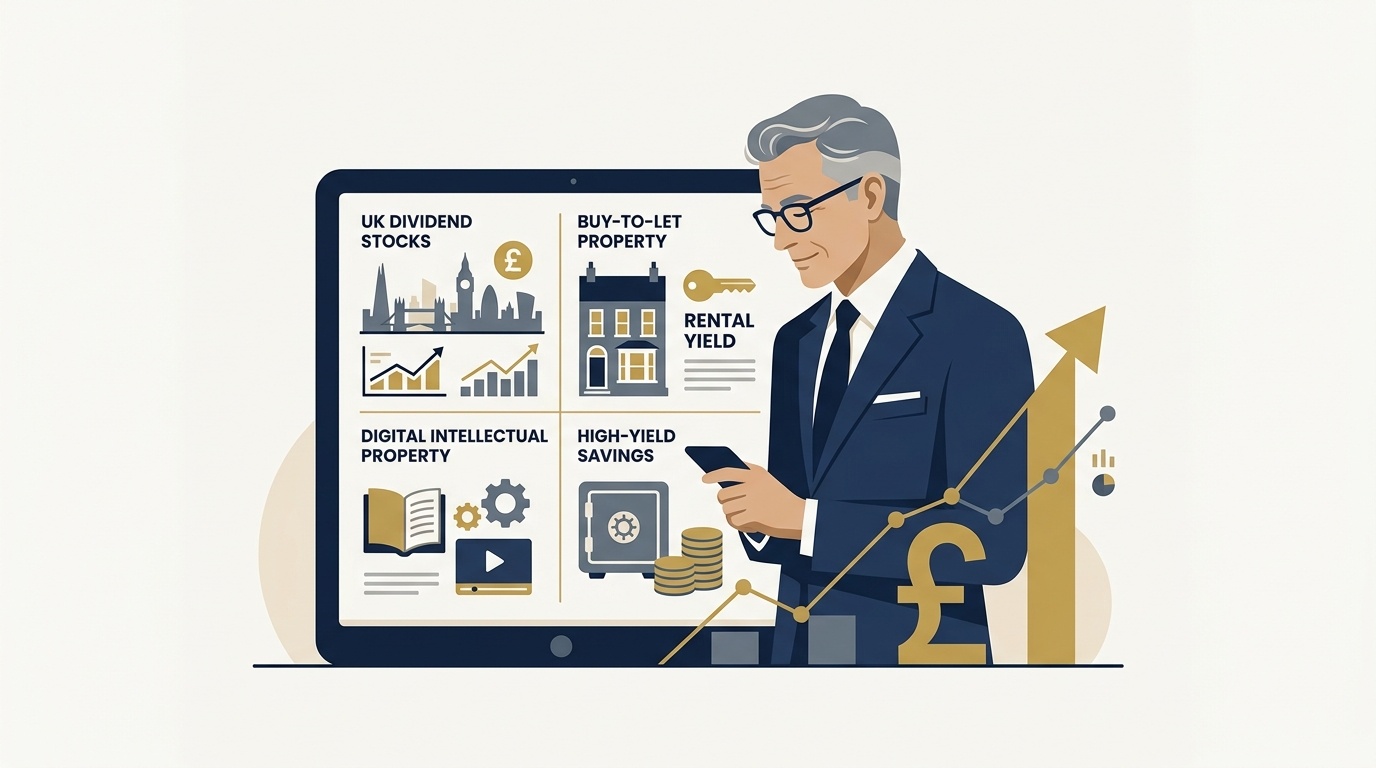
Most people think passive income means doing nothing and watching money roll in. Here’s the truth: according to the Office for National Statistics, nearly 40% of UK adults have no investments outside of their pension — meaning they’re leaving real money-building opportunities on the table every single month.
Passive income isn’t magic. But it is one of the smartest ways to take control of your finances, and you don’t need to be wealthy to get started.
In this guide, you’ll find the best passive income ideas UK residents can realistically pursue in 2025. More importantly, you’ll get honest numbers, UK-specific tax context, and a clear way to figure out which idea suits your situation — not just a long list to scroll through and forget.
What “Passive Income” Actually Means
Passive income is money you earn without trading your time for it directly. Unlike a salary, it keeps coming in whether you’re working, sleeping, or on holiday.
But here’s something most guides won’t tell you: almost every passive income stream requires effort upfront. The goal is to do the work once (or invest capital once) and then earn repeatedly from it.
There’s a useful distinction worth making here — semi-passive income and truly passive income. Semi-passive takes occasional effort to maintain (like a blog or rental property). Truly passive is almost entirely hands-off once set up (like dividend stocks or a savings account). Knowing which type you’re dealing with helps you set realistic expectations.
How to Choose the Right Strategy for You
Before jumping into ideas, ask yourself three questions:
- How much capital can you start with? (£0, under £1,000, or more?)
- How much time can you invest upfront? (Hours per week, or very little?)
- How quickly do you need to see returns? (Months, or are you playing a long game?)
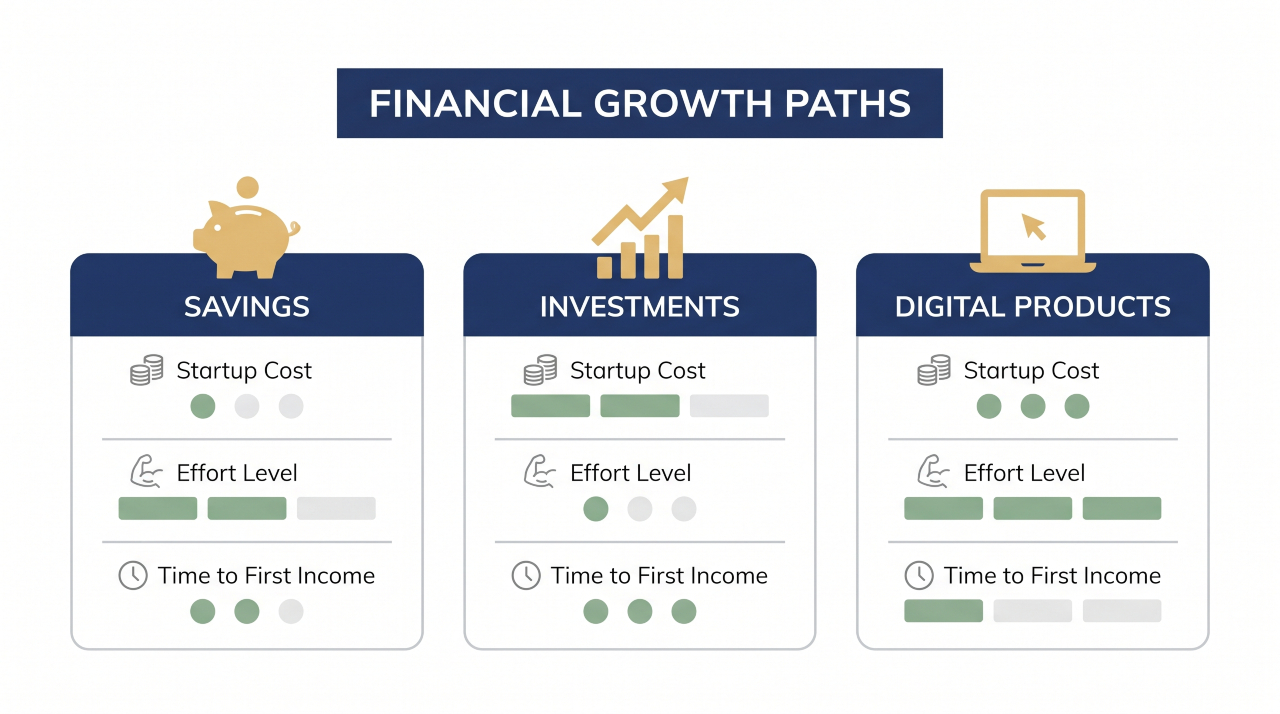
Your honest answers to these will point you toward the right strategy. Use the table below as your quick reference guide.
| Strategy | Startup Cost | Upfront Effort | Time to First Income |
|---|---|---|---|
| Savings account (high-interest) | £1+ | Very low | Immediate |
| Stocks & Shares ISA (dividends) | £25+ | Low–medium | 3–12 months |
| Buy-to-let property | £25,000+ | High | 1–3 months |
| Create a digital product | £0–£100 | High | 1–6 months |
| Affiliate marketing / blog | £0–£50 | Very high | 6–18 months |
| Peer-to-peer lending | £500+ | Low | 1–3 months |
| Print-on-demand | £0 | Medium | 1–6 months |
| Rent out assets (car, space, etc.) | £0 | Low | Days–weeks |
The Best Passive Income Ideas in the UK for 2025
1. High-Interest Savings Accounts
This is the simplest passive income idea available to anyone in the UK. You deposit money, the bank pays you interest — no skill required.
In 2025, easy-access savings accounts are offering rates of around 4–5% AER, which is the highest in over a decade. If you put £10,000 in a 4.5% account, you’d earn £450 in interest over a year — completely passively.
You can also shelter up to £20,000 per tax year inside a Cash ISA, meaning your interest is completely tax-free. If you’re just starting out with passive income, this is the logical first step.
The honest downside: Interest rates can drop, and inflation can erode real returns. This works best as a low-risk foundation alongside other strategies.
2. Stocks and Shares ISA (Dividend Investing)
If you want your money to genuinely grow over time, a Stocks and Shares ISA is one of the best tools available to UK investors. You can invest up to £20,000 per year and pay zero UK tax on gains or dividends.
Dividend investing means buying shares in companies that pay regular cash dividends to shareholders. The FTSE 100, for example, has historically offered a dividend yield of around 3.5–4% per year. On a £20,000 portfolio, that’s roughly £700–£800 annually in passive income — and your portfolio value may grow on top of that.
You can start with as little as £25 per month through platforms like Vanguard or Hargreaves Lansdown. The Financial Conduct Authority regulates these platforms, so your investments carry strong consumer protections.
The honest downside: Share prices go up and down. You might see your portfolio fall in value short term. This strategy works best over five years or more.
3. Buy-to-Let Property
Property is one of the most well-known passive income strategies in the UK — and for good reason. A buy-to-let property generates monthly rental income, and UK property values have historically risen over time.
Average rental yields in the UK sit at around 6–7% gross in many cities, according to Zoopla’s Rental Market Report. On a £200,000 property, that’s £12,000–£14,000 per year in gross rent before expenses.
The challenge is the upfront cost. You’ll typically need a 25% deposit for a buy-to-let mortgage, plus stamp duty, solicitor fees, and ongoing maintenance costs. It’s also worth noting that rental income is taxable above your personal allowance.
The honest downside: This is capital-intensive, time-consuming to set up, and comes with landlord responsibilities. It’s not truly passive — it’s semi-passive at best.
4. Digital Products
Creating a digital product — an eBook, a template, a spreadsheet, an online course — is one of the few passive income strategies that costs almost nothing to start. You create it once and sell it repeatedly.
Platforms like Gumroad, Etsy (for digital downloads), and Teachable let you list products and handle payments automatically. A well-designed Notion template or finance tracker can sell for £5–£15 and reach thousands of customers with zero ongoing effort.
The key is to create something genuinely useful. The most successful digital product sellers solve a specific problem for a specific audience.
The honest downside: Building an audience to sell to takes time. Your first product might earn very little until you have traffic or a following behind it.
5. Affiliate Marketing
Affiliate marketing means promoting someone else’s product and earning a commission every time someone buys through your link. You don’t hold stock, you don’t handle customer service — you just connect buyers with products.
Many UK bloggers and content creators earn consistent monthly income this way. Commission rates vary widely — software products often pay 20–40% recurring commission, while physical products might pay 3–8%.
You’ll need a platform to share your links: a blog, YouTube channel, social media account, or email newsletter. Building that platform takes real time, but once it’s established, it keeps generating income in the background.
Many of these strategies begin as active work before gradually becoming passive — if you’re not sure where to start, explore our guide to side hustles that can become passive income for ideas that grow with you.
The honest downside: This takes the most time of any strategy on this list to generate meaningful income. Expect 12–18 months of consistent effort before seeing reliable returns.
6. Peer-to-Peer Lending
Peer-to-peer (P2P) lending platforms let you lend money directly to individuals or businesses and earn interest on repayments. UK platforms like Loanpad and Assetz Exchange have offered returns of 5–8% annually.
You spread your money across multiple borrowers to reduce risk — similar to how a bank operates. Some platforms let you start with as little as £100.
The honest downside: P2P lending isn’t covered by the FSCS (Financial Services Compensation Scheme) in the same way a bank is. If borrowers default, you could lose money. Research each platform carefully before committing.
7. Rent Out What You Already Own

You might already own assets that others will pay to use. Your spare room, parking space, driveway, car, or even garden can all generate passive income with minimal effort.
- Spare room: Under the Rent a Room Scheme, you can earn up to £7,500 per year tax-free by letting a furnished room in your home.
- Driveway or parking: Platforms like JustPark let you rent your driveway, often earning £50–£200 per month depending on location.
- Car: Services like Turo and HiyaCar let you rent your vehicle when you’re not using it.
This is genuinely low-effort passive income that requires no upfront investment.
The honest downside: Renting out your home or car does carry some risk — wear and damage can occur. Make sure you check your insurance covers commercial use.
8. Print-on-Demand
Print-on-demand (POD) lets you design products — T-shirts, mugs, phone cases — that are printed and shipped by a third party only when someone orders. You set up a shop, upload designs, and the platform handles everything else.
Sites like Redbubble, Merch by Amazon, and Printful integrate with Etsy or Shopify. Once your designs are live, they can sell indefinitely without you doing anything additional.
The honest downside: Competition is high, and without marketing or a strong niche, your products can get buried. The income per sale is often small — this works best as a volume game.
A Smart Combination Strategy
One angle most passive income guides miss entirely is combining strategies. The most financially resilient people don’t rely on one income stream — they build multiple small ones that reinforce each other.
A practical combination for someone starting with moderate savings might look like this: put three months’ expenses in a high-interest Cash ISA (security), invest £200/month into a Stocks and Shares ISA (long-term growth), and create one digital product in your area of expertise (low-cost, scalable income).
Three streams, three different risk levels, and each one working while the others grow. You don’t have to do everything at once — starting with just one is absolutely the right move.
Passive Income and UK Tax: What You Need to Know
This is something competitors almost always skip — and it’s genuinely important.
Different passive income streams are taxed differently in the UK:
- Savings interest: Covered by the Personal Savings Allowance (£500 for higher-rate taxpayers, £1,000 for basic-rate taxpayers in 2026/27). Use a Cash ISA to earn tax-free.
- Dividend income: You get a £500 dividend allowance per year (2026/27 tax year). Above that, you pay 8.75% (basic rate) or 33.75% (higher rate).
- Rental income: Taxed as income. Allowable expenses (mortgage interest, repairs, letting agent fees) can be deducted.
- Digital products / affiliate income: Treated as self-employment income. You’ll need to register for Self Assessment if you earn over £1,000 per year from it.
If you’re earning from multiple streams, keeping clear records is essential. HMRC’s guidance on this is straightforward — you can find it on GOV.UK.
Frequently Asked Questions
What is the easiest passive income in the UK?
A high-interest savings account is the easiest starting point. You simply deposit money and earn interest — no skills or active management required. For 2025, easy-access accounts are offering around 4–5% AER, making this a genuinely worthwhile option.
Is passive income taxed in the UK?
Yes, most passive income is taxable in the UK, but there are useful allowances. You get a £1,000 trading allowance, a £500 dividend allowance, and the Rent a Room Scheme allows up to £7,500 per year tax-free. Using ISAs is the most powerful way to shelter investment income from tax entirely.
How much can I earn passively without paying tax?
It depends on the income type. Between the personal allowance (£12,570), the Personal Savings Allowance, and your ISA allowance, many people with modest passive income pay little or no tax on it — especially if they structure their earnings thoughtfully.
What is the best passive income for beginners?
Start with what costs the least and requires the least specialist knowledge. A high-interest savings account or Cash ISA is the safest first step. Once you’re comfortable, move into a Stocks and Shares ISA or consider creating a simple digital product in an area you already know well.
Can you live off passive income in the UK?
Yes, but it typically requires significant capital or multiple streams built over years. To replace a £30,000 salary with a 4% return, for example, you’d need around £750,000 invested. Most people use passive income to supplement their salary rather than replace it — and that’s a perfectly solid goal.
How do I start passive income with no money?
Focus on effort-based strategies: create a digital product, start a blog with affiliate links, or list your spare room or driveway for rent. These require time rather than capital. As your earnings grow, you can reinvest them into capital-based strategies like stocks.
Your Next Step Starts Here
The most important takeaway from this guide is simple: pick one strategy that fits your current situation and start this week.
Don’t wait until you have more money, more time, or a perfect plan. If you have any savings at all, open a Cash ISA today and put your money somewhere it’s actually working for you. If you have time but limited capital, spend two hours this week outlining a digital product you could create.
Passive income builds slowly and then quickly. The people earning meaningful sums from it didn’t start with an advantage — they started early.
As your passive income streams mature and you see consistent earnings, you might decide to scale further. If that time comes, our guide to turning passive income into a business walks you through the next level.