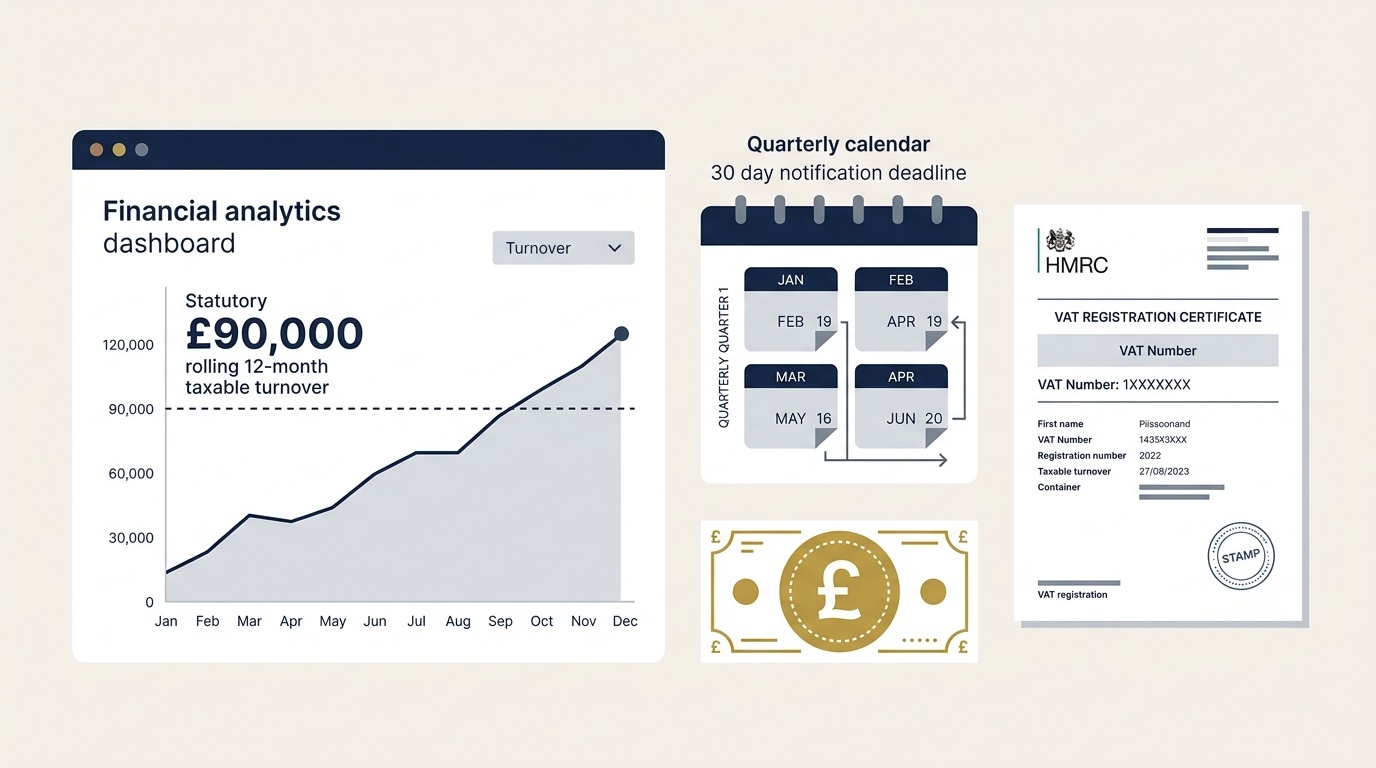
At £90,000, the UK has a higher VAT registration threshold than any EU country and the joint highest in the OECD, according to Exchequer Secretary James Murray, as cited in a House of Commons Library briefing on VAT registration. That single figure keeps the majority of UK businesses out of the VAT system altogether. It also means thousands of growing businesses cross into it every year without quite noticing until the deadline has already passed.
This guide explains exactly when VAT registration becomes mandatory in the UK, how the rolling 12-month test actually works (not the calendar or tax year most people assume), and what to do if you have already gone over without realising. By the end, you will know whether you need to register now, register voluntarily, or simply keep a monthly check running in the background.
Most business owners glance at the £90,000 number and stop reading there. The part that catches people out is less well known: a second, faster test based on the next 30 days alone, and a genuine exception route if you have only gone over the threshold temporarily. This guide covers both in detail below.
Key Takeaways
- The VAT registration threshold is £90,000 of taxable turnover in any rolling 12-month period, not a fixed tax year, and it has been unchanged since 1 April 2024.
- You must also register if you expect to exceed £90,000 in the next 30 days alone, even if your rolling 12-month total is still well under it.
- Zero-rated and reduced-rated sales count toward the threshold. Only genuinely VAT-exempt sales do not.
You have 30 days from the end of the month you crossed the threshold to notify HMRC, and registering late carries a penalty of 5% to 15% of the VAT you owe, with a £50 minimum. - If a breach is genuinely temporary, you can apply to HMRC for an exception from registration rather than registering anyway.
What You’ll Need
- Your business’s monthly sales records for the past 12 months, split by VAT status (standard, reduced, zero-rated, exempt)
- A Government Gateway account (or the ability to set one up in a few minutes on gov.uk)
- Your Unique Taxpayer Reference (UTR) or National Insurance number if you’re a sole trader
Business bank account details - An estimate of upcoming contracts or orders, for the forward-look test in Step 3
Step 1: Work Out What Actually Counts as Taxable Turnover
Taxable turnover is the total value of everything you sell that is not specifically VAT-exempt. That includes standard-rated sales, reduced-rated sales, and zero-rated sales such as most children’s clothing or books, which carry a 0% VAT rate but still count toward the threshold.
This step matters because it’s the most common source of miscalculation. A business that sells mostly zero-rated goods can easily assume none of that turnover counts, then discover during an HMRC review that it should have registered months earlier.
The common mistake here is treating “0% VAT” as the same thing as “VAT-exempt.” They are not. Only supplies that are genuinely exempt, such as insurance, finance, and most education and healthcare services, sit outside the calculation entirely.
Done correctly, you should be able to list your last 12 months of sales with a clear VAT category against each one, and a running total of everything except the truly exempt entries.
Step 2: Run the Rolling 12-Month Test at the End of Every Month
At the end of each calendar month, add up your taxable turnover for the previous 12 months. If that rolling total goes over £90,000, you must notify HMRC within 30 days of the end of the month in which you crossed it.
This is where most guides oversimplify the rules. HMRC does not assess this against your accounting year or the tax year. A business with a March year-end still has to check its rolling total every single month, not just once a year at the accounts stage.
For example, if your taxable turnover for the 12 months to 31 August 2026 comes to £91,200, you must notify HMRC by 30 September 2026. Your effective registration date would then be 1 October 2026, and VAT applies to your sales from that date onward.
The common mistake is checking turnover only once a year, at the same time as filing accounts. By then a business can be several months into a breach it didn’t know it had, which is exactly the situation that leads to the late registration penalties Step 5 covers.
Done correctly, you’ll have a simple spreadsheet or piece of accounting software that recalculates your trailing 12-month total automatically every month, flagging you well before you get close to £90,000.
Step 3: Check the 30-Day Forward-Look Test Separately
Even if your rolling 12-month total is nowhere near £90,000, you must register immediately if you have reasonable grounds to believe your taxable turnover will exceed £90,000 in the next 30 days alone. This typically happens when a business signs one large contract or lands a single high-value project.
This test exists because the rolling 12-month check would otherwise let a business avoid registration for months after a genuinely large jump in trading. HMRC treats the forward-look test as a separate, independent trigger from the backward-looking one in Step 2.
If this applies to you, your registration takes effect from the start of that 30-day period, not from the date you notify HMRC. That’s a meaningfully earlier date than most business owners expect, so it’s worth flagging to whoever handles your bookkeeping the moment you sign a large contract.
Done correctly, you’ll run this check any time a single deal, contract, or order is large enough on its own to push you past £90,000, independently of your rolling total.
Step 4: Decide Whether Voluntary Registration Makes Sense Before You’re Forced Into It
You can register for VAT before you reach £90,000 if it suits your business. This is common among businesses that sell mainly to other VAT-registered companies, since those customers can usually reclaim the VAT those businesses charge them anyway.
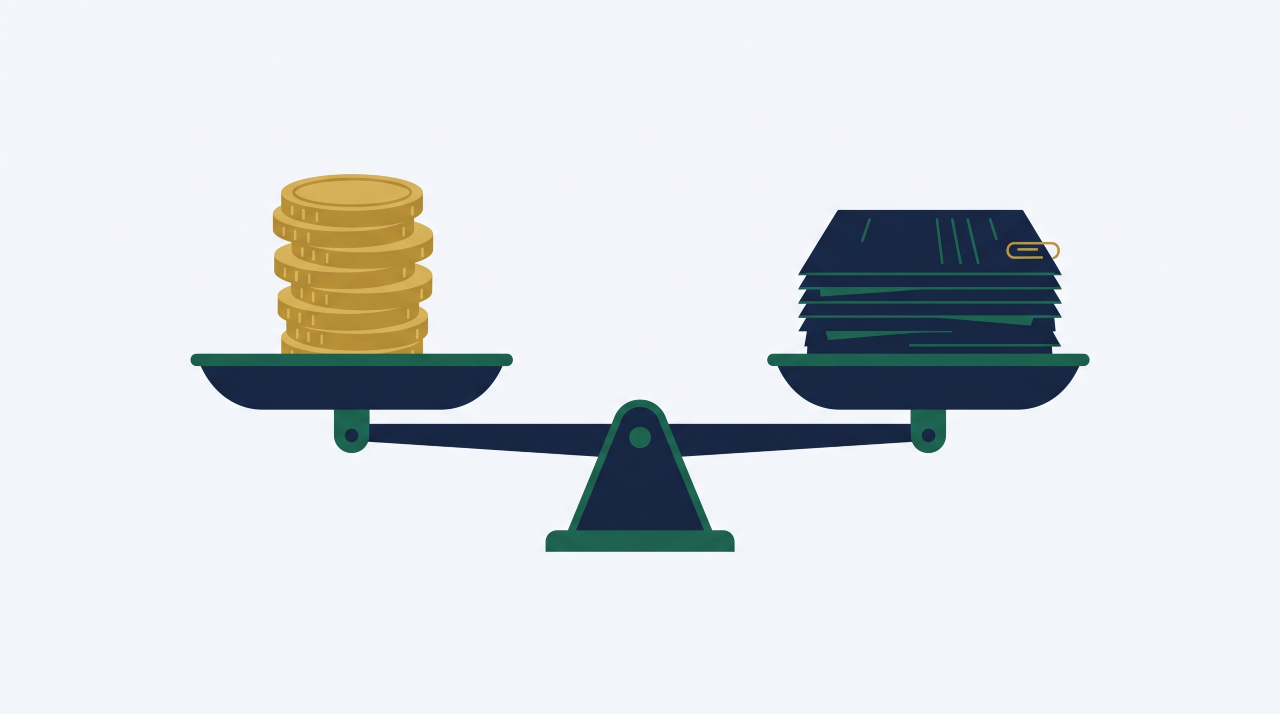
Voluntary registration lets you reclaim VAT on business purchases and can make a business look more established to bigger clients. The trade-off is the extra admin: quarterly returns, digital record-keeping, and VAT-inclusive pricing decisions you need to work through carefully if your customers are mostly the public rather than other businesses.
If you deal directly with consumers who can’t reclaim VAT, registering early effectively adds 20% to your prices or eats into your margin, so it deserves a proper cash flow calculation rather than a quick decision. Our cash flow tips for small business owners cover how to model that impact before committing either way.
Done correctly, you’ll have compared your likely VAT reclaim against the admin cost and pricing impact, and made a deliberate choice rather than defaulting into registration because a competitor did.
Step 5: Notify HMRC Within 30 Days of Crossing the Threshold
Once you trigger either test in Step 2 or Step 3, you have 30 days to notify HMRC. Missing this deadline means registering late, which carries a specific penalty structure under HMRC’s failure to notify rules (VAT Notice 700/41).
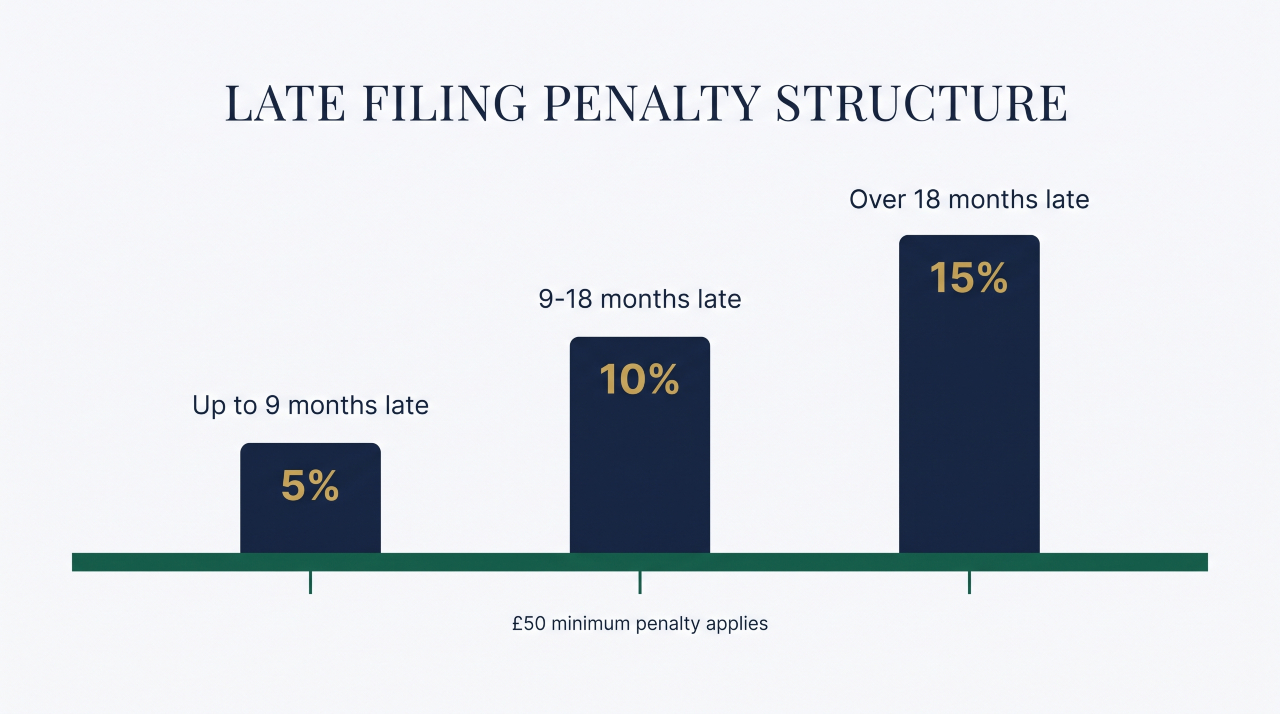
HMRC calculates the penalty as a percentage of the net VAT you owed for the period you should have registered. Registering not more than nine months late carries a 5% penalty, nine to eighteen months late rises to 10%, and beyond eighteen months late the penalty reaches 15%, with a minimum penalty of £50 regardless of how small the amount you owe is.
The common mistake at this stage is waiting until the accountant prepares year-end figures to even notice the breach happened. By that point, you often can’t avoid several months of backdated VAT plus a penalty on top of it.
Done correctly, you’ll notify HMRC the same month you identify a breach in Step 2 or Step 3, well inside the 30-day window, with supporting turnover figures ready if HMRC asks for them.
Step 6: Register Online and Wait for Your VAT Number
You register through your Government Gateway account on gov.uk, and it’s free. HMRC does not charge a registration fee, whatever some third-party services suggest when they quote a “VAT registration cost.”
You’ll need your UTR or National Insurance number, business bank details, and turnover figures to hand. Once you submit it, HMRC typically issues your VAT registration certificate (form VAT4) and VAT number within 30 working days, though it can take longer during busy periods.
The common mistake here is charging VAT on invoices before the VAT number actually arrives. If you need to start charging VAT from your effective registration date but don’t have the number yet, you can add the VAT amount to your price without showing a separate VAT line, then reissue a proper VAT invoice once the number comes through.
Done correctly, HMRC will have confirmed your VAT4 certificate and VAT number, and you’ll have a clear record of your effective registration date for your first return.
Step 7: Start Charging VAT and Filing Under Making Tax Digital
From your effective registration date, you must charge VAT on all applicable sales and keep VAT-compliant records. Every VAT-registered business, whether it registered voluntarily or because it crossed the threshold, must keep digital records and submit returns using Making Tax Digital (MTD) compatible software from its very first return.
Choosing the right VAT scheme at this stage (standard accounting, the flat rate scheme, or cash accounting) affects how much admin you carry and, in some cases, how much VAT you actually pay. It’s worth getting this decision right the first time, since switching schemes later adds complexity on top of an already new process. If you’re setting this up alongside wider financial planning, our guide to financial modelling for startups walks through building VAT into your cash flow projections properly.
Done correctly, you’ll file your first VAT return on time through MTD-compatible software, and every invoice from your effective registration date will correctly separate VAT from net sales.
Common Mistakes to Avoid
Checking turnover annually instead of monthly. You must assess the rolling 12-month rule every month, not once a year at accounts time. Set a recurring monthly reminder, even if it’s a five-minute spreadsheet check.
Assuming zero-rated sales don’t count. They do. Only genuinely exempt supplies sit outside the £90,000 calculation, and confusing the two categories is the single most common reason businesses under-calculate their turnover.
Missing the forward-looking test after signing a big contract. A single large deal can trigger mandatory registration on its own, independently of your rolling total, and HMRC backdates the registration date to the start of that 30-day window.
Assuming multiple trades each get their own threshold. For sole traders, the individual is the taxable entity. All business activities combined count toward one £90,000 threshold, not a separate allowance per trade.
Waiting for the accountant to catch it at year-end. By the time your accountant prepares annual accounts, a breach could be many months old, turning a manageable notification into a backdated VAT bill plus a penalty.
Frequently Asked Questions
What is the VAT registration threshold in the UK for 2026?
The threshold is £90,000 of taxable turnover in any rolling 12-month period. It has been unchanged since 1 April 2024 and continues to apply for the 2026/27 tax year.
Do zero-rated sales count toward the VAT threshold?
Yes. Zero-rated supplies, such as most children’s clothing and books, are still taxable supplies even though they carry a 0% VAT rate, so they count toward your £90,000 total. Only genuinely VAT-exempt sales, like insurance and certain finance and education services, fall outside the total.
What happens if I register for VAT late?
You’ll face a penalty based on the net VAT you owed for the period, ranging from 5% for registering up to nine months late, to 10% for nine to eighteen months, and 15% beyond eighteen months, with a minimum penalty of £50.
Can I register for VAT voluntarily before I reach the threshold?
Yes. Voluntary registration is common among businesses that sell mainly to other VAT-registered companies, since it lets you reclaim VAT on purchases. It adds quarterly filing and digital record-keeping requirements, so weigh the admin cost against the benefit for your specific business.
How long does VAT registration take once I apply?
HMRC typically issues your VAT registration certificate (VAT4) and VAT number within 30 working days of a completed online application, though busier periods can extend this.
What if I only go over the threshold temporarily?
You may be able to apply to HMRC for an exception from registration if you can demonstrate that your taxable turnover will fall back below the £88,000 deregistration threshold within the following 12 months. You must request this and get HMRC’s approval, rather than assume it applies.
Do sole traders with two separate businesses get two VAT thresholds?
No. The individual, not the business name or trade, is the taxable entity for a sole trader. The single £90,000 threshold combines all turnover across every trade you personally run.
What to Do Next
Run the rolling 12-month calculation on your actual sales figures this week, not at your next accounts meeting. If you’re within £10,000 to £15,000 of the £90,000 threshold, set a recurring monthly check rather than an annual one, since that gap can close faster than most business owners expect.
If your figures are close to the line or you’ve already identified a possible breach, speak to an accountant before you notify HMRC. VAT registration interacts with pricing, contracts, and cash flow in ways that are easier to get right before you register than to unwind afterward, and this guide covers the general rules rather than advice for your specific circumstances.