Here is a fact that might surprise you. Professionals who hold industry recognized certifications earn up to 20% more than those without them, according to data from CompTIA and LinkedIn Learning. That is a significant income difference, and many people assume getting certified costs thousands of dollars. The truth is that many solid business certifications cost less than a few hundred dollars, and some are completely free.
This article is for anyone who wants to grow their career, start a business, get a promotion, or switch industries without spending a fortune. You do not need a four year degree or a massive budget to add credentials that employers and clients respect. You just need the right information and a clear plan.
We are going to walk through the best affordable business certifications available right now. We will look at what each one costs, what it teaches you, who it is best for, and why it matters in the job market today. By the end of this article, you will know exactly which certification matches your goals and your budget.
Why Business Certifications Are Worth the Money
Business certifications are not just pieces of paper. They prove that you have specific skills and that you took time to develop them. Employers know this. Clients know this. And when you walk into a salary negotiation or a sales meeting, having a recognized credential gives you instant credibility.
Many people skip certifications because they think the cost is too high or the process is too difficult. But most affordable certifications are designed to be completed in weeks or months, not years. You can study at your own pace, often online, and fit learning around your current job or family schedule.
The return on investment for business certifications is often very strong. If a certification costs $300 and helps you land a job that pays $5,000 more per year, you recouped that investment in less than a month. That math is simple and powerful.
What Makes a Business Certification “Affordable”
Before we list specific certifications, it helps to define what affordable means in this context. For this article, we are focusing on certifications that cost under $500 in total. This includes exam fees, study materials, and any prep courses. Some options on this list cost far less than that.
Affordable does not mean low quality. Many of the certifications listed here are offered by respected organizations like Google, HubSpot, the Project Management Institute, and the American Management Association. These names carry weight in the professional world.
It is also worth noting that many platforms offer financial aid, free trials, or employer reimbursement programs. So even if a certification lists a certain price, you may be able to bring that cost down even further. Always check the provider website before paying full price.
Google Career Certificates: High Value at a Low Cost
Google offers a series of professional certificates through Coursera that cover project management, data analytics, digital marketing, IT support, and more. These programs cost about $49 per month through Coursera, and most people complete them in three to six months. That puts the total cost somewhere between $150 and $300.
Google designed these certificates for people who are new to a field or switching careers. You do not need prior experience. The coursework is practical, meaning you learn by doing real tasks rather than just reading theory. Google also connects graduates with job opportunities through its employer network.
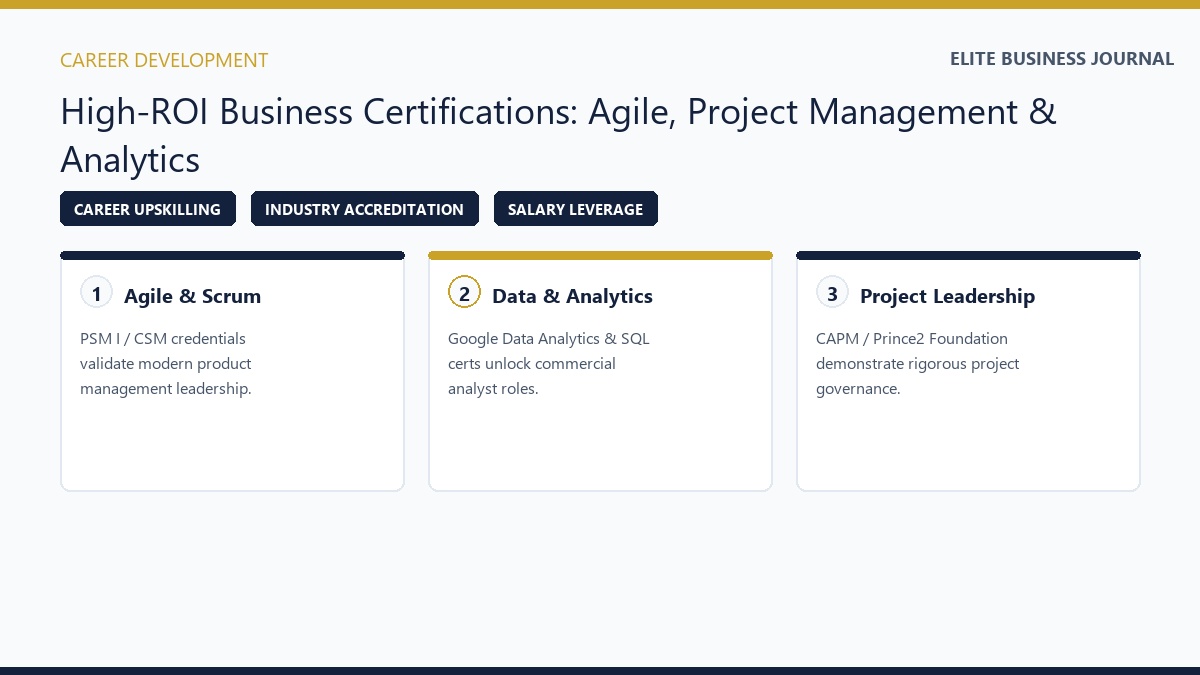
The Google Project Management Certificate is one of the most popular options. It covers planning, budgeting, risk management, and team leadership. These skills apply to jobs across almost every industry, making this certification very versatile.
The Google Digital Marketing and E-commerce Certificate is another strong pick. It teaches search engine optimization, paid advertising, social media strategy, email marketing, and data analysis. For small business owners and marketing professionals, this credential is especially useful.
HubSpot Academy: Free Certifications That Employers Recognize
HubSpot Academy offers over 30 free certifications in marketing, sales, and customer service. Yes, completely free. You create a free account, complete the course video lessons, pass an exam, and receive a digital certificate you can share on LinkedIn or add to your resume.
The HubSpot Inbound Marketing Certification is one of the most respected free credentials in the digital marketing world. It teaches you how to attract customers through content, search engine optimization, and social media rather than traditional advertising. This approach is what most modern businesses use.
The HubSpot Sales Software Certification and HubSpot CRM certifications are great for anyone in sales or customer management. These programs teach you how to use one of the most popular customer relationship management platforms in business today. Knowing this software well can make you a much stronger job candidate.
HubSpot certifications do expire and need renewal, typically every year. This keeps the content current and ensures your knowledge stays up to date. The renewal process is usually straightforward and fast.
Coursera and edX Certifications: University Quality Without the Tuition
Coursera and edX are online learning platforms that partner with real universities and companies to offer professional certificates and courses. Many of these programs cost between $50 and $400. Some are free to audit, meaning you can watch the lessons without paying, though you need to pay if you want the actual certificate.
The IBM Business Analyst Professional Certificate on Coursera is a strong example. It costs around $300 total if you complete it in a few months. IBM is a globally recognized brand, and having their name on a credential adds real value. This certificate covers data analysis, business process modeling, and project planning.
The Meta Social Media Marketing Professional Certificate is another popular and affordable option on Coursera. Meta, which owns Facebook and Instagram, designed this program to teach practical social media skills. It covers strategy, content creation, advertising, and analytics. Many small business owners and marketing assistants find it extremely useful.
CAPM Certification: An Entry Level Project Management Credential
The Certified Associate in Project Management, or CAPM, is offered by the Project Management Institute. It is the entry level version of the more famous PMP certification. The exam fee is $225 for PMI members and $300 for non-members. A PMI membership costs about $139 per year, so joining first usually saves you money.
The CAPM is a great choice for anyone who wants to move into project management without years of experience. It requires 23 hours of project management education and a high school diploma. You can meet the education requirement through free and low cost courses on YouTube, Coursera, or LinkedIn Learning.
Project managers are in high demand across many industries including construction, healthcare, technology, and finance. Having the CAPM certification signals to employers that you are serious about the field and that you understand the standard processes used by professionals around the world.
Study materials for the CAPM are widely available. The PMI provides a free downloadable study guide called the PMBOK Guide for members. There are also many affordable prep courses and practice exams available online.
Lean Six Sigma White Belt and Yellow Belt: Process Improvement on a Budget
Lean Six Sigma is a methodology used to improve efficiency and reduce waste in business processes. It is popular in manufacturing, healthcare, logistics, and service industries. The certification levels go from White Belt all the way up to Black Belt, with costs rising as you advance.
The White Belt and Yellow Belt levels are the most affordable options. Many organizations offer free White Belt training online. Yellow Belt certification programs typically cost between $100 and $300 depending on the provider. The Council for Six Sigma Certification offers one of the more affordable and recognized options.
These certifications teach you how to identify problems, analyze data, and implement process improvements. Even if you never pursue the higher levels, a Yellow Belt credential shows employers that you think analytically and care about efficiency. These are qualities that managers look for in candidates across many departments.
For business owners, Lean Six Sigma knowledge can directly improve operations. Reducing waste and streamlining processes often leads to real cost savings. Learning these skills for a few hundred dollars could end up saving your business thousands.
Microsoft Office Specialist: A Simple Credential With Real Demand
The Microsoft Office Specialist, or MOS, certification proves that you know how to use Microsoft Excel, Word, PowerPoint, or other Office tools at a professional level. Exam fees are typically around $100 per exam, and you can take exams for individual programs or pursue a higher level certification by passing multiple exams.
This might seem like a basic certification, but many employers specifically look for it. Advanced Excel skills in particular are extremely valuable. Financial analysts, administrative assistants, project coordinators, and data professionals all benefit from proven Excel proficiency.
Preparation for MOS exams is straightforward. Microsoft offers free learning paths on its website. There are also many YouTube tutorials and low cost practice tests available. Most people can prepare for a single MOS exam in four to eight weeks of regular study.
LinkedIn Learning Certifications: Affordable and Career Focused
LinkedIn Learning offers a large library of courses across business, technology, and creative fields. A LinkedIn Premium subscription costs about $40 per month and gives you access to thousands of courses. Many courses include a certificate of completion that automatically appears on your LinkedIn profile.
While LinkedIn Learning certificates are not formal industry credentials, they carry weight because employers actively use LinkedIn to screen candidates. Showing a pattern of continuous learning on your profile signals that you are proactive and motivated. That matters to hiring managers.
Some of the most popular LinkedIn Learning paths include project management, data analysis, leadership, human resources, and digital marketing. These learning paths bundle together related courses and guide you through a structured program rather than asking you to pick individual lessons on your own.
Certified Bookkeeper (CB): A Smart Choice for Finance Minded Professionals
The American Institute of Professional Bookkeepers offers the Certified Bookkeeper designation. Exam fees are around $100 per part, and the full certification has four parts. Total costs including study materials usually land between $400 and $500. This puts it right at the upper edge of our affordable range, but the earning potential makes it worthwhile.
Bookkeepers are needed in virtually every small business and organization. Certified bookkeepers typically earn more than non-certified ones, and many work as independent contractors or freelancers. This means the CB credential can open doors to self-employment, not just traditional jobs.
The certification tests knowledge of accounting principles, payroll, depreciation, and financial statements. You need two years of bookkeeping experience to qualify, which makes this a better fit for people already working in the field rather than absolute beginners.
QuickBooks ProAdvisor Certification: Free and Highly Practical
If you work in accounting, bookkeeping, or small business finance, the QuickBooks ProAdvisor Certification is worth serious attention. Intuit, the company behind QuickBooks, offers this certification completely free. You study through their training platform, take a free exam, and earn a certification that is recognized across the small business community.
QuickBooks is the most widely used accounting software for small businesses in the United States. Being certified means you know how to set up accounts, process payroll, manage invoices, and generate financial reports. These are tasks that nearly every small business owner needs help with.
Freelancers and consultants who earn the ProAdvisor certification can list themselves in the QuickBooks ProAdvisor directory. This is a free directory that small business owners use to find certified help. It can be a direct source of paying clients without any additional marketing effort.
Salesforce Associate Certification: Get Into a High Demand Field for Under $200
Salesforce is the world’s leading customer relationship management platform, and companies everywhere are looking for people who know how to use it. The Salesforce Associate Certification was introduced as an entry level credential designed for people with little to no Salesforce experience.
The exam costs $75 for the first attempt. If you do not pass, the retake fee is $75 as well. Salesforce provides free study resources through its Trailhead learning platform, which makes this one of the most affordable high-value certifications available right now.
Earning this certification opens doors in sales operations, customer success, marketing automation, and business administration roles. Many Salesforce related jobs pay well above average salaries, and the demand for Salesforce skills continues to grow as more companies adopt the platform.
Once you have the Associate certification, you can pursue higher level credentials like Salesforce Administrator or Salesforce Sales Cloud Consultant. Each step up increases your earning potential significantly.
Comparing Costs and Value: A Quick Reference
Here is a simple comparison of the certifications covered in this article so you can see the options side by side.
| Certification | Approximate Cost | Best For |
|---|---|---|
| Google Career Certificates | $150 to $300 | Career changers, beginners |
| HubSpot Certifications | Free | Marketers, sales professionals |
| Coursera Professional Certs | $150 to $400 | Various fields |
| CAPM (PMI) | $225 to $300 | Aspiring project managers |
| Lean Six Sigma Yellow Belt | $100 to $300 | Process improvement roles |
| Microsoft Office Specialist | Around $100 | Office and admin professionals |
| LinkedIn Learning | $40 per month | General skill building |
| Certified Bookkeeper (AIPB) | $400 to $500 | Finance professionals |
| QuickBooks ProAdvisor | Free | Bookkeepers, accountants |
| Salesforce Associate | $75 | CRM and tech roles |
How to Choose the Right Certification for Your Goals
Picking a certification is not a random process. You need to connect your choice to a specific outcome. Ask yourself what job you want, what skills you currently lack, and what the employers in your target field actually care about.
Start by looking at job listings in your field. Read through ten or twenty postings and note which certifications and skills appear most often. This tells you what the market values right now. If you see HubSpot mentioned three times and CAPM mentioned once, that data should guide your decision.
Also think about your timeline. Some certifications can be earned in a few weeks while others take several months. If you need a credential quickly, focus on programs with shorter completion times. If you have more flexibility, you might invest in a longer program that pays off more over time.
Finally, consider whether your employer might cover the cost. Many companies have professional development budgets that employees never use. Ask your HR department or manager before paying out of pocket. Even partial reimbursement can reduce your personal cost significantly.
Tips for Passing Your Certification Exam the First Time
Passing on your first attempt saves both money and time. The best way to prepare is to follow a structured study plan rather than cramming at the last minute. Set aside a consistent amount of time each week and stick to that schedule.
Use official study materials whenever possible. The organizations that issue certifications usually provide guides, practice tests, and sample questions. These are the most accurate resources because they reflect exactly what will be on the exam.
Join online study groups or forums. There are active communities on Reddit, Facebook, and LinkedIn for nearly every certification listed in this article. Members share study tips, exam experiences, and encouragement. Learning alongside others keeps you accountable and motivated.
Take at least two or three practice exams before sitting for the real test. Practice exams help you get used to the format, identify weak areas, and build confidence. Most people who fail on their first attempt say they underestimated the exam. Practice removes that surprise.
Making the Most of Your Certification After You Earn It
Earning a certification is just the beginning. What you do with it matters just as much as getting it. Start by updating your resume and LinkedIn profile immediately after earning your credential. Add the certification name, issuing organization, and date earned.
Display any digital badges you receive. Many certifications now come with digital badges that you can embed in email signatures, add to your LinkedIn profile, or share on social media. These badges link back to verification systems that confirm your credential is real.
Talk about your certification in job interviews. Use specific examples of how you applied what you learned. Saying “I earned my HubSpot Inbound Marketing Certification and used those skills to increase our website traffic by 30%” is far more powerful than simply listing the credential on a resume.
Keep your certification current. Many certifications require renewal every one to three years. Set a calendar reminder so you never let your credential lapse. An expired certification can actually hurt your credibility rather than help it.
Common Mistakes to Avoid When Pursuing Business Certifications
One of the biggest mistakes people make is chasing certifications that look impressive but have no connection to their actual career goals. A beautiful sounding credential means nothing if employers in your field do not recognize it or value it.
Another mistake is buying expensive study courses you do not need. Many certifications have free or low cost official preparation materials that are more than sufficient. Do not spend $400 on a prep course for an exam that only costs $75. Research what resources are actually necessary before spending money.
Some people collect certifications without ever applying the skills they learn. This is a waste of time and money. Every certification should connect to something you are actively doing or planning to do in your career. Learning without application leads to fast forgetting.
Do not pick a certification based on what someone else is doing. A certification that worked perfectly for a friend in a different industry or city might not translate the same way for your situation. Do your own research and base your decision on your specific goals and market.
Building a Certification Strategy Over Time
One certification is great. A strategic combination of certifications is even better. Think about building a credential stack that tells a clear story about your expertise. For example, a marketing professional might earn the HubSpot Inbound Marketing Certification, then the Google Digital Marketing Certificate, and later a data analytics certification to show they can measure results.
A project manager might start with the CAPM, add a Lean Six Sigma Yellow Belt to show process knowledge, and later pursue the full PMP when they have enough experience. Each certification builds on the last and creates a picture of depth and commitment.
This strategy works best when all your certifications point in the same direction. Mixing random certifications from completely unrelated fields can confuse employers and dilute your professional brand. Focused stacking is far more effective than scattered collecting.
You do not need to do this all at once. Add one certification per year and within five years you will have a credential profile that genuinely sets you apart from most candidates in your field.
The Real Cost of Not Getting Certified
Skipping certifications has a real cost too. It is just harder to see because it shows up as missed opportunities rather than money spent. Every job you do not get, every salary negotiation that goes poorly, and every client who chooses someone else over you represents value that slipped away.
Certifications reduce the risk that employers and clients feel when working with someone new. They provide a shortcut to credibility. Without credentials, you have to work much harder to prove your skills, and sometimes you simply do not get the chance to prove them at all.
The certifications on this list range from free to $500. When you consider that even a single raise or new client could more than cover that cost, the decision to invest in certification becomes very clear. The question is not whether you can afford to get certified. The real question is whether you can afford not to.
Pick One and Start This Week
You do not need to overanalyze this. Pick one certification from this list that matches your current career goals, go to the provider website, and sign up today. Every week you wait is a week you could have been building a credential that opens doors.
If you are brand new to professional development, start with a free option like HubSpot or QuickBooks ProAdvisor. If you have a specific industry in mind, choose the certification most relevant to that field and if you want broad credibility fast, the Google Career Certificates are hard to beat for the price.
Affordable business certifications are one of the smartest investments you can make in yourself. They cost less than most people think, they take less time than you might expect, and they deliver real, measurable benefits in your career and income. The only thing left to do is start.