
There are around 11 million private renters in England, according to the government’s guide to the Renters’ Rights Act. Every one of them is responsible for insuring their own belongings, because a landlord’s policy covers the building, not the tenant’s laptop, sofa or bike.
That is what renters insurance does. In the UK it is usually sold as contents insurance for tenants, and it costs far less than most people expect. This guide explains what renters insurance covers and what your landlord insures instead. It also sets out what the law lets landlords require, how much cover you need and whether it is worth paying for.
Quick Answer: What Is Renters Insurance in the UK?
Renters insurance is contents insurance for people who rent their home. It pays to repair or replace your own belongings if they are stolen or damaged by fire, flood, storms or burst pipes. Many policies add tenant’s liability cover for accidental damage to the landlord’s fixtures. The building itself is the landlord’s responsibility. Industry figures suggest the average contents-only policy costs roughly £118 to £131 a year. In England, the Tenant Fees Act means a landlord cannot make you pay for insurance, so renters insurance is your choice. It is usually worth having if replacing your possessions would cost more than you could comfortably pay from savings.
Key Takeaways
- Renters insurance covers your belongings, not the building you live in.
- Landlords insure the structure, and sometimes their own furniture in furnished lets.
- In England, landlords cannot make tenants pay for insurance.
- Tenant’s liability cover protects you against accidental damage to the landlord’s property.
- Most renters underestimate the value of their belongings by several thousand pounds.
Quick Answer: Do You Need Renters Insurance?
Renters insurance is not a legal requirement, and your landlord cannot force you to buy it in England. It is still worth having for most tenants, because the landlord’s insurance will not pay a penny for your own possessions.
The question to ask is simple. If a fire or burglary wiped out everything you own tomorrow, could you replace it from savings? Where the answer is no, a policy costing roughly £10 a month is a sensible safety net.
What Renters Insurance Covers
Policies vary between insurers, but most UK tenant contents policies follow the same structure. Standard cover protects your belongings at home against a list of named events, and extras can be added for a higher premium.
| Usually included | Often optional | Usually excluded |
|---|---|---|
| Theft after forced entry | Accidental damage, such as spilling paint on a sofa | Wear and tear |
| Fire, smoke and explosion | Personal possessions away from home | Damage caused by pets, unless added |
| Flood, storm and escape of water | Bicycles over a set value | Business stock and equipment |
| Tenant’s liability for the landlord’s fixtures | Legal expenses cover | Theft with no sign of forced entry |
| Contents of your fridge and freezer | Named high-value items, such as jewellery | Loss while the home is empty beyond the policy limit |
Two terms decide how much you get back. New-for-old cover pays to replace items with new equivalents, while indemnity cover takes off an amount for age and wear. Nearly all tenant policies today are new-for-old, except for clothing and linen on some policies.
Watch the single item limit too. Many policies only pay up to a set amount, often £1,000 to £2,000, for any one item unless you list it separately.
Landlord Insurance vs Renters Insurance
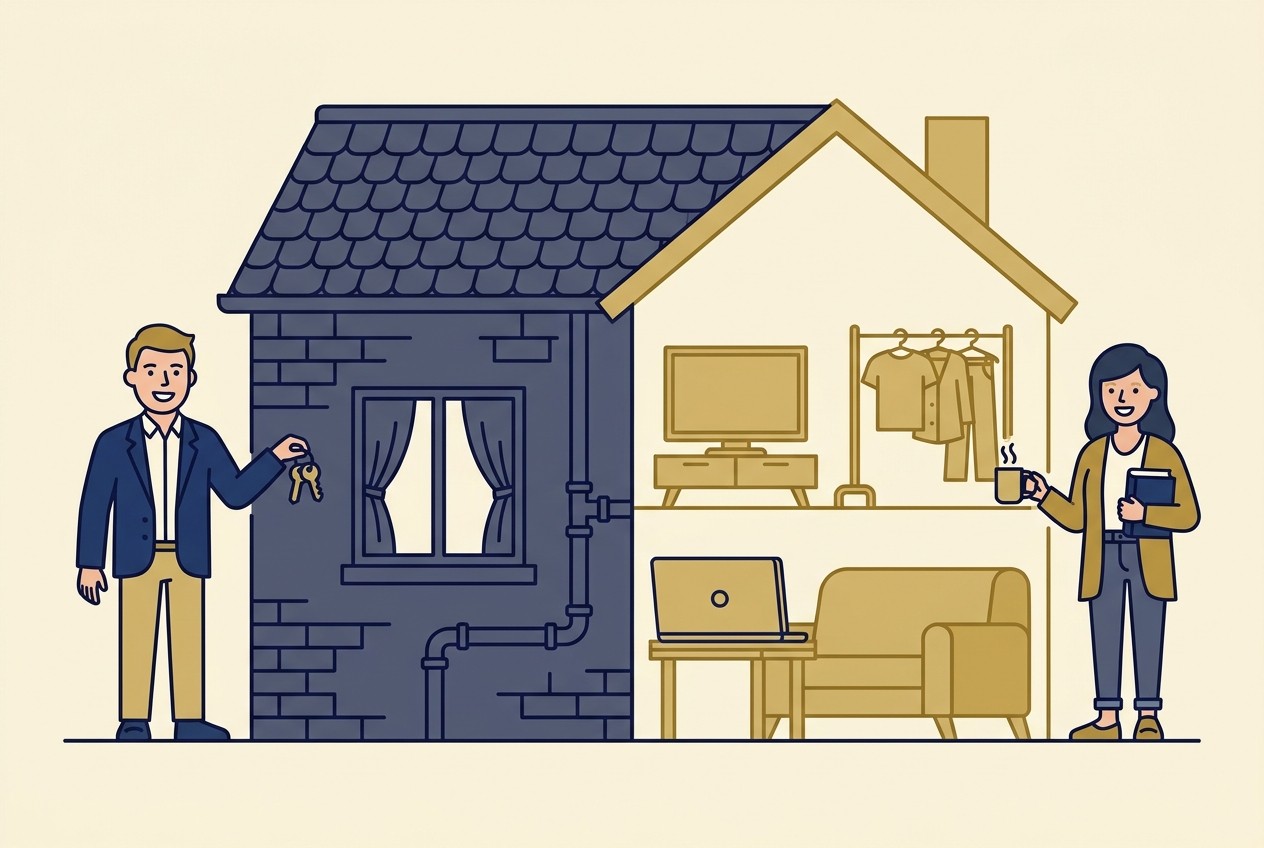
A common belief is that the landlord’s insurance covers everything in the property. It does not. The two policies protect different things and different people.
| What is damaged | Whose insurance pays |
|---|---|
| Walls, roof, windows and plumbing | Landlord’s buildings insurance |
| Fitted kitchen, bathroom suite and built-in appliances | Landlord’s buildings insurance, unless you caused the damage |
| Landlord’s furniture in a furnished let | Landlord’s contents insurance, if they have it |
| Damage you accidentally cause to the landlord’s property | Your tenant’s liability cover, or your deposit |
| Your own belongings | Your renters insurance only |
If a pipe bursts in the flat above and ruins your television, the landlord’s policy repairs the ceiling. Your television is your own problem unless you have contents cover.
Tenant’s Liability Cover Explained
Tenant’s liability is the part of renters insurance that many tenants overlook. It pays for accidental damage you cause to things your landlord is responsible for, such as cracking a bathroom basin, burning a kitchen worktop or staining a carpet.
Without it, the landlord can claim the cost from your deposit. In England, deposits are capped at five weeks’ rent where annual rent is under £50,000. Your landlord must also protect your deposit in a government-backed deposit protection scheme, which can settle disputes over deductions.
If the damage costs more than the deposit, the landlord can pursue you for the rest through the courts. Tenant’s liability cover, often included up to £2,500 to £10,000, protects you from that bill.
Can Your Landlord Make You Get Renters Insurance?
In England, the answer is no. The government’s Tenant Fees Act guidance for tenants lists contents insurance among products tenants can choose to use. It states that a landlord is not allowed to make you pay for insurance.
A landlord also cannot charge you a fee for arranging cover or push you into buying a policy through them. Any such payment would be a prohibited payment that you could recover. Scotland, Wales and Northern Ireland have their own tenancy laws, so check the rules where you live.
What About Pets?
The Renters’ Rights Act means landlords in England cannot unreasonably refuse a tenant’s request to keep a pet. According to the guide to the Renters’ Rights Act, the tenancy deposit is there to cover any damage a pet causes.
Most standard tenant policies exclude pet damage, so a chewed carpet usually comes out of your deposit. Some insurers sell pet damage as an add-on, which can be worth considering if you have a young dog or cat.
How Much Does Renters Insurance Cost?
Contents-only cover is the cheapest kind of home insurance. Association of British Insurers figures, as reported in recent quarters, put the average contents-only premium at roughly £118 to £131 a year. That is around £10 a month.
Your own quote depends on several factors:
- Postcode. Areas with higher theft or flood risk cost more.
- Sum insured. The total value of your belongings sets the starting price.
- Excess. Agreeing to pay a higher first portion of any claim lowers the premium.
- Security. Approved locks on doors and windows often reduce the price.
- Claims history. A recent claim usually pushes premiums up for several years.
- Optional extras. Accidental damage and cover away from home add to the cost.
Paying annually is usually cheaper than paying monthly, because many insurers charge interest on instalments. If cash flow is tight, compare the total yearly cost of both options before deciding.
How Much Cover Do You Need?
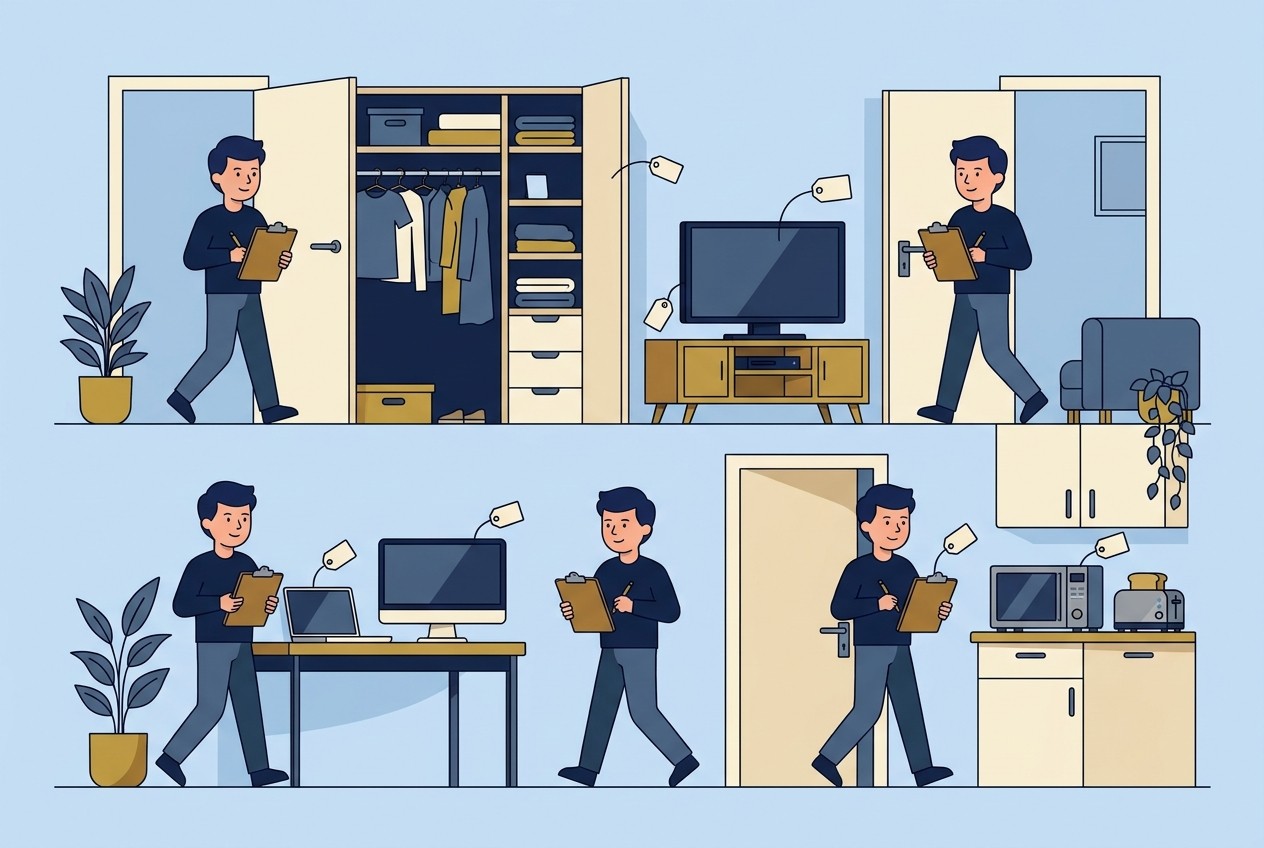
The most common mistake renters make is guessing their contents are worth a few thousand pounds. Walk round your home room by room and the total often lands far higher.
| Room | Example items | Example replacement cost |
|---|---|---|
| Living room | Sofa, television, games console, rug, lamps | £3,000 |
| Bedroom | Clothes, shoes, bedding, bed, wardrobe | £5,000 |
| Kitchen | Pans, crockery, small appliances, food | £1,500 |
| Home office | Laptop, monitor, desk, chair | £2,500 |
| Total | A modest one-bedroom flat | £12,000 |
These are illustrations, so use your own figures. Value items at what they would cost to buy new today, not what you paid years ago.
If your cover is too low, insurers can apply the average clause. Insure £6,000 of belongings worth £12,000 and the insurer may only pay half of any claim, even a small one.
Is Renters Insurance Worth It?
For most tenants, yes. A contents policy costing around £10 a month protects against losses that could cost thousands, and tenant’s liability cover can save part or all of your deposit.
There are cases where it may not be worth buying a separate policy:
- Students in halls. Many university halls include basic contents cover in the rent, so check before buying.
- Students at a parental address. Some family home insurance policies extend to students living away, often with limits.
- People with very few possessions. If everything you own could be replaced from savings without strain, the premium may not be worth it.
- Lodgers. If you rent a room in the owner’s home, their policy will not cover your belongings, but specialist lodger cover exists.
Before you decide, check what you may already have. Bank accounts with paid-for benefit packages sometimes include gadget cover, and a few employers offer discounted policies.
Running a Business From a Rented Home
This is where many self-employed renters get caught out. Standard tenant contents cover is designed for personal belongings, and most policies limit or exclude business equipment and stock.
If you sell products from a spare room, see clients at home or rely on expensive equipment, tell your insurer. Some will extend cover for a small extra premium, while others will point you to a separate business policy.
You may also need public liability or professional indemnity cover, depending on what you do. Our guide to business insurance requirements explains which policies are compulsory and which are optional. If you are still deciding what to launch, our list of the cheapest businesses to start from home includes ideas that suit rented homes.
How to Buy Renters Insurance in Six Steps
- List and value your belongings. Go room by room and price everything at today’s replacement cost.
- Note high-value items. Anything above the single item limit, such as jewellery, a camera or a bike, should be listed separately.
- Decide on extras. Consider accidental damage, cover away from home and tenant’s liability limits.
- Compare at least three quotes. Use comparison sites and check direct insurers that do not appear on them.
- Read the key exclusions. Look for the excess, single item limits, unoccupancy rules and theft conditions.
- Keep proof of ownership. Store receipts, photos and serial numbers somewhere other than your home.
Common Mistakes Renters Make
- Underinsuring. A low sum insured can reduce every claim through the average clause.
- Assuming flatmates are covered. Many insurers only cover the policyholder’s belongings, so sharers may each need their own policy.
- Leaving the home empty too long. Many policies restrict cover if the property is unoccupied for more than 30 to 60 days in a row.
- Forgetting to update cover. New furniture, a new laptop or moving house all need telling your insurer.
- Ignoring the excess. A £250 excess means small claims may not be worth making.

Frequently Asked Questions
What is renters insurance called in the UK?
In the UK, renters insurance is usually called contents insurance for tenants or tenants’ contents insurance. It covers your belongings rather than the building.
Is renters insurance a legal requirement in the UK?
No. There is no law requiring tenants to have contents insurance. In England, the Tenant Fees Act also stops landlords from making tenants pay for insurance.
Does my landlord’s insurance cover my belongings?
No. A landlord’s buildings insurance covers the structure and fixtures, and landlord contents insurance covers only the landlord’s own furniture. Your possessions need your own policy.
How much is renters insurance a month in the UK?
Average contents-only premiums have been around £118 to £131 a year in recent industry figures, which is roughly £10 a month. Your price depends on postcode, sum insured, excess and extras.
Does renters insurance cover accidental damage to the landlord’s property?
Many policies include tenant’s liability cover for accidental damage to the landlord’s fixtures and fittings, such as a cracked sink. Check the limit, as it varies between insurers.
Can flatmates share one renters insurance policy?
Some insurers offer joint policies for sharers, but many only cover one person’s belongings. Check the policy wording, or take out individual policies.
Does renters insurance cover my bike?
Bikes are often covered at home up to a set limit. For an expensive bike, or cover while you are out, you usually need to list it separately or buy specialist cycle insurance.
Your Next Actions
Tenant contents cover is one of the cheapest ways to protect yourself from a large, unexpected bill. Start by valuing your belongings room by room, so you know how much cover you need.
Next, check whether you already have cover through halls, a family policy or a bank account. If not, compare at least three quotes and make sure tenant’s liability cover is included at a sensible limit.
If you work from your rented home, confirm in writing whether your equipment and stock are covered. Budget for any extra business cover as part of your plan for managing small business cash flow. Finally, store receipts and photos of valuable items somewhere safe, so a claim is quick and straightforward if you ever need to make one.