
In September 2026, the government named around 660 employers for failing to pay the National Minimum Wage, with roughly £4 million returned to workers. Most of those businesses did not set out to underpay anyone. They fell foul of uniform deductions, unpaid training time or a missed birthday that moved someone into a higher age band.
This guide sets out the UK minimum wage for 2026 in full: every age band, the apprentice rate and how each compares with 2025. It then covers what a worker on the legal minimum really costs once National Insurance and pensions are added. You will also see the mistakes that trigger HMRC penalties and what to plan for ahead of April 2027.
Quick Answer: UK Minimum Wage 2026
From 1 April 2026, the National Living Wage for workers aged 21 and over is £12.71 an hour, up from £12.21. Workers aged 18 to 20 must get at least £10.85, up from £10.00. The rate for under-18s and apprentices is £8.00, up from £7.55. Apprentices aged 19 or over who have finished their first year get the rate for their age. The rates apply across the UK until 31 March 2027, and a full-time adult on 37.5 hours a week earns about £24,785 a year. Employers who underpay face arrears at today’s rates, a penalty of up to 200% of the arrears (capped at £20,000 per worker) and possible public naming.
Key Takeaways
- The National Living Wage rose 50p to £12.71 an hour on 1 April 2026.
- The 18 to 20 rate jumped 85p to £10.85, the biggest rise of any band.
- Under-18s and first-year apprentices must get at least £8.00 an hour.
- The accommodation offset is £11.10 a day or £77.70 a week from April 2026.
- Underpayment penalties can reach 200% of arrears, up to £20,000 per worker.
Quick Answer: What Is the Minimum Wage in 2026?
The UK minimum wage in 2026 is £12.71 an hour for anyone aged 21 or over. Younger workers and apprentices have lower legal minimums of £10.85 and £8.00.
The rates took effect on 1 April 2026 and run until 31 March 2027. Unlike Income Tax, they are the same in England, Scotland, Wales and Northern Ireland.
UK Minimum Wage Rates 2026 vs 2025
Here are the official rates from the GOV.UK minimum wage rates page, compared with the year before.
| Age band | April 2025 to March 2026 | From April 2026 | Increase |
|---|---|---|---|
| 21 and over (National Living Wage) | £12.21 | £12.71 | +50p (4.1%) |
| 18 to 20 | £10.00 | £10.85 | +85p (8.5%) |
| Under 18 | £7.55 | £8.00 | +45p (6.0%) |
| Apprentice | £7.55 | £8.00 | +45p (6.0%) |
| Accommodation offset | £10.66 a day | £11.10 a day | +44p |
The 18 to 20 rate rose fastest because the government wants to close the gap between young adults and the National Living Wage over time. If you employ many workers in that age group, your wage bill grew far more than the headline 4.1%.
The Apprentice Rate Explained
Apprentices can be paid the £8.00 apprentice rate if they are under 19, or if they are 19 or over and in the first year of their apprenticeship. Once an apprentice aged 19 or over completes that first year, they must get the full rate for their age.
This catches out many employers. A 21-year-old apprentice who passes their first anniversary jumps from £8.00 to £12.71 an hour overnight, a 59% rise that payroll has to pick up automatically.
Minimum Wage 2026: Weekly and Annual Pay
Hourly rates are easier to budget with once they are turned into weekly and yearly figures. The table below shows gross pay before tax at each 2026 rate.
| Age band | 20 hours a week | 37.5 hours a week | Annual (37.5 hours, 52 weeks) |
|---|---|---|---|
| 21 and over | £254.20 | £476.63 | £24,784.50 |
| 18 to 20 | £217.00 | £406.88 | £21,157.50 |
| Under 18 and apprentices | £160.00 | £300.00 | £15,600.00 |
These figures include paid holiday, because statutory holiday pay is built into a 52-week year. For part-time staff, multiply the hourly rate by contracted hours and check that any extra hours worked are paid too.

What a Minimum Wage Worker Really Costs in 2026
The hourly rate is only part of the bill. Here is what a full-time adult worker on the National Living Wage costs. The figures assume 37.5 hours a week for 52 weeks, with paid holiday included.
| Cost item | How it is worked out | Annual cost |
|---|---|---|
| Gross pay | 1,950 hours × £12.71 | £24,785 |
| Employer National Insurance | 15% of pay above £5,000 | £2,968 |
| Workplace pension | At least 3% of qualifying earnings | About £560 |
| Total employer cost | Before any Employment Allowance | About £28,300 |
Compared with 2025/26, gross pay alone rises by £975 per full-time worker. Add the extra employer NI on that rise and the increase is about £1,120 a head.
Smaller employers can soften the NI hit with the Employment Allowance, which can reduce the year’s employer NI bill by up to £10,500. Our guide to employer National Insurance contributions explains who qualifies.
Who Is Entitled to the Minimum Wage?
The legal minimum applies to “workers”, which is wider than employees. Agency workers, casual and zero-hours staff, part-timers, trainees and most people on probation are all covered.
A few groups are not entitled, including:
- genuinely self-employed contractors running their own business
- company directors who have no contract of employment
- volunteers who receive no payment beyond genuine expenses
- students on a placement required as part of a UK further or higher education course
- family members who live in the employer’s home and share in household tasks
Calling someone self-employed does not settle the question. If they work set hours under your control, using your equipment, HMRC may treat them as a worker and claim arrears.
Zero-Hours, Agency and Sleep-In Workers
Some working patterns need extra care because hours are irregular or hard to record.
- Zero-hours and casual staff. They are entitled to the same rates as anyone else for every hour worked, including short shifts that run over.
- Agency workers. The agency that pays them is responsible for meeting the minimum wage, but the hiring business should still check the rates being charged look realistic.
- Sleep-in shifts. Where a worker may sleep on site, pay at the legal rate is generally only due for time spent awake and working, not time asleep. The rules are detailed, so care providers should take advice.
- Piece workers. Workers paid per item must either get the legal rate for hours worked or be paid under a fair piece rate set using the official method.
Common Minimum Wage Mistakes Employers Make
HMRC’s own guidance lists the same causes of underpayment year after year. Most are honest errors, yet the penalties apply either way.
- Deductions for uniforms or equipment. Charging staff for a uniform, tools or a DBS check can push their pay for that period below the legal rate.
- Unpaid working time. Training, team meetings, security searches, opening up and cashing up all count as working time.
- Travel between jobs. Care workers and cleaners travelling between assignments during the day must be paid for that time.
- Salary sacrifice. Schemes for pensions, cycles or cars cannot reduce pay below the legal minimum.
- Missed birthdays. Workers move to a higher rate from the pay period after they turn 18 or 21.
- Salaried staff working extra hours. A fixed salary can fall below £12.71 an hour once overtime is counted.
- Counting tips. Tips and service charges never count as pay for this purpose.
Accommodation is the one benefit in kind that can count. If you provide housing, you can count up to £11.10 a day (£77.70 a week) as minimum wage pay, as set out in the accommodation offset rules. Charge more than that and the excess reduces the worker’s pay for minimum wage purposes.
How to Check You Are Paying Enough
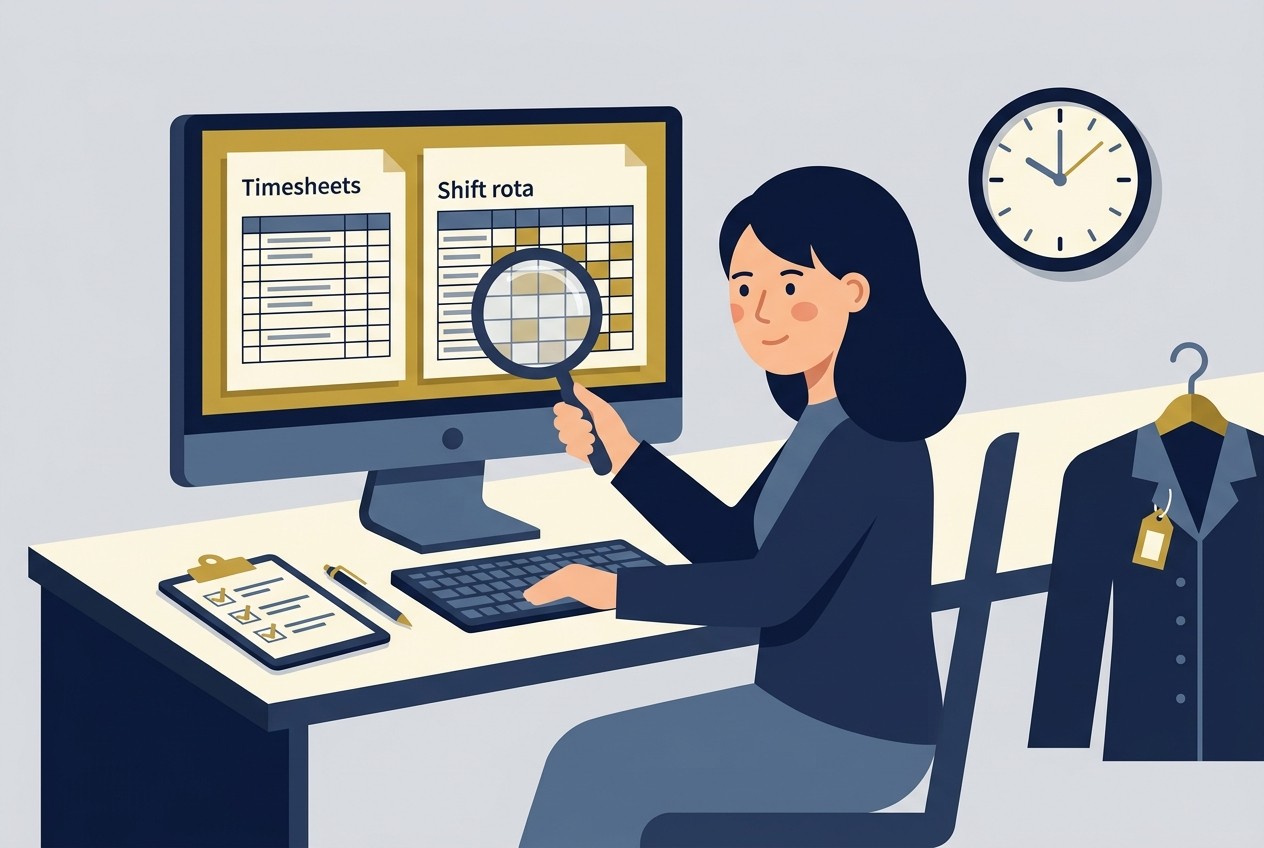
Compliance is tested by pay reference period, which is usually the period you pay for, such as a week or a month. Total qualifying pay for that period, divided by the hours worked in it, must reach the right rate.
- Pick the pay reference period. Use the period the worker is paid for, such as a calendar month.
- Add up qualifying pay. Include basic pay and bonuses for that period. Leave out tips, premium overtime rates and most benefits.
- Take off deductions that benefit you. Charges for uniforms, tools or meals reduce minimum wage pay, even if the worker agreed to them.
- Count every working hour. Include training, travel between assignments, meetings and time spent waiting at work.
- Divide pay by hours. If the answer is below the worker’s age-band rate, you owe arrears.
Worked Example: A Salaried Supervisor
Jordan, aged 24, earns a salary of £25,500 a year, which is £2,125 a month. The contract says 37.5 hours a week, but rotas show Jordan regularly works 42 hours, including unpaid opening and closing time.
Across a year, that is 2,184 hours. Dividing £25,500 by 2,184 hours gives £11.68 an hour, which is £1.03 below the £12.71 National Living Wage. The employer owes arrears for every affected month and risks a penalty on top.
Salaried roles that look comfortably above the minimum are often the ones that slip under it, because extra hours are never recorded. Ask managers to log actual hours, not just contracted ones.
Penalties for Not Paying the Minimum Wage
HMRC enforces the legal minimum, either after a worker complains or through its own risk-based checks. According to the official guidance on enforcing the minimum wage, an employer found to have underpaid can face:
- Arrears at today’s rates. Back pay is recalculated using the current rate for the worker’s age band, so older underpayments cost more to fix.
- A financial penalty. Up to 200% of the arrears, capped at £20,000 per worker. It halves if you pay everything within 14 days.
- Public naming. Employers can be named in government lists, as the 660 or so businesses were in September 2026.
- Criminal prosecution. Deliberate or serious cases can be taken to court.
Employers must also keep pay records for at least six years. If you find a mistake yourself, HMRC’s voluntary declaration process lets you repay arrears, and accepted declarations do not normally lead to naming or a penalty.
What to Expect for April 2027
New rates will take effect on 1 April 2027. The government usually confirms them in the Autumn Budget, based on recommendations from the Low Pay Commission.
Two trends are worth building into your budget now. The National Living Wage is set to keep pace with two-thirds of median earnings. Meanwhile, the 18 to 20 rate is expected to keep closing in on the adult rate.
Rising wage costs on top of wider price pressures squeeze margins hardest in hospitality, retail and care. Our analysis of UK inflation in 2026 shows how those costs combine for small firms.

Frequently Asked Questions
What is the minimum wage for a 40-hour week in 2026?
For a worker aged 21 or over, 40 hours at £12.71 is £508.40 a week before tax. Over 52 weeks, that is £26,436.80 a year.
When did the 2026 minimum wage start?
The new rates took effect on 1 April 2026. They apply to pay reference periods starting on or after that date and stay in place until 31 March 2027.
Is the minimum wage the same across the UK?
Yes. Both the National Minimum Wage and National Living Wage apply equally in England, Scotland, Wales and Northern Ireland. The voluntary Real Living Wage is a separate, higher benchmark and is not a legal requirement.
What is the minimum wage for an 18-year-old?
From April 2026, workers aged 18 to 20 must be paid at least £10.85 an hour. An 18-year-old apprentice in any year of their apprenticeship can be paid the £8.00 apprentice rate.
Can an employer pay less than the minimum wage if staff get tips?
No. Tips, gratuities and service charges do not count as minimum wage pay. Workers must receive at least the legal minimum from basic pay, with tips on top.
How far back can minimum wage arrears go?
HMRC can issue a notice requiring arrears going back up to six years. Workers can also bring their own claim to an employment tribunal.
Your Next Actions
The 2026 rate changes are now in force, so the risk lies in the detail rather than the headline rate. Check that payroll moved every worker onto the new rates from their first pay period after 1 April 2026. Pay special attention to 18 to 20 year olds and apprentices past their first year.
Next, audit the hidden risks: uniform charges, unpaid training or travel time, salary sacrifice schemes and salaried staff working long hours. Put the April 2027 increase into your budget now, alongside your plan for managing small business cash flow.
If you find an underpayment, repay it quickly and consider HMRC’s voluntary declaration route. For complex cases, such as sleep-in shifts or disputed worker status, take advice from an employment solicitor or Acas before you act.