Over 300,000 UK contractors are currently working outside IR35 — but research suggests a significant number of them may have the wrong status without knowing it. If you work through a limited company, or if you hire contractors, IR35 affects you directly. Getting it wrong can cost thousands of pounds in back taxes, interest, and penalties.
This guide gives you IR35 explained simply, without the legal fog. By the time you finish reading, you’ll know what IR35 is, why it exists, how it works, who decides your status, and exactly what happens if things go wrong. You’ll also see the real pound-for-pound difference between working inside and outside IR35 — which most guides skip entirely.
What Is IR35?
IR35 is a piece of UK tax legislation designed to stop what HMRC calls “disguised employment.” The name comes from the original Inland Revenue press release number — Inland Revenue 35 — issued back in 1999. Not the most memorable branding, admittedly.
Here’s the core idea. Some workers provide services through their own limited company, known as a Personal Service Company (PSC). IR35 only applies when you operate through an intermediary like a PSC — so IR35 and your business structure are the first decision that determines whether these rules touch you at all.
If you fall inside IR35, HMRC treats your income as employment income. You pay Income Tax and National Insurance Contributions (NICs) at the same rates as a permanent employee, which significantly reduces your take-home pay.
Why Did the Government Introduce IR35?
HMRC introduced IR35 because the Treasury was losing substantial tax revenue. A contractor earning £100,000 through a limited company could, before IR35, take a combination of low salary and dividends. This legally reduced their tax and NIC bill by tens of thousands of pounds compared to an employed person on the same income.
The government estimated this cost the Exchequer hundreds of millions of pounds per year in lost revenue. According to HMRC’s own tax gap data, employment taxes account for a major share of the UK’s overall tax gap — the difference between what HMRC expects to collect and what it actually receives.
IR35 was HMRC’s answer to that gap. Whether it’s been effective is a separate — and genuinely contested — debate.
Inside IR35 vs Outside IR35: The Critical Difference

This is the distinction that matters most to your finances, so pay close attention here.
Outside IR35 means HMRC considers you a genuine independent contractor. You run a real business, you take real commercial risk, and you work for multiple clients. You can pay yourself via a mix of salary and dividends through your limited company, and you keep the tax advantages that come with that structure.
Inside IR35 means HMRC views you as a “disguised employee.” Your income from that contract gets treated as a salary. You pay Income Tax and National Insurance as if you were on the client’s payroll — even though you’re not. The client (or their agency) must also pay Employer’s NICs on top.
| Scenario | Gross Contract Value (Annual) | Approx. Take-Home (Outside IR35) | Approx. Take-Home (Inside IR35) | Difference |
|---|---|---|---|---|
| Mid-level contractor | £80,000 | ~£57,000–£60,000 | ~£48,000–£51,000 | ~£9,000 less |
| Senior contractor | £120,000 | ~£82,000–£86,000 | ~£70,000–£74,000 | ~£12,000 less |
| High-rate contractor | £150,000 | ~£98,000–£103,000 | ~£86,000–£90,000 | ~£13,000 less |
Figures are estimates based on current 2026/27 tax rates (including the 8% employee Class 1 NIC rate, £12,570 personal allowance, and 19%/25% Corporation Tax brackets). Always verify with a qualified accountant.
The gap is real, and it’s significant. You can see why contractors fight hard to maintain an outside IR35 status — and why HMRC monitors this area so closely.
How Does HMRC Decide Your IR35 Status?
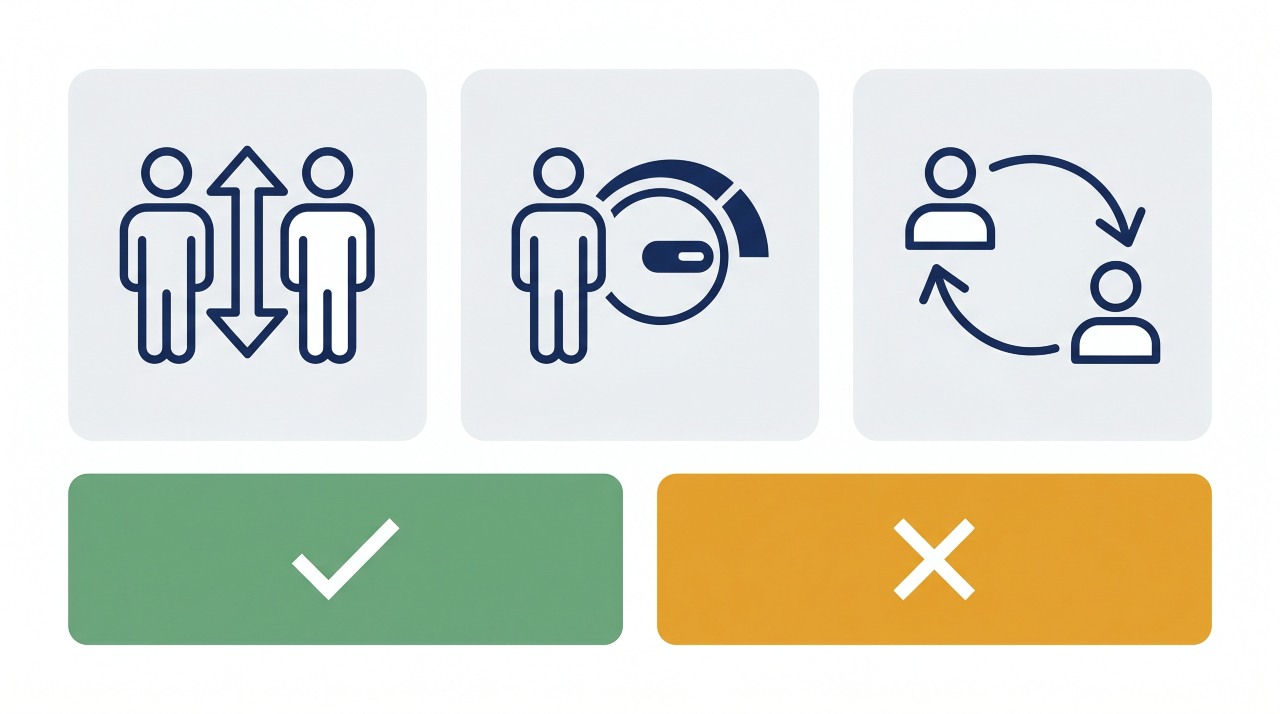
HMRC doesn’t flip a coin. They use a set of established employment status tests, developed through decades of case law. The three most important ones are:
1. Substitution — Can you send someone else to do the work in your place? If your contract says you personally must perform the services, that points toward employment. Genuine contractors can send a substitute.
2. Control — Does your client control what you do, when you do it, and how you do it? High levels of control suggest employment. A true contractor decides how they deliver results.
3. Mutuality of Obligation (MOO) — Does your client have to keep offering you work, and do you have to accept it? If yes, that looks like employment. Independent contractors take on specific projects with no expectation of ongoing work.
HMRC also looks at financial risk (do you invest in equipment, take on business risk?), integration (are you embedded in the client’s organisation like a permanent member of staff?), and the length and exclusivity of engagements.
You can use HMRC’s free tool — the Check Employment Status for Tax (CEST) tool — to get an initial read on your status. However, CEST has faced significant criticism from tax professionals and courts for being too simplistic. It doesn’t account for all the nuances of IR35 case law, and a result from CEST is not legally binding if HMRC investigates you later.
For a reliable assessment, you need a specialist IR35 contract review from a qualified tax adviser — not just a tool.
Who Decides Your IR35 Status Now?
This changed significantly in 2017 (public sector) and April 2021 (private sector). Before these reforms, contractors made the IR35 determination themselves. That created an obvious problem — most people decided they were outside IR35.
Since the off-payroll working rules came into force in April 2021 for medium and large private sector businesses, the responsibility shifted. Now the end client (the business engaging the contractor) must assess IR35 status. They issue a Status Determination Statement (SDS), which tells you and any agency in the supply chain what they’ve decided.
This reform affected hundreds of thousands of contractors. Many reported that clients issued blanket “inside IR35” determinations to avoid the administrative burden, regardless of the actual working practices. The Chartered Institute of Taxation (CIOT) and IPSE (the Association of Independent Professionals and the Self-Employed) both flagged this as a serious problem.
Small businesses — those that don’t meet two of the three Companies Act 2006 criteria for medium/large companies — are exempt. In those cases, the contractor’s PSC still makes the IR35 determination.
What Actually Happens If You Get IR35 Wrong?

This is the part most guides gloss over, and it’s worth being direct with you.
If HMRC opens an IR35 investigation and finds you should have been inside, the liability can be severe. You’ll owe the unpaid Income Tax and NICs, plus interest on that amount. HMRC can investigate up to six years back (or longer if they suspect deliberate non-compliance). Penalties can range from 30% to 100% of the unpaid tax, depending on whether HMRC views the error as careless or deliberate — and how IR35 affects your tax return determines exactly where that liability shows up when you file.
Since April 2021, in the private sector, liability primarily falls on the end client or the fee-payer (often the agency). That’s a meaningful shift — and one that’s made many large companies very cautious about contractor engagements.
It’s also important to be honest here: HMRC investigations are stressful and time-consuming even when you’re in the right. Defending an IR35 position costs money in professional fees and significant amounts of time. That’s a real downside of contracting through a limited company that deserves acknowledgement.
IR35 and the Public Sector: Key Differences
The public sector rules have been in force since April 2017, so there’s four more years of precedent to draw on. Public bodies — NHS trusts, government departments, local councils — must assess and determine IR35 status for all contractors.
Many public sector contractors found themselves moved inside IR35 after 2017, even where their working practices hadn’t changed. Some left the public sector for private contracts. Others restructured entirely.
The off-payroll rules that came into force in 2021 largely aligned the private sector with the public sector approach, though the specific mechanics of liability and the SDS process have some differences. If you work across both sectors, you may have different IR35 statuses for different contracts simultaneously — which is perfectly possible and legal.
How to Protect Your Outside IR35 Status
If you genuinely operate as an independent contractor, there are practical steps you can take to support your position.
Your contract must reflect your real working practices. A contract that says you can provide a substitute is meaningless if you’ve worked exclusively at the same desk for three years and your pass says “team member.” HMRC looks at what actually happens, not just what the paperwork says.
Maintain clear evidence of your working arrangements. Keep records of invoices, separate business expenses, multiple clients over time, and any instances where you provided a substitute or rejected work from a client. This documentation matters enormously if you face scrutiny.
Consider an annual IR35 contract review with a qualified tax professional. According to HMRC guidance on employment status, the tests are not mechanical — they require a holistic assessment. An expert eye on your specific contract and working practices is worth the fee.
FAQ: IR35 Explained Simply
What does IR35 mean in simple terms?
IR35 is a UK tax law that targets contractors who work like employees but pay tax as if they’re self-employed. If HMRC decides you’re a “disguised employee,” you pay the same Income Tax and National Insurance as a salaried worker, which reduces your take-home pay significantly.
How do I know if I am inside or outside IR35?
Your IR35 status depends on your specific working arrangements, assessed against tests including substitution, control, and mutuality of obligation. HMRC’s CEST tool gives an initial indication, but a professional IR35 review from a specialist tax adviser gives you a much more reliable answer. Your end client is responsible for making the determination if they’re a medium or large business.
Who is responsible for IR35 in the private sector?
Since April 2021, medium and large private sector businesses that engage contractors are responsible for determining IR35 status. They must issue a Status Determination Statement to the contractor and any agency in the supply chain. Small businesses remain exempt, and in those cases the contractor’s own limited company makes the determination.
What happens if you fail IR35?
If HMRC determines you should have been inside IR35, you or your client (depending on who holds the liability) will owe unpaid Income Tax and National Insurance Contributions, plus interest. Penalties can apply on top of that. HMRC can look back up to six years, meaning the financial exposure can be substantial.
Does IR35 apply to all contractors?
IR35 applies to contractors who provide services through an intermediary — typically a Personal Service Company or limited company. Sole traders who operate without a limited company structure are not subject to IR35, as they’re already taxed under self-employment rules. The rules also only apply where the working relationship resembles employment.
Can I appeal an IR35 determination made by my client?
Yes. Since April 2021, end clients must operate a client-led disagreement process. If you believe their Status Determination Statement is wrong, you can formally challenge it. The client must respond within 45 days. If you remain dissatisfied, you can ultimately appeal to the First-tier Tax Tribunal, though this is an expensive route that requires specialist legal support.
The One Thing You Must Take Away
IR35 is not going away, and HMRC is not getting less attentive. The legislation has been in place for over two decades, the off-payroll reforms have shifted liability onto clients, and investigations are an ongoing reality for UK contractors.
The most important action you can take right now is to get your current contract reviewed by a qualified IR35 specialist — not a tool, and not a generic accountant. Know your status with confidence, document your working practices properly, and make sure your contract reflects reality. That combination is your best protection against an HMRC challenge.
If you’re a business hiring contractors, make sure your Status Determination Statements are accurate, defensible, and based on actual working arrangements. A blanket determination either way creates legal and financial risk for your organisation.
You now have a solid grasp of what IR35 is, how it works, and what it costs. The next step is acting on it.