Quick Answer: What Is Construction Business Insurance?
Construction business insurance is an integrated package of commercial liability, contract works, and asset protection policies designed for UK building contractors, groundworkers, trades, and civil engineering firms. While employers liability insurance is legally compulsory under UK statute for any firm with staff (£5 million minimum), principal building contractors and standard JCT contracts mandate public liability limits of £5 million to £10 million alongside Contractors All Risks (CAR) cover. CAR protects permanent and temporary works, uninstalled site materials, and plant machinery against fire, storm, theft, and accidental collapse during the build period. In 2026, typical annual insurance costs for small building firms start from £1,200 to £3,500, scaling to 1% to 4% of total contract value for large-scale development projects.
Key Takeaways for UK Building Contractors
- Contractors All Risks (CAR): Protects active works, materials in transit, and site structures up to completion, preventing cash flow collapse when fire, storm, or subsidence destroys unhanded projects.
- JCT Clause 6.5.1 Non-Negligence Cover: Standard public liability only responds to contractor negligence. JCT 6.5.1 covers structural collapse, subsidence, or vibration damage to neighbouring buildings where no legal negligence occurred.
- CPA Plant Liability: Under Construction Plant-hire Association model terms, the hiring contractor is 100% financially liable for stolen or damaged hired machinery, including continuous rental charges during downtime.
- Subcontractor Classification: Labour-only subcontractors require statutory employers liability cover, while bona-fide subcontractors must carry their own verified £5 million public liability schedules.
- Condition of Average Risk: Underinsuring contract sums amid elevated materials inflation triggers proportional claim reductions, leaving builders liable for six-figure rebuilding deficits.
Construction Business Insurance UK
Official reporting published in the Health and Safety Executive construction safety statistics confirms that construction remains Britain’s most hazardous commercial sector. Construction activities account for roughly 45 workplace deaths and over 50,000 non-fatal injuries and occupational illnesses every year. Beyond immediate bodily peril, modern building sites present extreme financial exposures, ranging from tower crane collapses and deep trench wall cave-ins to high-value plant machinery theft. In this high-stakes operational landscape, construction business insurance provides the structural balance sheet protection that allows building contractors to bid, build, and grow without risking insolvency.
Operating a construction enterprise in the UK requires balancing statutory requirements with stringent contractual mandates. While residential clients might only check references, principal contractors, commercial developers, and local councils enforce strict pre-qualification questionnaires (PQQs). Entering a modern construction site without accredited insurance schedules in place is impossible. If you take on groundworks, commercial refurbishments, or new housing developments, knowing which policies protect your works, plant, and workforce prevents costly project delays.
Building companies also face complex structural distinctions when selecting policies. While a sole operator might begin with basic sole trader insurance, expanding into full-scale building contracting demands multi-layered cover. In many trade trades, specialized packages like electrician public liability insurance address specific circuit hazards, but general construction requires broad, multi-disciplinary protection. This guide details essential cover components, JCT contract clauses, 2026 pricing benchmarks, and the underwriting pitfalls every building contractor must avoid.
The Core Pillars of UK Construction Business Insurance
Unlike single-trade policies, construction business insurance integrates multiple protective covers into an interconnected framework. Building projects involve transient labour, heavy earthmoving plant, sub-surface engineering, and third-party property interfaces. A gap in any single layer can leave a main contractor exposed to catastrophic litigation.
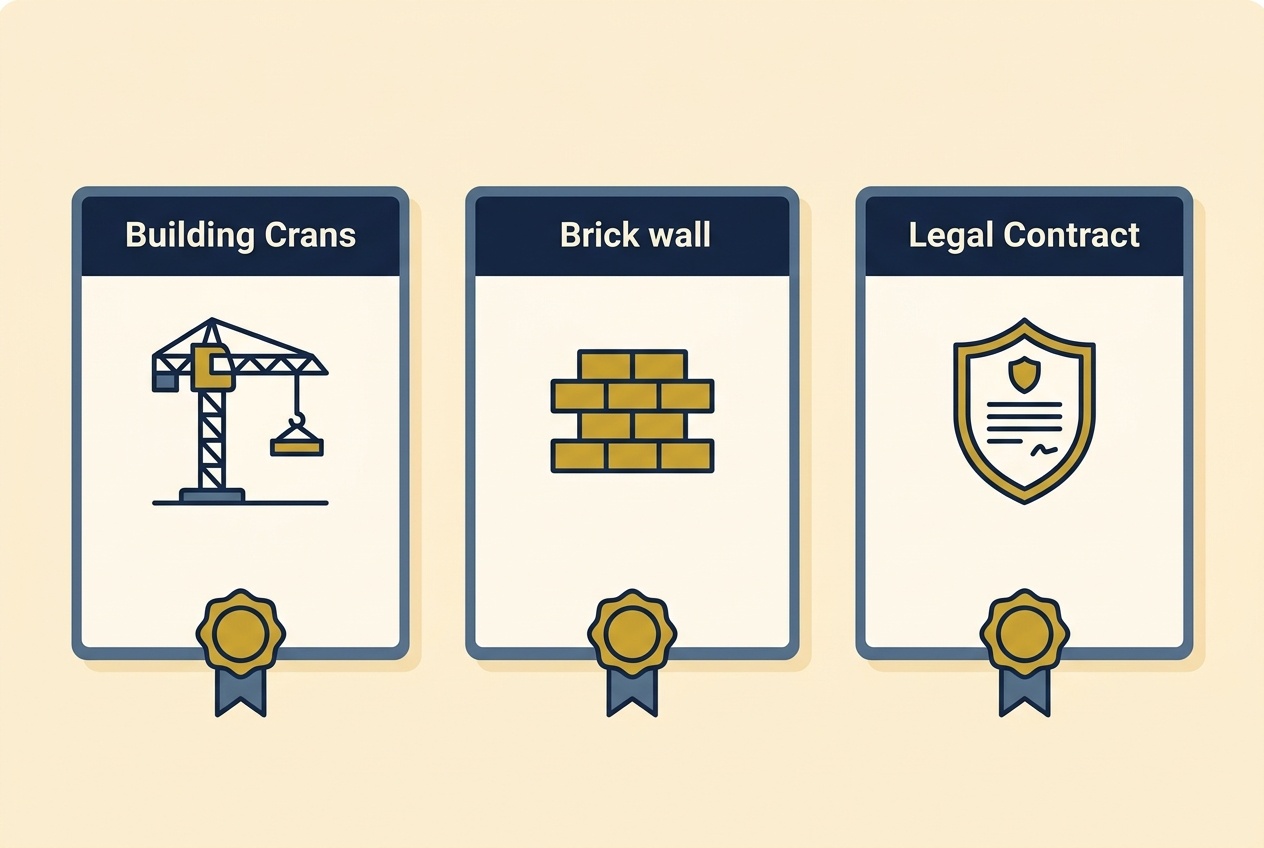
The three core pillars of UK construction risk management: Contract Works, Public Liability, and Plant Cover.
A resilient construction insurance program is built around five core elements:
1. Contractors All Risks (CAR) / Contract Works Insurance
Contractors All Risks (also known as contract works insurance) covers the physical contract works while construction is underway. If a two-storey commercial extension suffers an arson attack at 90% completion, or a sudden winter river flood washes away timber framing and uninstalled dry-lining boards, CAR pays for the materials and labour required to rebuild back to the pre-loss stage. It also covers materials stored on site or in transit, protecting deliveries of structural steel, glazing packs, and copper pipework.
2. Public Liability Insurance (£5m to £10m Limits)
Public liability protects your firm against financial compensation claims and legal costs arising from third-party injury, death, or property destruction caused by your operations. In construction, a standard £2 million limit is inadequate. Commercial landlords, utility companies, and Tier 1 main contractors mandate minimum limits of £5 million or £10 million. If an excavator tracks across a highway pavement and crushes an underground high-pressure gas main or optical fibre trunk, repair costs and business interruption claims from neighbouring companies can rapidly breach £5 million.
3. Employers Liability Insurance (£10m Standard)
Holding employers liability cover is a statutory duty under the Employers Liability (Compulsory Insurance) Act 1969. In accordance with GOV.UK Employers’ Liability guidelines, cover must be active the day you hire your first team member. Construction work involves significant manual handling, heavy plant interaction, and working at height. If an employee suffers a spinal injury falling from scaffolding, employers liability funds their legal representation, medical care, and court-mandated loss-of-future-earnings awards.
4. Hired-In Plant and Owned Plant Machinery Cover
UK building sites rely heavily on rented machinery, including 360 excavators, site dumpers, telehandlers, and mobile generators. Contractors often assume the hire depot insures the machine. In reality, hire agreements incorporate the strict model terms of the Construction Plant-hire Association model conditions. These clauses make the hirer fully responsible for physical machine destruction, theft, and ongoing downtime hire fees until the replacement arrives. Hired-in plant insurance absorbs these substantial financial liabilities.
5. Professional Indemnity (Design & Construct)
Traditional builders working purely to external architectural drawings historically skipped professional indemnity. However, modern procurement relies on Design and Build (D&B) contracts where the main contractor assumes full legal responsibility for design integration. If your firm selects a foundation pile depth, designs a temporary earth retention wall, or specifies cladding materials that subsequently fail structural or fire safety standards, Design & Construct Professional Indemnity covers the multi-million-pound rectification costs.
JCT Insurance Clauses: managing Joint Names and Clause 6.5.1
The vast majority of commercial and high-end residential building projects in the UK run under Joint Contracts Tribunal (JCT) contract forms, such as JCT Minor Works, Intermediate, or Design and Build. JCT contracts contain specific insurance schedules that allocate risk between the Employer (property owner/developer) and the Contractor.
Failing to read and implement your JCT insurance schedule correctly is one of the most common legal errors in construction management:
| JCT Clause Option | Project Scenario | Insurance Responsibility | Policy Requirement |
|---|---|---|---|
| Option A | New building construction on clear site. | Contractor secures and maintains cover. | All Risks insurance in Joint Names of Contractor and Employer. |
| Option B | New building construction where client arranges cover. | Employer secures and maintains cover. | All Risks insurance in Joint Names of Employer and Contractor. |
| Option C | Alterations, extensions, or refurbishments of existing property. | Employer insures existing structure; contractor insures works. | Joint Names policy for existing building and works against Specified Perils. |
| Clause 6.5.1 (Non-Negligence) | Piling, basement digs, underpinning, or party wall works. | Arranged by contractor on behalf of both parties. | Specialist cover for non-negligent collapse, vibration, or subsidence. |
The distinction between standard Public Liability and JCT Clause 6.5.1 (formerly known as Clause 21.2.1) is critical. Public liability requires proof of negligence. If you dig a basement in strict accordance with engineer specifications and follow all building regulations, yet a neighbouring Georgian townhouse settles and develops severe wall cracks, you were not legally negligent. As a result, your public liability policy will reject the claim. In contrast, Clause 6.5.1 non-negligence cover steps in specifically to indemnify the developer and contractor against such unpreventable subsidence, vibration, or removal of support damages.
Managing Subcontractor Risks Under the Construction Industry Scheme (CIS)
Most UK construction businesses operate using a lean core management team while hiring trade subcontractors for groundworks, brickwork, roofing, and mechanical services. When arranging construction business insurance, failing to categorize your subcontractors correctly will invalidate your liability protection.
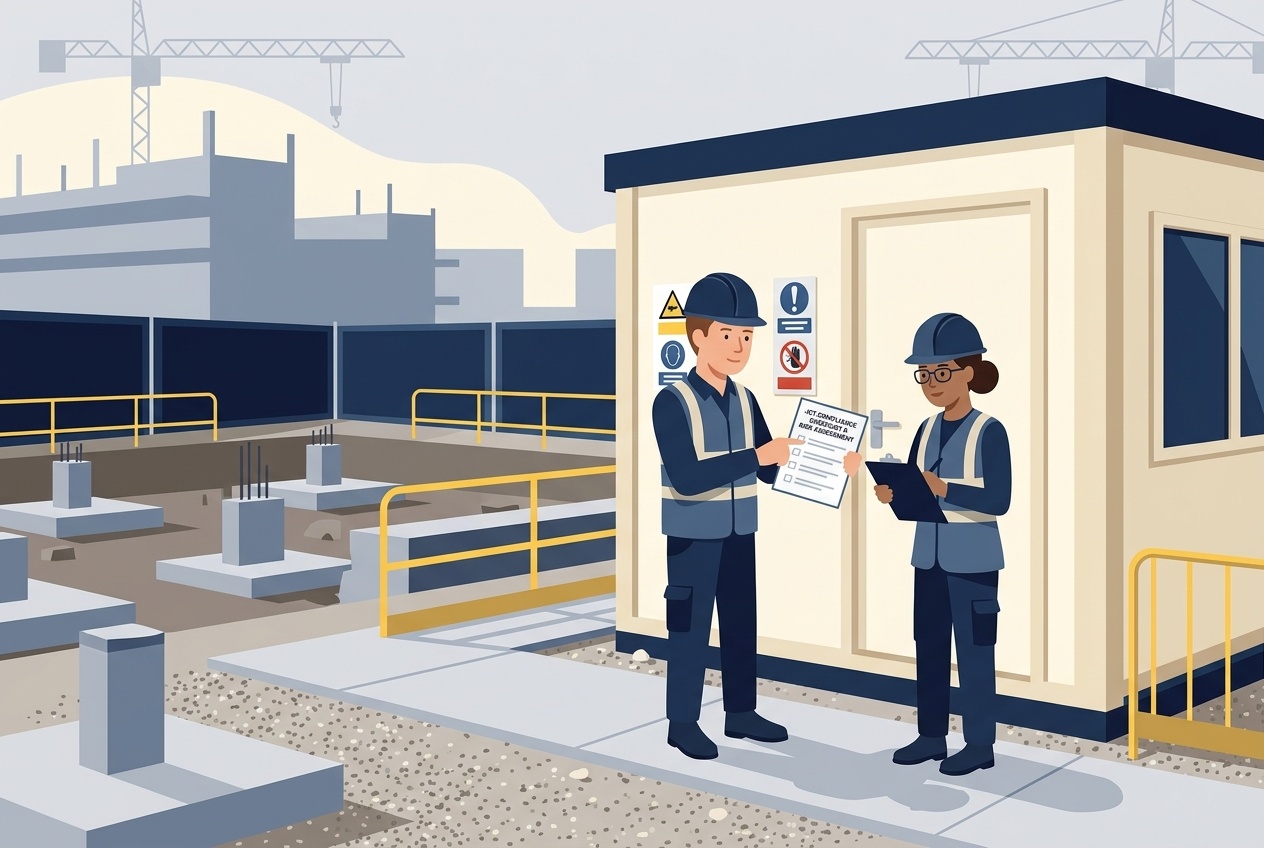
Rigorous subcontractor vetting and insurance verification ensure site compliance.
Insurers divide construction personnel into two distinct legal groups:
- Labour-Only Subcontractors (LOSC): These tradespeople work under your direct management, use your site plant and materials, and work set site hours. Legally and operationally, insurers treat labour-only subcontractors as direct employees. You must include their estimated annual wage roll on your Employers Liability schedule. If an LOSC worker is injured on site, your employers liability insurance must respond.
- Bona-Fide Subcontractors (BFSC): These are independent trade businesses (such as steel fabricators or roofing specialists) who work to their own method statements, provide their own plant and materials, and invoice a fixed price for a specific scope. Insurers do not require you to pay employers liability premiums on bona-fide subcontract spend. However, your policy will include an explicit Bona-Fide Subcontractors Warranty. This warranty requires you to collect and verify that every bona-fide firm maintains their own active public liability insurance with indemnity limits equal to or greater than your own (typically £5 million). If you fail to verify their certificate and a subcontractor causes a major site fire, your insurer can legally decline indemnity.
For building contractors managing projects across leased commercial yards or storage compounds, coordinating your site covers alongside commercial property insurance and local commercial lease agreements guarantees that your compound assets, perimeter fencing, and leased welfare cabins remain compliant under commercial lease covenants.
How Much Does Construction Business Insurance Cost in 2026?
Construction insurance premiums reflect the physical hazards of your trade, your annual turnover, maximum project values, and deepest working depths. While general building carries moderate risk classifications, activities involving open flames, demolition, or working above 15 meters attract higher rating factors.
| Contractor Profile | Core Policy Limits Included | Typical Scope of Work | Estimated 2026 Premium |
|---|---|---|---|
| Small General Builder (1-2 Staff) | £5m Public Liability + £10m Employers Liability + £150k CAR | Domestic extensions, kitchen renovations, internal structural knock-throughs. | £1,200 – £2,400 / year |
| Mid-Size Main Contractor (£1m–£3m Turnover) | £10m Public Liability + £10m EL + £750k CAR + £100k Hired Plant | Commercial fit-outs, school refurbishments, new build residential developments. | £4,500 – £8,500 / year |
| Civil Engineering / Groundwork Specialist | £10m Public Liability + £10m EL + CAR + £250k Hired Plant + Depth Ext. | Deep drainage, piling, highway connections, heavy concrete foundations. | £7,000 – £14,000+ / year |
| Commercial Design & Build Firm | £10m PL + £10m EL + £2m CAR + £2m D&B Professional Indemnity | Multi-unit housing schemes, industrial warehouse developments, commercial offices. | £12,000 – £28,000+ / year |
When structuring your policy, be vigilant regarding the Condition of Average. Over the past three years, persistent inflation in UK construction materials and specialist trade labour has driven up reinstatement costs significantly. If you declare a maximum contract works limit of £300,000 for a development that actually costs £450,000 to rebuild following a fire, your policy is 33% underinsured. In the event of a £100,000 claim, the insurer applies the average clause, reducing your claim payout by 33% to £67,000, leaving your business to fund the remaining £33,000 out of operating capital.
Five Critical Policy Pitfalls Construction Firms Must Avoid
Insurance disputes in the construction industry rarely occur because a contractor lacked insurance altogether. Disputes occur because a standard exclusion or policy condition was breached on site. To keep your cover enforceable, address these five common operational traps:
1. Depth and Height Threshold Restrictions
Standard building contractor policies include default depth limits (commonly 2 meters or 3 meters) and height restrictions (often 10 meters or 15 meters). If your team digs a basement lightwell, executes deep sewer trenching, or works on a four-storey commercial parapet wall beyond your declared limits, insurers can decline claims arising from that work. Ensure your broker removes or expands these restrictions to match your real site specifications.
2. Hot Work Warranties and Fire Extinguisher Distances
Activities involving torch-on felt roofing, lead flashing burning, or structural steel flame cutting carry stringent underwriting conditions. Most UK insurers impose an explicit Hot Work Warranty requiring a continuous 60-minute fire watch after work stops, dedicated multi-class fire extinguishers within arm’s reach, and clearing combustible dust and timber within six meters. Failure to log a written hot work permit will void fire claim settlements.
3. Unattended Site Security and Tool Storage Warranties
Contractors All Risks policies require construction sites to be secured during non-working hours. Common policy warranties stipulate solid two-meter perimeter hoarding with locked gates, padlocked steel site storage containers (often requiring Sold Secure Gold ratings), and immobilizer tracking on high-value plant. Storing valuable boilers, uninstalled cabling, or power tools inside an unboarded property over a bank holiday weekend will result in claim rejection following a break-in.
4. Hazardous Location Exclusions
Standard trade policies exclude work conducted within high-risk environments unless declared upfront. Common excluded locations include airports (airside work), railway trackside corridors, petrochemical refineries, chemical processing plants, nuclear facilities, and offshore docks. Working on these specialized sites requires dedicated endorsement and enhanced liability extensions.
5. Failing to Update Turnover and Wage Roll Declarations
Construction business insurance policies are written on an adjustable basis. At the start of the policy year, you estimate your annual turnover, labour-only subcontractor spend, and PAYE wage roll. At the end of the policy term, your insurer conducts an annual declaration adjustment. If your business expanded significantly during the year and you failed to report the growth, insurers can charge backdated premiums or challenge claims on grounds of material non-disclosure.
Frequently Asked Questions About Construction Business Insurance
What is the difference between Public Liability and Contractors All Risks?
Public liability insurance protects against third-party claims for accidental injury or property damage caused by your construction activities. In contrast, Contractors All Risks (CAR) protects your own project works, uninstalled materials, and equipment on site against physical destruction caused by fire, storm, flood, collapse, or vandalism prior to formal handover to the client.
Is Contractors All Risks insurance legally compulsory in the UK?
No general UK statute mandates Contractors All Risks insurance. However, it is compulsory under almost all commercial construction contracts, including standard JCT, NEC, and FIDIC contract forms. Commercial mortgage lenders, property developers, and local councils will not permit work to start without verified CAR cover in place.
What is JCT Clause 6.5.1 insurance and do I need it?
JCT Clause 6.5.1 (formerly Clause 21.2.1) is specialist non-negligence insurance. Standard public liability only pays when a contractor is legally negligent. Clause 6.5.1 covers damage to neighbouring buildings caused by collapse, subsidence, vibration, or removal of support where no negligence took place. It is typically required when carrying out basement excavations, underpinning, or structural piling adjacent to existing properties.
Does construction insurance cover plant and machinery I hire from depots?
Not automatically. You must ensure Hired-In Plant cover is active on your policy schedule. Under Construction Plant-hire Association (CPA) model conditions, the hiring contractor is held legally responsible for replacing stolen or damaged machinery, as well as paying continuing hire charges during repair downtime.
How much public liability cover do main contractors require?
While domestic homeowners rarely ask for more than £2 million in cover, main building contractors, local councils, and commercial developers almost universally require £5 million or £10 million in public liability indemnity. The cost to upgrade from £2 million to £5 million is modest compared to the value of commercial tenders it unlocks.
Do I need employers liability insurance for CIS subcontractors?
Yes, if they are labour-only subcontractors. If an operative works under your direct instruction, uses your equipment, and does not provide an independent fixed-price quote with their own materials and liability cover, UK law classifies them as an employee for insurance purposes under the Employers Liability (Compulsory Insurance) Act 1969.
The Bottom Line: Engineering a Bulletproof Risk Management Strategy
Operating a construction business in Britain requires managing substantial physical and financial exposures every day. A single structural failure, plant theft incident, or unvetted subcontractor disaster can jeopardize years of accumulated business equity. Relying on basic trade insurance is an unnecessary gamble when detailed multi-tiered protection is readily available across the UK commercial market.
Take time to review your existing policy schedules against current contract demands. Verify that your Contractors All Risks limits reflect current material replacement costs, your height and depth limits match site realities, and your subcontractor insurance registers are fully up to date. When entering into commercial contracts, pair your site liability framework with an evaluating of what business insurance do you actually need in the UK to protect both your workforce and your long-term commercial balance sheet.
Next Actions for Construction Executives
Review your current project contracts to confirm whether JCT Clause 6.5.1 or joint-names insurance is required before ground breaking. If you are structuring your business entity or planning commercial equipment acquisitions this quarter, explore our suite of interactive business calculators to forecast overheads, cash flow runway, and capital allocations with precision.