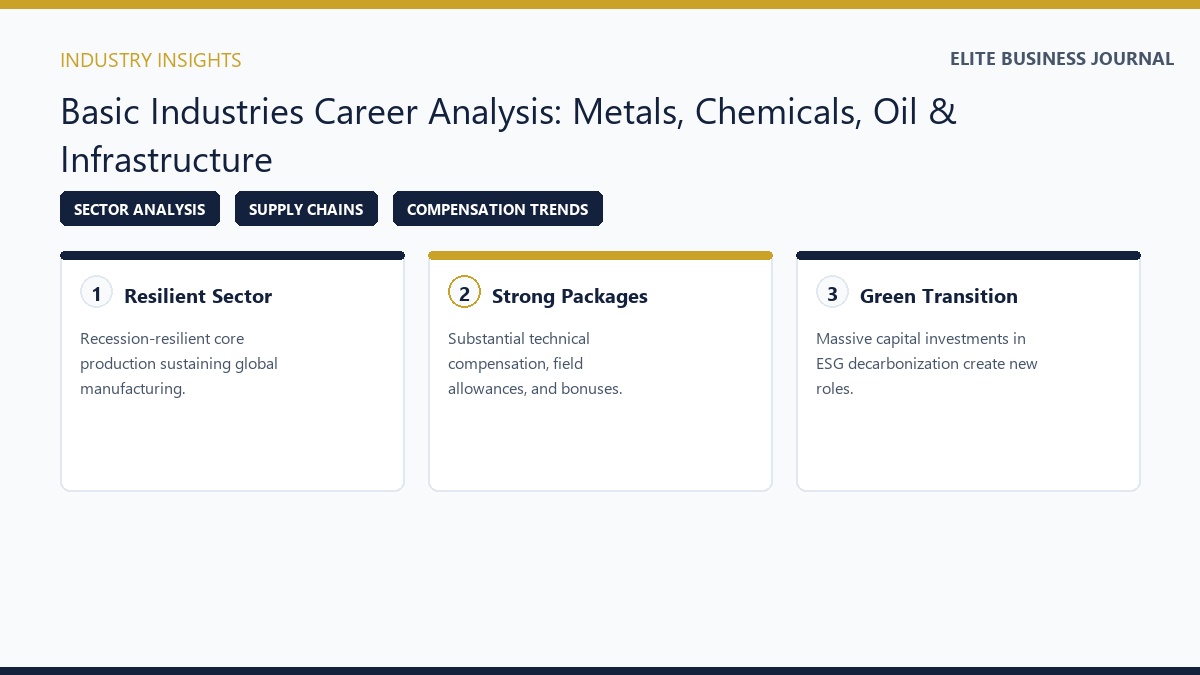
Basic industries employ more than 20 million people in the United States alone. That is a massive number. If you have been asking yourself whether basic industries is a good career path, the short answer is yes. But like any career, it depends on who you are and what you want.
Basic industries make up the backbone of the global economy. These industries turn raw materials into products that everyone uses every day. Think of the steel in your car, the gas that heats your home, or the food on your table. All of that comes from basic industries.
This article will walk you through everything you need to know. You will learn what basic industries are, what jobs exist, how much you can earn, and whether this path makes sense for your future. No fluff. No hype. Just real information to help you make a smart decision about your career.
What Are Basic Industries and Why Do They Matter?
Basic industries are sectors that extract or process raw materials. These industries take things from nature or transform them into something useful. They are called “basic” because they sit at the very start of the supply chain. Everything else in the economy depends on them.
Here are the main categories that fall under basic industries:
- Mining and metals — Pulling coal, iron, gold, and other minerals from the ground
- Oil and gas — Extracting and refining petroleum products
- Agriculture — Growing crops and raising livestock
- Forestry and paper — Harvesting timber and turning it into paper or wood products
- Chemicals — Creating industrial chemicals, fertilizers, and plastics
- Steel and aluminum — Producing metals used in construction and manufacturing
These sectors are not glamorous. They involve physical work, large equipment, and real risk. But they also offer steady pay, job security, and a clear path forward. The products they make are always in demand because people will always need food, fuel, shelter, and materials to build things.
Basic industries are different from service industries. Service industries involve doing things for people, like cutting hair or writing software. Basic industries involve making or extracting physical things. Both matter, but basic industries tend to be more stable during economic downturns because demand for raw materials rarely disappears completely.
Is Basic Industries the Right Career Path for You?
Not every career is for every person. Before you commit to basic industries, it is worth asking yourself a few honest questions. Do you like working with your hands? Are you okay with being outdoors or in a factory? Can you handle physical demands and shift work?
Basic industries are a great fit for people who prefer doing over sitting. If you would rather operate a machine, inspect a pipeline, or drive a harvester than sit at a desk all day, this field could be a great match. Many people in these industries say they love their work because they can see the results of what they do.
You do not need to be the strongest or the toughest person. But you do need to be reliable, safety conscious, and willing to learn. Many employers in basic industries train workers on the job. They often prefer someone with a strong work ethic over someone with a long resume but a bad attitude.
Basic industries also suit people who want good pay without spending four years in college. Many roles offer starting wages well above the federal minimum wage, and some entry level positions pay $20 or more per hour. If you want a stable income without student debt, basic industries can get you there faster than many other fields.
What Kind of Jobs Can You Get in Basic Industries?
There is a wide range of jobs available in basic industries. Some are physical. Some are technical a Some require leadership. And some need a college education, while others just need on the job training or a short certification program.
Entry Level Jobs
Entry level workers in basic industries often start as laborers, helpers, or operators in training. These roles involve physical tasks like loading materials, cleaning equipment, or assisting experienced workers. The pay is decent, the hours are predictable, and the learning curve is manageable for most people.
Examples of entry level jobs include:
- Farm laborer or agricultural worker
- Mine helper or surface worker
- Oil field laborer
- Chemical plant operator assistant
- Lumber yard worker
Mid Level Jobs
With a few years of experience or a vocational certificate, workers can move up quickly. Mid level positions often come with a significant pay increase and more responsibility.
Mid level roles include equipment operators, maintenance technicians, quality control inspectors, and shift supervisors. These jobs require more skill, but most of that skill is learned on the job or through a community college program. A two year associate degree in industrial technology or a trade certificate can open many of these doors.
High Level Jobs
At the top of the ladder, basic industries need engineers, plant managers, environmental specialists, geologists, and safety directors. These roles often require a four year degree and several years of hands on experience. But the pay is excellent. Many senior professionals in oil and gas or mining earn six figure salaries.
The point is that basic industries are not just for entry level workers. There is a full career ladder. You can start at the bottom and work your way up over a 20 or 30 year career. Many people in basic industries are proud of where they started and how far they have come. For detailed job descriptions, employment numbers, and salary data across every basic industries role, check the Bureau of Labor Statistics Occupational Outlook Handbook.
The Honest Benefits of Working in Basic Industries
Let us talk about what is actually good about a career in basic industries. These are real benefits backed by data and worker experience, not marketing language.
Strong and Stable Pay
Basic industries are known for paying above average wages. Even entry level jobs often pay more than retail or food service. Workers in oil and gas, mining, and chemical manufacturing regularly earn wages that support a comfortable lifestyle without a college degree. Many union jobs in these sectors also include overtime pay, which can significantly boost annual earnings.
Job Security
The world will always need raw materials. As long as people need food, energy, and construction materials, basic industries will exist. This makes careers in these fields much more stable than many tech or media jobs that can vanish when the market shifts. Even during recessions, basic industries tend to hold up better than other sectors.
Benefits and Union Protections
Many employers in basic industries offer strong benefits packages. These often include health insurance, retirement plans, paid time off, and sometimes even housing allowances for remote job sites. Workers covered by union contracts typically enjoy even stronger protections and benefits.
Clear Career Growth
In many office jobs, career growth can feel invisible. You may work hard for years without a clear path forward. Basic industries are different. The ladder is clear. You start as a helper, become an operator, then a technician, then a supervisor, and so on. Each step up comes with better pay and more responsibility.
No College Debt Required
This is a big one. Millions of Americans are buried under student loan debt. Many basic industries jobs do not require a four year degree. A high school diploma and a willingness to work can get you started. Vocational training programs and apprenticeships can elevate your career further without the cost of a university education.
The Downsides You Should Know Before You Start
Being honest matters when you are making a big life decision. Basic industries are not perfect. There are real drawbacks you should think about before committing to this path.
Physical Demands and Health Risks
Many jobs in basic industries are physically hard. You may be on your feet for 10 to 12 hours a day. You might work in extreme heat, cold, or in dusty or noisy environments. Long term physical strain can lead to injuries. Repetitive motion injuries, back problems, and hearing loss are common in some roles. Safety regulations have improved a lot over the years, but the work is still demanding.
Shift Work and Long Hours
Many industrial facilities run 24 hours a day, 7 days a week. That means shift work. You might work nights, weekends, or holidays. This can be hard on family life and social schedules. Rotating shifts can also affect your sleep and overall health over time.
Geographic Limitations
Some of the best basic industries jobs are in remote areas. Oil fields in North Dakota, mines in rural Nevada, or timber operations in the Pacific Northwest are not close to major cities. You may need to relocate or live away from family for months at a time. This is a real trade off that many workers struggle with.
Automation and Technological Change
Some basic industries jobs are being replaced by machines. Automated equipment, drones, and artificial intelligence are changing certain roles. Workers who do not update their skills risk being left behind. This makes ongoing training and skill development important for anyone in this field. If you want to check current wage rates for specific basic industries roles in your area, Salary.com lets you search by job title and location.
Basic Industries Salaries: What to Realistically Expect
Money matters. Let us look at what workers in basic industries actually earn. These numbers come from Bureau of Labor Statistics data and are approximate averages.
Oil and Gas Sector
Workers in oil and gas consistently earn some of the highest wages in basic industries. Entry level roughnecks and rig workers can earn $50,000 to $65,000 per year. Experienced drilling engineers or petroleum technicians can earn $90,000 to $130,000 or more. The work is demanding, but the pay reflects that.
Mining
Mining workers earn solid wages as well. Surface mining equipment operators average around $55,000 per year. Mining engineers with degrees can earn between $90,000 and $120,000 annually. Underground miners often receive hazard pay on top of their base salary.
Agriculture
Agricultural wages vary widely. Farm laborers may earn $30,000 to $40,000, while farm managers and agricultural engineers can earn $70,000 to $100,000 or more. Starting a farming operation yourself adds another level of income potential but also risk.
Chemical Manufacturing
Chemical plant operators earn an average of $55,000 to $70,000 per year. Senior process engineers and plant managers in this sector can earn well above $100,000.
Steel and Metal Production
Metal workers and equipment operators in steel mills earn around $50,000 to $65,000 annually. Experienced metallurgists and production managers can earn $85,000 or more.
These numbers show a clear pattern. Basic industries pay well at every level. And unlike many fields, your income can grow significantly without a four year degree. Hard work and experience are often valued just as much as formal education in these industries.
What Education Do You Need for a Career in Basic Industries?
One of the biggest advantages of basic industries is flexibility in education requirements. You do not always need years of school to get started. But knowing what each level requires will help you plan smarter.
High School Diploma or GED
Many entry level jobs require nothing more than a high school diploma or a GED. You may go through a brief orientation or safety training when you are hired. From there, you learn on the job. This is common in farming, lumber operations, and construction related roles.
Vocational Training and Certifications
Short programs at community colleges or trade schools can open more doors faster. Programs in industrial maintenance, electrical technology, welding, or heavy equipment operation typically take six months to two years. They are much cheaper than a four year degree and often lead directly to jobs paying $25 or more per hour.
Associate Degrees
A two year associate degree in fields like chemical technology, environmental science, or industrial management can qualify you for mid level roles. Many community colleges partner directly with local employers, so graduates often have job offers before they finish school.
Bachelor’s and Graduate Degrees
For the highest paying roles in basic industries such as petroleum engineering, mine management, or environmental compliance, a four year degree is usually required. These programs are competitive, but salaries at the top of basic industries make the investment worthwhile for many people.
To find vocational training programs, apprenticeships, and certification courses near you, visit CareerOneStop, which is sponsored by the U.S. Department of Labor.
Are Basic Industries Jobs Growing or Disappearing?
This is a fair question. Technology is changing everything, and some people worry that basic industries jobs will vanish. The reality is more complicated than that.
Some roles are being automated. Certain repetitive tasks in mining and manufacturing are now handled by machines. But automation also creates new jobs. Someone has to program, maintain, and supervise that equipment. Workers who are willing to learn new technology will find more opportunity, not less.
Energy is a good example. Fossil fuel industries like coal are shrinking due to environmental policy and competition from renewable energy. But oil and gas remain important for the foreseeable future. Natural gas in particular is expected to be a significant energy source for decades to come. At the same time, sectors like solar panel manufacturing and battery production are growing fast and also fall under the broader industrial umbrella.
Agriculture is not going anywhere. The global population is still growing, which means demand for food will keep rising. Technology in agriculture, such as precision farming and smart irrigation, is creating new job categories that did not exist 10 years ago.
Chemical manufacturing and metals are also expected to grow moderately. Infrastructure investment in many countries is driving demand for steel, aluminum, and construction materials. As governments rebuild roads, bridges, and power grids, basic industries will benefit.
The honest picture is this: basic industries are not dying. They are changing. Workers who stay current and keep developing their skills will have strong career prospects for years to come. Adaptability is the most important skill you can bring to this field.
Ready to Get Started? Here Is How to Break Into Basic Industries
Starting a career in basic industries does not have to be complicated. The path is more straightforward than many other industries. Here is a practical approach to getting your foot in the door.
1: Pick a Sector That Fits You
Do not just chase the highest salary. Think about what kind of work environment you want. Do you prefer being outdoors? Oil and gas or agriculture might suit you well. Do you like precision and problem solving? Chemical manufacturing or metals could be a strong fit.
2: Research Local Employers
Look at what industries are active in your region. Basic industries are often concentrated in specific geographic areas. Finding opportunities close to home makes the transition easier.
3: Apply for Entry Level Roles or Training Programs
Start somewhere. Even the most senior professionals in basic industries started at the bottom. Apply for entry level positions or enroll in a short certification program. Many employers post openings on job boards like Indeed and LinkedIn. Union halls are also a great resource for finding union sponsored apprenticeships.
4: Never Stop Learning
Once you are in, keep building your skills. Attend employer sponsored training. Get certified in additional areas. Learn to use new technology and equipment. Workers who commit to growth consistently earn more and face less risk from automation.
What Workers in Basic Industries Actually Say About Their Careers
Numbers and facts are useful. But hearing from real workers tells you something different. People who work in basic industries often describe their careers with a mix of pride and practicality.
Many say the physical challenge is something they enjoy. They like the feeling of doing real work and seeing what they built or produced by the end of a shift. There is a sense of purpose that comes from making something that the world needs.
Others talk about the community. Basic industries often employ people from the same region for generations. There is a culture of loyalty and respect among coworkers that some people find rare in office environments.
Of course, not everyone loves it. Some workers say the shift work is hard on their families. Others wish they had more time to pursue education earlier in their careers to move up faster. These are honest truths worth considering.
The consistent theme across worker stories is this: basic industries reward hard work. If you show up, do your job, and stay committed, you will be recognized and rewarded in most basic industries workplaces.
Is Basic Industries a Good Career Path? Here Is the Final Answer
Yes. Basic industries is a good career path for the right person. It offers strong pay, clear advancement, job stability, and accessible entry points for workers at all education levels. The industries that make up this sector are deeply tied to global demand for essential products. That demand is not going away.
That said, it is not for everyone. If you are not willing to do physical work, handle shift schedules, or potentially relocate for the best opportunities, other fields may suit you better. Honesty about your own preferences will save you time and frustration.
If you are someone who values hard work, wants to earn well without necessarily going to college, and can handle the demands of physical or industrial work, basic industries could be one of the best decisions you ever make for your career and your family’s financial future.