Winter is coming. Your neighbors will wake up to snow covering their driveways. They’ll panic. They’ll search online for someone to clear it. That someone could be you.
Right now, you might be thinking about ways to make money. Snow removal is one of the easiest. You don’t need special skills or a college degree. You don’t need experience and you just need a truck, a plow and a willingness to work hard when snow falls.
Here’s the truth: a single snowstorm can put hundreds of dollars in your pocket. Some snow removal business owners make $50,000 in just four months. Others make over $100,000 per year.
This guide will show you exactly how to start a snow removal business. You’ll learn what equipment you need. You’ll learn how to price your services and find customers. By the end, you’ll know if this business is right for you.
Why Snow Removal Makes Money
You Don’t Need a Fancy Degree
Snow removal doesn’t require a college diploma. You don’t need to be super technical. You just need to show up and clear the snow. That’s it.
Snow Creates Demand
When it snows, people panic. They need help. They’ll pay good money for quick service. This creates reliable demand.
You Can Start Small
You don’t need $50,000 to start. Many people begin with just $5,000 to $10,000. You can use your own truck. You can buy cheap tools and you can grow from there.
Money Comes Fast
Other businesses take months to turn a profit. Snow removal pays you the same day. You clear the snow on Tuesday. You get paid on Tuesday. That’s immediate cash.
You Can Work Alone
You don’t need to hire a team immediately. Start by doing the work yourself. Keep all the profit. Hire help later if you want.
What Problems Will You Solve?
The Problem Your Customers Face
When it snows, your customers have a real problem. Their driveway is blocked. They can’t get to work. They can’t go to school. They’re stuck.
Some customers are elderly. They physically can’t shovel. Some have back problems. Some have young kids and no time. Others just don’t want to freeze outside.
These people will pay money to solve this problem. That’s where you come in.
Why They’ll Choose You
Customers want someone reliable. They want fast service. They want someone who shows up when it snows, not three days later and want someone who cares about their property.
If you provide this, you’ll have customers for life.
The Equipment You Actually Need
The Minimum Setup: Start Really Small
You can start with almost nothing.
What you need:
- A pickup truck (you might already own one)
- A plow attachment ($3,000 to $8,000)
- A shovel ($30)
- Ice scraper ($15)
- Gloves and boots ($50)
Total cost: $3,000 to $8,000
This setup works for residential driveways. You can make $50 to $100 per driveway. Clear five driveways per day and you make $250 to $500.
The Better Setup: Make More Money
Add a few more tools.
What to add:
- A snow blower ($2,000 to $5,000)
- A salt spreader ($200 to $500)
- More shovels and tools ($100)
- Safety gear ($200)
Total cost: $5,500 to $9,500
With these tools, you can do more jobs faster. You can charge more money. You can do bigger properties.
The Professional Setup: Maximum Profit
This is for serious business owners.
What you need:
- A dump truck with plow ($20,000 to $35,000)
- Multiple salt spreaders ($5,000)
- Backup vehicles and equipment ($5,000)
- Software and tracking tools ($2,000)
Total cost: $32,000 to $47,000
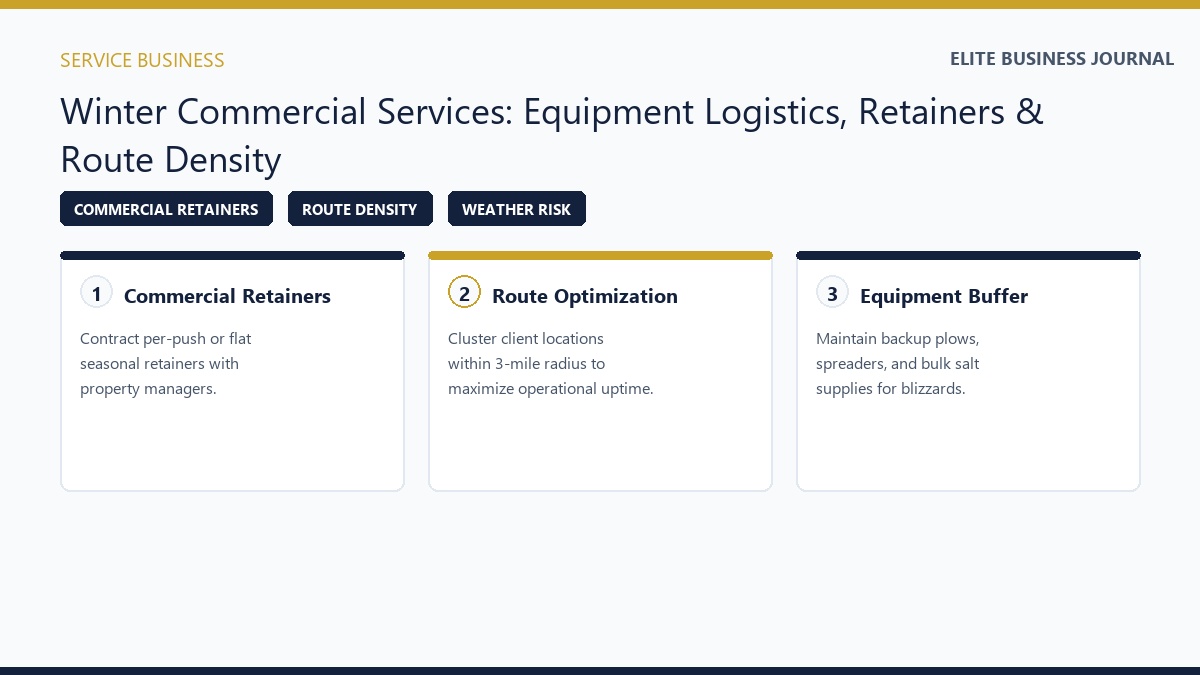
This setup lets you handle large commercial properties. Shopping centers. Parking lots. Office buildings. These jobs pay $500 to $2,000 per visit.
Where to Buy Equipment
Options:
- New equipment stores (cost more, warranty included)
- Used equipment online (Craigslist, Facebook Marketplace)
- Equipment rental (test before buying)
- Equipment financing (spread payments over time)
Pro tip: Buy used the first year. See if the business works. Then buy new equipment once you have customers.
4: How to Price Your Services
Understanding Your Costs First
Before you set prices, know what things cost.
Your costs include:
- Fuel: $10 to $30 per hour
- Salt and materials: $5 to $20 per job
- Truck payment: $300 to $500 per month
- Insurance: $200 to $500 per month
- Maintenance: $100 to $200 per month
Add these up. Divide by number of jobs. Now you know your minimum price.
Simple Pricing Formulas
The Easy Method:
Take your costs. Double them. That’s your price.
Example:
- Cost to clear one driveway: $30
- Price you charge: $60
- Your profit: $30
For Commercial Work:
Charge by size. Bigger properties cost more.
- Small parking lot: $200 to $500
- Medium parking lot: $500 to $1,500
- Large parking lot: $1,500 to $5,000
Seasonal Pricing
Before Winter (September to November):
Offer discounts. Offer 10 to 15 percent off if customers sign contracts now. This locks in customers before the rush.
During Winter (December to February):
Charge regular price or more. You’re busy. You can afford to charge more.
Emergency Service:
Charge double. Some customers need service the same day. They’ll pay extra for this speed.
Contract Pricing vs. Per Job Pricing
Per Job Pricing:
Charge each time you clear snow. Customers pay $50 to $150 per visit.
Pros: You make more money in heavy snow years.
Cons: Customers might be upset if snow is rare.
Contract Pricing:
Customers pay one price for the whole season. Usually $500 to $2,000 for residential.
Pros: Steady income. Happy customers.
Cons: You make less money in heavy snow years.
Best Option: Do both. Offer seasonal contracts at a discount. Also offer per job pricing for new customers.
Sample Prices for Different Services
Residential Services:
- Small driveway: $75 to $125
- Large driveway: $125 to $200
- Walkway and entrance: $40 to $75
- De icing application: $50 to $100
- Season contract (8 services): $600 to $1,000
Commercial Services:
- Small parking lot: $150 to $300
- Medium parking lot: $300 to $750
- Large parking lot: $750 to $2,000
- Monthly de icing: $500 to $2,000
Finding Your First Customers
Where Customers Are Right Now
Your customers are closer than you think. They’re in your neighborhood. They’re in nearby towns and searching online right now.
Create a Simple Website
You don’t need anything fancy.
What your website needs:
- Your name and phone number (big and easy to see)
- List of services
- Photos of your work
- Your service area (which cities you cover)
- A way to contact you (phone, email, or form)
Cost: Free to $500 per year
How to build it: Use Wix, Squarespace, or GoDaddy. These are easy. No coding needed.
Use Google to Find Customers
When it snows, people search “snow removal near me.” You want them to find you.
How to get found:
- Claim your Google Business listing (free)
- Add photos
- Add your service area
- Ask happy customers to leave reviews
This takes one hour. It’s free. It could bring you 10 customers.
Ask for Referrals
Your best customers come from other customers.
How to get referrals:
- Give a $25 credit to anyone who refers a friend
- Ask satisfied customers to tell neighbors
- Leave business cards at local businesses
- Join neighborhood Facebook groups
Post on Social Media
You probably already use social media. Use it for your business too.
What to post:
- Before and after photos (very powerful)
- Photos of you working
- Winter safety tips
- Customer testimonials
- Special offers
Which platforms: Facebook is best. Also try Instagram and TikTok.
Cost: Free (or $5 to $20 per day for ads)
Partner with Other Businesses
Find businesses that work with your customers.
Good partners:
- Lawn care companies (they have customer lists)
- Landscaping companies
- Real estate agents
- Property management companies
- Roofing companies (roof snow removal)
How to partner: Call them. Offer to split referrals. “You send me a customer, I’ll give you 20 percent of the job.”
Call Property Managers
Property managers need snow removal. They manage many properties. One contract with them could be 10 to 20 driveways.
How to reach them:
- Search online for “property management” in your area
- Call and ask to speak to the manager
- Offer a quote for their properties
- Offer a discount for the full season
Marketing That Actually Works
What NOT to Do
Don’t spend money on expensive ads you can’t measure. Don’t hire fancy marketing companies. You don’t have a huge budget.
What TO Do Instead
Focus on cheap, measurable marketing.
High Return Marketing:
- Local Google Ads ($200 to $500 per month)
- Show up when people search “snow removal near me”
- Only pay when someone clicks
- You control your budget
- You see exactly what you’re getting
- Facebook Ads ($5 to $20 per day)
- Show ads to people in your area
- Show before and after photos
- Target people who care about their properties
- Easy to turn on and off
- Email List Building (Free to $50 per month)
- Collect emails from your website
- Send reminders in September when winter is coming
- Send special offers
- Keep customers informed
- Business Cards ($30 to $50)
- Leave them at local businesses
- Give them to customers
- Cost almost nothing
- People actually use them
- Referral Program (Costs only what you offer)
- Offer $25 to $50 for each referral
- Only pay when someone signs up
- Your best customers do the marketing for you
When to Run Ads
September to October: Start advertising. Tell people to sign up for seasonal contracts.
November to December: Increase ads. Winter is here. People are ready to buy.
January to February: Keep advertising. You’ll stay busy.
March to August: Stop ads or reduce them. Winter is over. Most people don’t need snow removal.
7: Business Setup (Legal Stuff)
Register Your Business
You need a legal business name.
Three options:
- Sole Proprietor (Simplest)
- You and the business are the same
- Cost: $50 to $200
- Best for: Starting out
- LLC (Recommended)
- Separates you from the business legally
- Protects your personal assets
- Cost: $100 to $500
- Best for: Most small businesses
- Corporation (Overkill for now)
- Too complex to start
- Better to upgrade later
What to do:
- Search for business registration in your state
- File online (takes 30 minutes)
- Get your business license locally ($50 to $300)
Get Insurance (Don’t Skip This)
Insurance protects you if something goes wrong.
Insurance you need:
- General Liability ($400 to $1,000 per year)
- Someone slips on ice. They sue you.
- This covers it.
- Commercial Auto Insurance ($1,500 to $3,000 per year)
- Your truck is involved in an accident
- This covers it
- Regular auto insurance won’t cover plowing
- Workers Compensation (if you hire people)
- Required if you hire employees
- Cost depends on how much you pay them
Where to get it:
- Talk to an insurance agent
- Get quotes from three companies
- Choose the best price
Licenses and Permits
Check with your city and county. You might need:
- A snow removal license (some places require it)
- A contractor’s license (some places require it)
- Environmental permits (for salt application)
Call your city hall. Ask what you need. Usually it costs under $500 total.
Step by Step: How to Start Your Business
Month 1: Plan and Research
1:
- Research competitors in your area
- Call three competitors and get quotes
- Find out what they charge
- Find out what makes them good or bad
2:
- Calculate your startup costs
- Decide which equipment setup fits your budget
- Look at used equipment online
- Find the best deals
3:
- Create a business plan (simple, one page is fine)
- Write down your costs
- Write down your expected income
- Decide if this makes sense financially
4:
- Register your business name
- Open a business bank account
- Look into insurance quotes
Month 2: Get Equipment and Legal
1:
- Buy or finance your equipment
- Arrange plow attachment and truck setup
- Test everything works
2:
- Get business insurance quotes
- Buy the best insurance option
- Get your business license and permits
3:
- Get your business letterhead and cards printed
- Set up a simple website (use Wix or Squarespace)
- Set up a Google Business listing
4:
- Create business contracts (find templates online, $50 to have a lawyer review)
- Set up a phone number (can be your cell phone)
- Practice explaining your service to a friend
Month 3: Marketing and Customer Finding
1:
- Set up your website completely
- Write good descriptions of what you do
- Add photos
- Make sure your phone number is easy to find
2:
- Start calling property management companies
- Send emails to potential commercial clients
- Offer a free quote
3:
- Set up Facebook ads
- Create before and after photos
- Post on local Facebook groups
4:
- Print and distribute business cards
- Ask friends and family to refer you
- Set up email marketing
- Send first email to list
Months 4 to 6: Pre Season Push
July to August (Off season):
- Keep marketing going
- Reach out to past customers
- Offer discounts for signing seasonal contracts
- Build your customer list
September to October:
- Increase marketing budget
- Run Facebook ads
- Call all prospects again
- Offer 15 percent discount for early signers
Early November:
- Stop signing new customers (you’re full)
- Check all equipment
- Hire any employees needed
- Create emergency protocols
Late November to March:
- Run your business
- Provide excellent service
- Collect payment immediately after service
- Track everything (jobs, customers, money)
Common Mistakes People Make
1: Buying Too Much Equipment Too Fast
The Problem:
New owners spend $30,000 on equipment before they have one customer.
The Fix:
Start small. Buy a basic plow. See if customers want your service. Buy more equipment with money you earn.
Real Example:
Start with a $3,000 plow. Get five customers. Make $1,000 profit. Use that to buy a snow blower. Keep growing.
2: Pricing Too Low
The Problem:
You charge $50 per driveway but it costs you $40 to do it.
The Fix:
Calculate your costs first. Double them for profit. Research what competitors charge. Charge similar prices or higher.
Real Example:
If a driveway costs $30 to clear (fuel, time, wear and tear), charge at least $75. You make $45 profit per job.
3: Not Getting Insurance
The Problem:
You damage a customer’s car. They sue you. You have no protection.
The Fix:
Get insurance before you take your first job. Cost is only $1,500 to $3,000 per year. That’s cheap protection.
4: Not Tracking Money
The Problem:
You don’t know if you’re making profit or losing money.
The Fix:
Track every expense. Keep receipts. Use simple accounting software ($10 to $20 per month).
Real Example:
Use a spreadsheet or QuickBooks. Write down money in. Write down money out. Do this daily.
5: Taking on Too Much Too Fast
The Problem:
You sign 50 customers before winter. You can’t handle them all.
The Fix:
Start with customers you can handle. Do excellent work. Get referrals. Grow slowly. Hire employees when you’re overloaded.
6: No Backup Equipment
The Problem:
Your plow breaks. You can’t serve customers. They hire someone else. You lose them.
The Fix:
Keep a backup shovel or small plow. Have a relationship with equipment rental companies. Know you can get backup equipment quickly.
7: Not Communicating with Customers
The Problem:
A customer doesn’t know if you’re coming today. They hire someone else.
The Fix:
Send text updates. Call the night before. Send confirmation message morning of. Keep customers informed.
8: Skipping the Contract
The Problem:
A customer claims you said something you didn’t. You fight about payment.
The Fix:
Use a simple written contract. It protects both of you. Shows what you’ll do. Shows when and how they’ll pay.
Design Ideas for Your Business
Your Brand Look
Your business needs to look professional. This makes customers trust you.
Your Truck:
- Paint your business name on it (cost: $500 to $1,500)
- Add your phone number big and visible
- Keep it clean
- This is your best advertisement
Uniform:
- Wear a shirt or jacket with your logo ($20 per item)
- Wear safety gear (reflective vest)
- Look professional
Business Cards:
- Simple design
- Your name, phone, website
- Professional look
- Order from Vistaprint or similar ($30 for 500)
Your Website:
- Clean and simple design
- Good photos of your work
- Easy to find your phone number
- Works on phones
Vehicle Wrap:
- Full wrap showing your business name
- Phone number prominently displayed
- Professional photos of your work
- Cost: $1,500 to $3,000
- But it gets seen 1,000 times per day
Your Logo
The logo should be simple. You don’t need fancy.
Logo Ideas:
- Your name with a snowflake
- A truck with snow plow
- A shovel with your name
- Simple and clean
Where to get it:
- Fiverr (cheap, $5 to $20)
- Upwork (freelance designers)
- Canva (DIY, free tool)
Your Service Area Map
Show exactly where you work.
Options:
- Map on your website
- Printed map on business card
- List all cities you serve
This stops customers from calling if you don’t serve their area.
Photos That Sell
Before and after photos are your best marketing.
What to photograph:
- Driveway before snow removal (during or right after snow)
- Same driveway after you clear it (clean and professional)
- Parking lots before and after
- Walkways and entrances before and after
- Include your truck if it looks good
How to use them:
- Post on Facebook
- Put on website
- Send in email marketing
- Show to prospects
Building Your Customer Base (Step by Step)
1: Start with People You Know
Your first customers are easiest to find.
Who to ask:
- Family members
- Neighbors
- Friends from work
- People at church or community groups
- Coworkers
What to say:
“I’m starting a snow removal business. Would you be interested in my service? I can clear your driveway for $100 per season. That’s less than a typical fee.”
Goal: Get three to five first customers. Prove you can do good work.
2: Do Perfect Work for First Customers
Your first customers are your best advertisement.
How to be perfect:
- Show up early, not late
- Clear the entire driveway completely
- Remove all snow and ice
- Edge the driveway neatly
- Put snow in a good spot
- Clean up any mess
- Send a thank you text after
Why this matters:
Happy customers tell other people. They leave good reviews. They become repeat customers.
3: Ask for Reviews and Referrals
After great service, ask for help.
What to say:
“I’m so glad you’re happy with the service. Would you leave a quick review on Google? And if you know anyone who needs snow removal, I’d appreciate a referral.”
Where to ask for reviews:
- Google Business listing
- Yelp
- Your website
4: Offer Referral Bonuses
People help if you reward them.
Referral bonus options:
- $25 credit toward next service
- $50 discount on winter contract
- Free de icing service
How to run it:
- Tell customers about it
- Track who refers whom
- Honor the rewards
- Thank them for the referral
5: Target Commercial Properties
Commercial work pays better.
Where to find them:
- Small shopping centers
- Office parks
- Apartment complexes
- Doctors offices
- Banks and insurance agencies
How to approach:
- Find the property manager or owner’s name
- Call and ask to speak to them
- Say: “I’m a local snow removal company. Can I send you a quote for next winter?”
- Send a professional quote by email
- Follow up in two weeks
Why commercial work is better:
- Bigger jobs mean more money
- Long term contracts (whole season)
- Pay better than residential
- More stable income
6: Build a Email List
Your email list is gold.
How to build it:
- Add email signup to website
- Offer something free (snow removal tips, winter checklist)
- Collect emails from all prospects
- Ask customers for permission to email them
How to use it:
- Send reminder in September: “Winter is coming. Sign up now and save 15 percent”
- Send monthly tips in winter
- Announce special offers
- Keep your name in their mind
Email frequency:
- Monthly in off season
- Weekly in winter
- Only when you have real news (not spam)
Money Basics
Understand Your Profit
Profit is money left after paying expenses.
Simple formula:
Income minus Expenses equals Profit
Example:
- You clear five driveways at $100 each = $500 income
- Your costs: $100 in fuel, supplies, truck payment
- Your profit: $400
Know Your Numbers
Track everything.
What to track:
- Every job (who, when, how much)
- Every expense (fuel, salt, supplies)
- Every payment received
- Every customer
Best tool:
Use a simple spreadsheet or QuickBooks. Update it daily.
Seasonal Income Pattern
Your income isn’t even all year.
Typical pattern:
- May to August: $0 to $1,000 (off season)
- September: $1,000 to $3,000 (selling contracts)
- October: $2,000 to $5,000 (pre season signups)
- November to February: $5,000 to $15,000 per month (heavy season)
- March to April: $2,000 to $5,000 (tail end of season)
What this means:
You need to save money in winter. Use it to pay bills in summer.
First Year Realistic Income
Most people don’t make big money year one.
Conservative estimate:
- 20 residential customers
- 8 snow events per year
- $100 per event average
- Total: $16,000 for the year
That’s only:
$250 per month average. But really you make it all in winter.
Better estimate:
If you hustle and build a good customer list:
- 40 residential customers: $32,000
- 5 commercial contracts: $15,000
- Emergency jobs: $2,000
- Total: $49,000
Real options:
Some people make $5,000 to $10,000 in winter alone. Some make $50,000 to $100,000 by year two.
Profit Margins
How much profit do you actually make?
Residential service:
- Charge: $100
- Cost: $40
- Profit: $60 (60 percent margin)
Commercial work:
- Charge: $1,000
- Cost: $400
- Profit: $600 (60 percent margin)
De icing services:
- Charge: $500
- Cost: $150 (cheap materials)
- Profit: $350 (70 percent margin)
The better you get, the higher your margins. You do jobs faster. You need less time. More profit.
Managing Cash in Off Season
Winter pays well. Summer doesn’t.
How to manage:
- Save 50 percent of winter profits
- Use savings to cover summer bills
- Keep $5,000 emergency fund
- Don’t spend all winter money in spring
Example:
Make $30,000 in January. Save $15,000. Spend $15,000 on summer expenses.
Scaling Your Business
When to Hire Your First Employee
Do it when you have more work than you can handle alone.
Signs you need help:
- You’re turning down jobs
- You’re working 14 hour days
- You could make more money if you had help
- You have $20,000 plus in customer contracts
How to hire:
- Look for reliable people
- Start with part time help
- Pay $15 to $20 per hour
- Start with basic tasks (shoveling, spreading salt)
When to Buy More Equipment
Buy equipment when you have customers to pay for it.
Bad way: Buy $50,000 in equipment. Hope customers come.
Good way:
- Get customers (sign contracts)
- Make money from those customers
- Use profit to buy equipment
- Get more customers
- Repeat
Expanding Your Service Area
After you crush your local area, expand.
How to expand:
- Add one nearby town
- Run ads there
- Build customer base
- Add another town
- Keep growing
Cost: About $500 per town for ads and marketing
Adding More Services
Make more money from same customers.
Services to add:
- De icing maintenance (spring service to prevent ice)
- Fall leaf cleanup
- Spring yard cleanup
- Pressure washing
- Landscaping
Benefits:
- Same customers all year round
- Higher income
- Better marketing (more things to offer)
- Less seasonal income swings
Your Weather Monitoring Plan
Why This Matters
You need to know when it snows before customers call you.
How to Monitor
1: Free (but requires attention)
- Check weather.com multiple times per day
- Watch local news
- Read weather alerts on phone
- Works but takes time
2: Smart (costs $50 to $200 per month)
- Subscribe to professional weather service
- Get alerts sent to your phone
- Know snowfall predictions
- Know timing of storms
Best option:
Use a combination. Check weather daily. Subscribe to alerts for big storms.
Your Action Plan
The forecast shows 2 inches coming:
- Alert customers (text: “Snow forecast. I’ll be out tomorrow.”)
- Prepare equipment
- Get coffee ready
- Plan your route
When it starts snowing:
- Get your team ready
- Text customers: “Snow is falling now. We’ll be there soon.”)
- Start clearing the biggest properties first
- Work until the snow stops and has been cleared
When you’re done:
- Send final photos if needed
- Invoice customers the same day
- Ask for payment immediately
- Get rest
Final Thought
Winter is coming whether you’re ready or not.
Homes and businesses will need snow removal.
The question is: who will they hire?
Will it be someone else?
Or will it be you?
Make the decision now. Start today.