
At the Budget on 28 October 2026, the government announced that the tax-free trading allowance will rise from £1,000 to £3,000 from April 2027. HMRC’s own Help for Hustles campaign describes the change as extra tax relief for people earning money from side hustles. That makes this a good moment to be clear on what a side hustle actually is, and when it stops being a hobby in the eyes of the taxman.
This guide explains what a side hustle means, how it differs from a second job, a hobby or a small business, and what UK rules apply once the money starts coming in. You will also find realistic examples and a checklist for starting one without tripping over your employment contract or a tax bill.
Quick Answer
A side hustle is paid work you do on your own terms alongside your main job or main source of income. Common examples include freelancing, tutoring, dog walking, delivery driving, selling things you make or buy online, and creating paid content. Unlike a second job with a payslip, a side hustle is usually self-employed, so no tax is taken off automatically. In the UK, if your combined side hustle income is more than £1,000 in a tax year, before expenses, you normally need to tell HMRC through Self Assessment. The tax-free trading allowance rises to £3,000 from April 2027, but HMRC says you must still report income over £1,000 until a new online reporting tool arrives, expected by 2029. Selling your own unwanted belongings usually does not count.
Key Takeaways
- A side hustle is flexible, self-directed paid work done alongside a main job or main income.
- The £1,000 trading allowance covers all your side hustles combined and is measured on income, not profit.
- The allowance rises to £3,000 from April 2027, but reporting income above £1,000 is still required for now.
- Online marketplaces and gig platforms now share seller information with HMRC.
- Check your employment contract for conflict-of-interest or outside-work clauses before you start.
What Is a Side Hustle?
A side hustle is any paid activity you run yourself on top of your main job, studies or caring responsibilities. You decide when you work, what you charge and which clients you take on. The income tops up your main earnings rather than replacing them.
The phrase started as American slang but is now everyday British English. The Cambridge Dictionary definition describes it as work you are paid for in addition to your main job. HMRC uses the term too, which tells you how mainstream it has become.
Three features separate a side hustle from other ways of earning extra money:
- It is self-directed. There is usually no employer setting your hours or deducting tax.
- It is secondary. Your main job or main income still pays the core bills.
- It is done for money. A hobby that occasionally covers its costs is different from an activity run to earn income.
A side hustle can be tiny, such as a few hours of dog walking at weekends. It can also be a serious micro-business turning over thousands of pounds a year, run in evenings and lunch breaks.
Side Hustle Examples in the UK
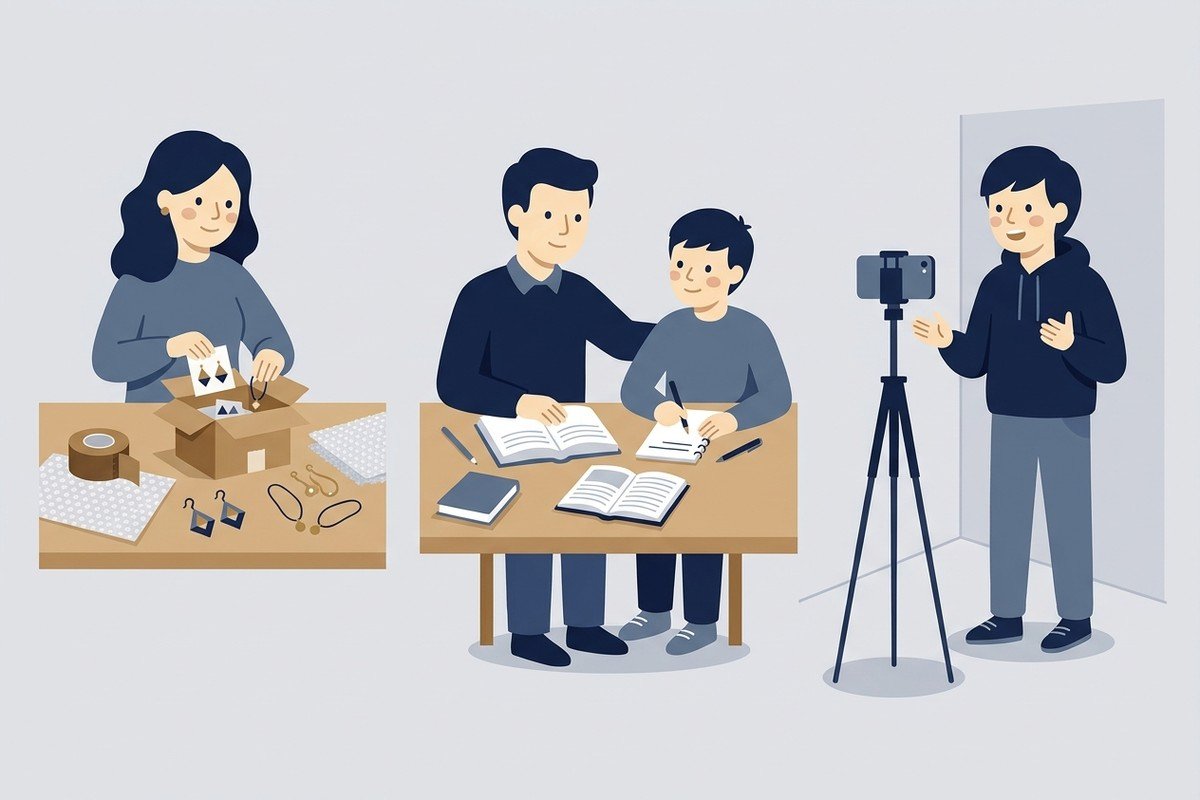
Most side hustles fall into one of three groups. HMRC’s guidance uses the same split, because each one is treated in a similar way for tax.
| Type | Typical examples | What to watch |
|---|---|---|
| Selling goods | Handmade crafts, reselling charity shop finds, upcycled furniture, print-on-demand | Buying or making items to sell for profit counts as trading |
| Providing a service | Tutoring, dog walking, cleaning, gardening, food delivery, freelance design or writing | Insurance, licences and checks for some services |
| Creating content | YouTube videos, podcasts, sponsored social posts, affiliate links | Free gifts and services received for promotion count as income |
Some side hustles carry extra rules beyond tax. Paid childminding in a home in England, for example, requires registration with Ofsted or a childminder agency. Food businesses need to register with the local council, and anyone visiting clients’ homes should think about public liability insurance.
For ideas sorted by skill level and income potential, see our guide to the best side hustles in the UK.
Side Hustle vs Second Job vs Hobby
These terms get used interchangeably, but HMRC treats them very differently. The distinction decides whether tax is handled for you or whether you have to declare it yourself.
| Side hustle | Second job | Hobby | |
|---|---|---|---|
| Who sets the work | You | An employer | You |
| Payslip | No | Yes | No |
| How tax is paid | Self Assessment if over £1,000 | PAYE, deducted by the employer | Usually nothing to declare |
| Example | Freelance logo design for paying clients | Evening bar shifts | Painting for pleasure and selling the odd canvas to a friend |
HMRC is clear on the second job point. If you get a payslip for extra shifts, your tax should already be sorted through PAYE, so you do not need Self Assessment for that income. Your second employer will normally use a tax code such as BR, which taxes everything at the 20% basic rate, because your Personal Allowance of £12,570 is already used by your main job.
The hobby line is fuzzier. HMRC’s practical test is simple: once you earn more than £1,000 from activities outside your main job in a tax year, “it’s grown bigger than a hobby” and you need to tell HMRC.
Side Hustle Tax Rules in the UK
Tax is where most new side hustlers get caught out. Your employer does not handle it, and HMRC says it is your responsibility, not your employer’s, to report what you earn on the side.
The £1,000 trading allowance
Every individual gets a single £1,000 trading allowance per tax year (6 April to 5 April). It is not £1,000 per side hustle. HMRC gives the example of someone earning £800 from content creation and £500 from selling crafts: the total is £1,300, so they must tell HMRC.
The threshold is measured on income before expenses, not profit. A crafter who sells £1,200 of jewellery but spent £700 on materials has still gone over the limit.
If your income is above £1,000, you can either deduct the £1,000 allowance or deduct your actual expenses, whichever gives the lower taxable figure. You cannot do both.
The 2027 change to £3,000
The allowance rises to £3,000 from April 2027. HMRC warns that this does not mean you can ignore income up to £3,000 today. Until a new online reporting tool is ready, expected by 2029, income over £1,000 still has to go through Self Assessment.
When the government first set out the plan in March 2025, it said around 300,000 taxpayers would benefit. It estimated 90,000 of them would have no tax to pay and no reason to report their trading income at all.
Registering and paying
If you need to report, register for Self Assessment by 5 October after the end of the tax year in which you started. For income earned between 6 April 2025 and 5 April 2026, that deadline was 5 October 2026. The online return and any tax due must then be filed and paid by 31 January 2027.
Profits are added to your salary and taxed at your usual Income Tax rate. Larger profits can also trigger Class 4 National Insurance, so set aside a share of every payment rather than spending it all.
Our step-by-step guide on how to register as a sole trader walks through the HMRC registration process.
Selling Online: When HMRC Gets Involved
Online marketplaces, gig apps and rental platforms must now share certain seller information with HMRC. HMRC says it uses this and other third-party data to spot income that has not been declared.
That does not mean everyone selling on Vinted or eBay owes tax. HMRC’s guidance on income from online platforms draws a clear line:
- Clearing out your own things is unlikely to need reporting, however many items you sell, as long as no single item is worth more than £6,000.
- Buying items to resell for profit, such as regular car boot or charity shop flipping, is likely to be trading.
- Making items to sell, even if it started as a hobby, counts as trading too.
Selling a single possession for more than £6,000 can bring Capital Gains Tax into play instead, so check before you list something valuable.
Your Employment Contract and a Side Hustle
No UK law stops you running a side hustle while employed. Your contract, though, might. Many employment contracts include clauses about outside work, conflicts of interest, use of company equipment and confidential information.
Before you start, check these points:
- Outside work clause. Some contracts require permission before taking on other paid work.
- Conflict of interest. Doing similar work for your employer’s clients or competitors is the riskiest kind of side hustle.
- Company resources. Never use a work laptop, software licence or work hours for your own clients.
- Intellectual property. Some contracts claim ownership of anything you create that relates to the business, even outside hours.
- Restrictive covenants. These can limit work you do after leaving, which matters if the side hustle may grow.
When in doubt, ask HR in writing. A short email asking permission is far cheaper than a disciplinary hearing. If your contract is unclear, an employment solicitor or ACAS can explain how the terms apply to you.
The Honest Downsides of a Side Hustle
Social media makes side hustles look effortless. The reality is usually slower and more demanding, and it pays to go in with clear eyes.
- Time cost. Evenings and weekends disappear, and burnout is a real risk alongside a full-time job.
- Low early earnings. Once materials, platform fees and your hours are counted, the hourly rate is often below the minimum wage at first.
- Tax admin. Records, receipts and a yearly tax return become your job.
- Insurance gaps. Home and car policies often exclude business use, so a delivery driver or home-based seller may need extra cover.
- Benefits and student finance. Extra income can affect Universal Credit and some other means-tested support, so check before you start.
None of these rule out a side hustle. They simply mean the best ones are planned like a small business from day one, with a budget, a pricing plan and a record of every pound in and out.
How to Start a Side Hustle the Right Way
A little structure at the start saves a lot of trouble later. These six steps cover the essentials.
- Pick something you can deliver reliably. Start with a skill you already have or a product you can make consistently.
- Check your contract. Confirm there is no clause or conflict that rules it out.
- Test demand cheaply. Offer the service to a few paying customers before spending on branding or stock.
- Open a separate bank account. Keeping side hustle money apart makes record keeping and tax far easier.
- Keep records from the first sale. Log income, expenses and mileage in a spreadsheet or simple bookkeeping app.
- Track the £1,000 line. As soon as your combined income passes it, plan to register for Self Assessment.
If the side hustle starts to outgrow your spare time, our guide on turning your side hustle into a full-time business covers the numbers to hit before you hand in your notice.
Frequently Asked Questions
What is a side hustle in simple terms?
A side hustle is a way of earning extra money on your own terms alongside your main job. Examples include freelancing, tutoring, dog walking, selling crafts online and creating paid content.
Is a side hustle the same as a second job?
No. A second job is employed work with a payslip, and tax is deducted through PAYE. A side hustle is normally self-employed, so you are responsible for reporting the income and paying any tax due.
How much can I earn from a side hustle before paying tax?
You can earn up to £1,000 a year from all side hustles combined without telling HMRC, under the trading allowance. Above that, you normally need to file a Self Assessment return. The allowance rises to £3,000 from April 2027.
Do I need to tell my employer about my side hustle?
There is no general legal duty to tell your employer, but your contract may require it. Check for outside-work, conflict-of-interest and confidentiality clauses, and ask HR in writing if you are unsure.
Does selling clothes on Vinted count as a side hustle?
Selling your own unwanted clothes usually does not count, and you are unlikely to need to tell HMRC. Regularly buying items to resell for a profit is likely to be trading, and that income counts as part of the £1,000 allowance.
Can a side hustle become a full-time business?
Yes, and many UK businesses started that way. The usual signs are steady demand, repeat customers and income that could cover your living costs with a buffer.
Your Next Actions
A side hustle is one of the most flexible ways to raise your income, but it works best when you treat it as a small business from the first sale. Start by checking your employment contract and opening a separate account for the money.
Next, add up what you have already earned this tax year from every side activity combined. If it is approaching £1,000, use HMRC’s free online checker and plan to register for Self Assessment by the 5 October deadline. Remember the move to a £3,000 allowance does not apply until April 2027.
Still choosing an idea? Browse our list of the best side hustles in the UK and pick one that fits the hours you genuinely have. Tax rules can change, so for anything complex, such as several income streams or a hustle that may become a company, speak to an accountant.