
The average contents-only insurance policy in the UK cost £118 a year between July and September 2026, according to the Association of British Insurers’ latest Property Insurance Tracker. Over the same quarter, the average home and business claim reached a record £10,000. That gap between a modest premium and a five-figure loss is the whole case for contents insurance.
This guide explains what contents insurance covers in the UK, what it leaves out, what it costs in 2026 and how to set your cover so a claim is paid in full. It also covers a point most comparison pages skip: what happens to your laptop, stock and work equipment if you run a business or work from home.
Quick Answer
Contents insurance pays to repair or replace your belongings if they are stolen, damaged or destroyed by events such as fire, flood, escape of water or burglary. It covers anything you would take with you when you move: furniture, electricals, clothes, jewellery and usually fitted carpets. The structure of the property is not included and needs buildings insurance. No law requires it, and renters only ever need contents cover because the landlord insures the building. The ABI puts the average contents-only premium at £118 a year for July to September 2026. The most important decision is the sum insured: it should equal the cost of replacing everything new, because underinsuring can reduce every claim you make. Items worth more than the single-item limit, often around £1,500, must be listed separately.
Key Takeaways
- Contents insurance covers your belongings; buildings insurance covers the structure, fixtures and fittings.
- The average UK contents-only premium was £118 a year in Q3 2026, £7 lower than a year earlier.
- Insure for the full new-for-old replacement cost of everything you own, not its second-hand value.
- Single items above the policy limit, often £1,500 to £2,500, must be named or they may be paid only up to the cap.
- Business stock and equipment used to earn money are often limited or excluded, so check before you rely on a home policy.
What Contents Insurance Covers
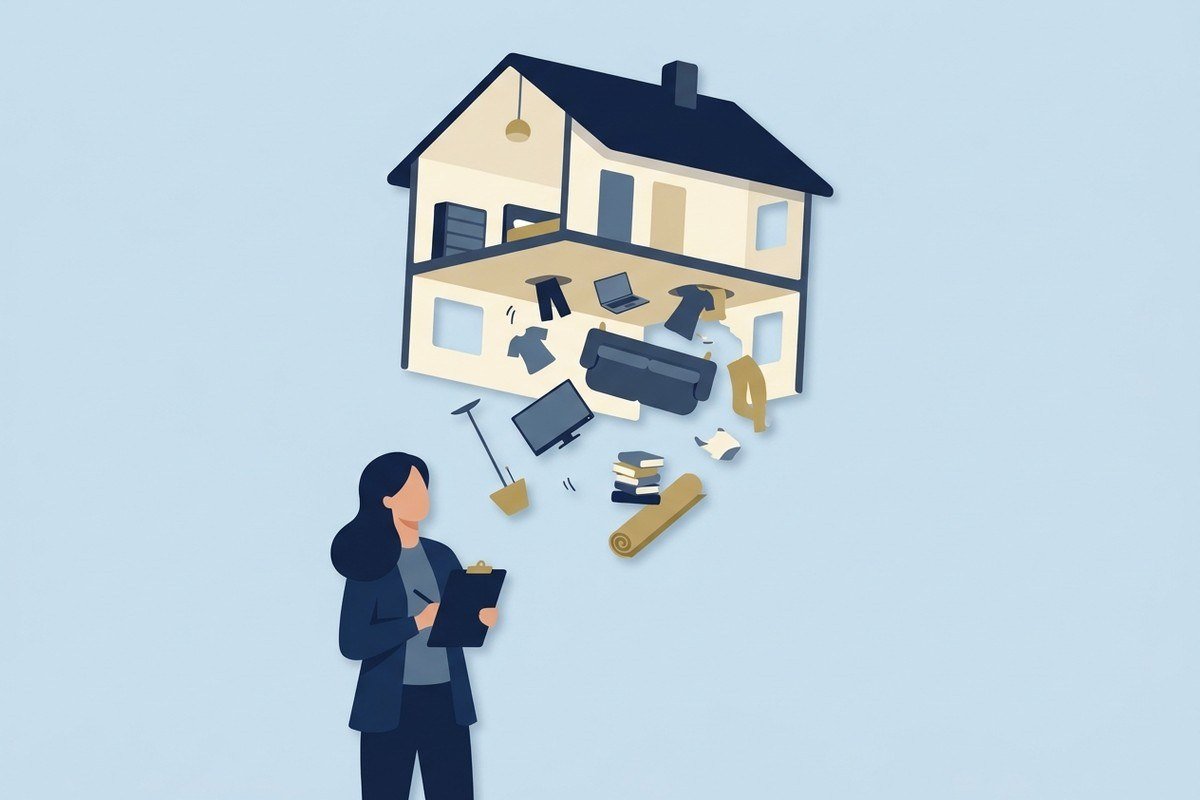
A simple test decides what counts as contents. If you turned your home upside down, everything that fell out would be contents. Furniture, televisions, laptops, clothes, books, kitchen appliances and jewellery all qualify, and most policies include fitted carpets too.
Policies pay out when those items are damaged or lost through an insured event. The core list is similar across insurers, although limits and wording vary.
| Usually covered | Typical example |
|---|---|
| Theft | A burglar takes a laptop, a TV and jewellery after forcing the back door |
| Fire and smoke | A kitchen fire ruins the sofa, curtains and clothes in the next room |
| Flood and storm | River water soaks carpets and ground-floor furniture |
| Escape of water | A burst pipe in the loft drips through and destroys a bed and wardrobe |
| Garden and outbuilding contents | Tools stolen from a locked shed, usually at a lower limit |
| Alternative accommodation | Hotel costs while a fire-damaged home is made fit to live in |
Many policies add smaller benefits as standard. Aviva’s Signature policy, for instance, includes replacement locks if your keys are stolen, visitors’ belongings up to £3,000 and garden contents up to £12,000. Food spoiled in a broken freezer is another common inclusion.
Most cover is “new for old”. That means a destroyed five-year-old television is replaced with an equivalent new one, with no deduction for age. Clothing and household linen are the usual exceptions, since some insurers still deduct for wear and tear on those.
What Contents Insurance Does Not Cover
Exclusions cause more disputes than any other part of a policy. MoneyHelper, the government-backed guidance service, lists the standard ones as normal wear and tear, deliberate damage and damage to a computer caused by a virus.
Beyond those, expect these gaps unless you pay for an add-on:
- Accidental damage. Spilling paint on the carpet or knocking a TV off its stand is usually excluded from basic cover.
- Items away from home. Phones, laptops and jewellery lost outside the house need personal possessions cover.
- Bikes left unsecured. Aviva, for example, will not pay for a bike stolen from the garden unless it was locked to something that cannot be moved.
- Vehicles. Cars, motorbikes, caravans and boats need their own insurance.
- Gradual damage. A slow leak that rots a cupboard over months is normally treated as a maintenance issue.
- Theft without forced entry. Many policies only pay for theft if there are signs someone broke in.
Every policy also carries an excess, the part of each claim you pay yourself. MoneyHelper says this is typically between £50 and £250, and you choose the figure when you buy.
Contents vs Buildings Insurance
The two policies split your home in half. Contents insurance covers what you own inside it, while buildings insurance covers the structure: walls, roof, floors, windows and permanent fixtures such as fitted kitchens and bathroom suites.
| Situation | Buildings insurance | Contents insurance |
|---|---|---|
| Homeowner with a mortgage | Required by the lender | Optional, strongly advised |
| Homeowner, no mortgage | Optional, strongly advised | Optional, strongly advised |
| Leasehold flat owner | Usually arranged by the freeholder | Your responsibility |
| Tenant | Landlord’s responsibility | Your responsibility |
Homeowners who need both can buy them as one combined policy. That often costs less than two separate policies and avoids arguments between insurers about whether damage belongs to the structure or the contents.
Tenants have a narrower decision, because the landlord’s policy never covers your possessions. Our guide to renters insurance in the UK covers tenant’s liability cover and what a landlord can and cannot require.
How Much Does Contents Insurance Cost in 2026?
The ABI’s tracker is the most reliable price guide because it is based on what 15.5 million policyholders actually paid, not on quotes. Its figures for July to September 2026 show contents cover getting slightly cheaper while combined policies edged up.
| Policy type | Average annual premium, Q3 2026 | Change on Q3 2025 |
|---|---|---|
| Contents only | £118 | Down £7 |
| Buildings only | £310 | Down £13 |
| Combined buildings and contents | £389 | Up £3 |
Your own quote will move a long way from the average. Postcode is the biggest single factor, because theft and flood rates vary sharply by area. The sum insured, the excess you choose, your claims history and any add-ons all shift the price as well.
Security matters too. Insurers often ask whether your external doors have five-lever mortice locks and whether you have a working alarm. If you say yes, you must actually use them, or a theft claim can be refused.
How Much Contents Cover Do You Need?
This is where most people go wrong. The figure you give the insurer, called the sum insured, should be the cost of replacing everything you own at today’s prices, bought new. Second-hand value and what you originally paid are both the wrong numbers.
Most households guess, and most guess low. A room-by-room tally usually lands well above the first estimate once kitchenware, clothes, books and garden equipment are added.
Work it out room by room
- Walk through each room with a notepad or a spreadsheet.
- List large items first: furniture, beds, appliances, electricals.
- Add the categories people forget, such as clothes, shoes, bedding, cookware, toys, tools and anything in the loft.
- Price each item at what a like-for-like new replacement costs now.
- Note anything worth more than your insurer’s single-item limit.
- Add the total, then round up rather than down.
Most insurers and comparison sites offer free contents calculators that follow the same method. Photos and receipts stored online also make any later claim far quicker.
Why underinsurance costs you on every claim
If your sum insured is too low, some policies apply what is called an average clause. The insurer pays the same proportion of each claim as the proportion of your contents you insured. Take an illustration: belongings worth £40,000 insured for £30,000 are 75% covered, so an £8,000 claim could be settled at £6,000.
That reduction applies even to a small claim nowhere near your limit. It is the main reason a cheap quote built on a low sum insured can prove expensive.
Some insurers sell unlimited or high fixed sums insured instead. MoneyHelper notes these usually cost more and you may pay for cover you never need, but they do remove the guesswork.
Single-item and valuables limits
Policies also cap what they will pay for any one item. MoneyHelper’s contents insurance guide says the single-item limit is often around £1,500. Aviva asks customers to declare any single item worth more than £2,500.
Engagement rings, watches, designer bags, high-end bikes and art often break these limits. List them by name with a valuation, otherwise a £6,000 ring may be paid only up to the cap. Valuables usually have a separate total limit as well, so check the schedule once you have added them.
Working From Home or Running a Business
For many readers of this journal, the home is also the office. That changes what a household policy will and will not pay for.
Standard contents policies usually include some home office equipment. Aviva’s Signature cover, for example, includes home office equipment you own and are responsible for up to £15,000. Other insurers set lower limits, and some exclude equipment owned by your employer.
The bigger risk is trading from home. Stock held for sale, client property, tools used for paid work and equipment owned by a limited company are often limited or excluded on a household policy. Visiting customers and staff raise liability questions too.
Follow these steps if any of that applies to you:
- Tell your insurer you work from home and describe what you do, even if it feels minor.
- Check the business equipment limit and whether stock is covered at all.
- Confirm whether a company-owned laptop counts as your contents or the company’s.
- Consider separate home business cover if stock or client visits are involved.
Our guide to what business insurance you actually need explains which commercial policies sit alongside a household policy.
Optional Add-Ons Worth Paying For
Add-ons can double a basic premium, so buy only the ones that match real risks in your household.
| Add-on | What it adds | Who it suits |
|---|---|---|
| Accidental damage | One-off accidents such as spills and dropped electricals | Families with young children or pets, new furniture |
| Personal possessions | Loss or theft of items you carry outside the home, often including abroad | Commuters, frequent travellers, anyone with costly jewellery |
| Bicycle cover | Theft and damage away from home | Cyclists whose bike is worth more than the excess |
| Legal expenses | Legal costs for disputes such as faulty goods or neighbours | Anyone without similar cover through a union or bank account |
| Home emergency | Call-outs for boiler failure, blocked drains or lost keys | Homeowners without a boiler service plan |
Check for duplicate cover before you add anything. Packaged bank accounts often include phone or gadget insurance, and travel policies may already cover belongings abroad.
How to Cut the Cost Without Cutting Cover
Renewal pricing is now regulated. Under the FCA’s loyalty penalty rules, insurers cannot offer a renewing customer a higher price than they would charge the same customer as a new one. The regulator found that in 2018, 6 million loyal policyholders would have saved £1.2 billion by paying the average price for their risk.
Loyalty is no longer punished, but your current insurer is still not guaranteed to be the cheapest. Compare every year. These steps also bring the price down:
- Combine policies if you need buildings cover as well.
- Pay annually where you can, because monthly instalments often add interest.
- Raise the voluntary excess to a level you could comfortably pay.
- Improve security with BSI-approved locks, a burglar alarm and smoke alarms.
- Protect your no-claims discount by paying small losses yourself.
- Check landlord schemes if you rent from a council or housing association, as some arrange cheaper group policies.
Avoid cutting the sum insured to save money. As the average clause shows, the saving is small and the cost at claim time can be large.
Common Mistakes That Get Claims Cut
Most contents claims that go wrong fail on facts the policyholder controlled. These are the ones to watch:
- Guessing the sum insured. A low figure can reduce every claim, including small ones.
- Not naming high-value items. An undeclared ring or watch is often paid only up to the single-item limit.
- Wrong answers on the application. MoneyHelper warns that an error or missing information could mean a claim is not paid. Answer every question accurately.
- Not updating the policy. Tell your insurer after a big purchase, a move, a new lodger or when you start working from home.
- Ignoring security conditions. Leaving a window open or the alarm off can void a theft claim.
- No evidence. Without receipts, photos or bank statements, proving ownership and value takes much longer.
Rules and limits vary between policies, so read your own schedule. For a complex situation, such as high-value collections or a home-based business, an independent insurance broker can compare specialist policies for you.
Frequently Asked Questions
What is contents insurance?
Contents insurance is a home insurance policy that pays to repair or replace your belongings if they are stolen, damaged or destroyed. It covers movable possessions such as furniture, electricals, clothes and jewellery, plus fitted carpets on most policies.
What does contents insurance cover?
Standard cover protects against theft, fire, smoke, flood, storms and escape of water. Many policies also include garden contents, replacement locks, freezer food and alternative accommodation. Accidental damage and items away from home usually cost extra.
What is the average cost of home contents insurance?
The ABI found the average contents-only premium was £118 a year for July to September 2026. A combined buildings and contents policy averaged £389. Your price depends on postcode, sum insured, excess and claims history.
Is contents insurance a legal requirement?
No, it is optional in the UK. Mortgage lenders require buildings insurance, but not contents cover. Without it, you would pay to replace everything yourself after a fire, flood or burglary.
Who is best for contents insurance?
No single insurer is best for every household. A tenant with few possessions, a family that needs accidental damage cover and a homeowner with valuable jewellery will each find different winners. Compare on cover, limits and excess, not price alone.
Does contents insurance cover my laptop if I work from home?
Usually, if you own the laptop and it is used mainly at home, up to the policy’s home office or single-item limit. Equipment owned by your employer or your company, and stock for sale, may not be covered. Tell your insurer you work from home.
Your Next Actions
Start with the number that matters most: your sum insured. Spend an hour on a room-by-room list, price everything as new, and name any item above your insurer’s single-item limit. Then decide which add-ons match real risks in your household rather than buying every extra on offer.
Get at least three quotes on the same sum insured and excess so the comparison is fair. If you own your home, price a combined policy against our buildings insurance UK guide figures. Tenants should read our renters insurance guide before you buy.
Finally, if you earn money from home, call your insurer before you need to claim. A five-minute conversation now costs far less than an argument after a burglary.