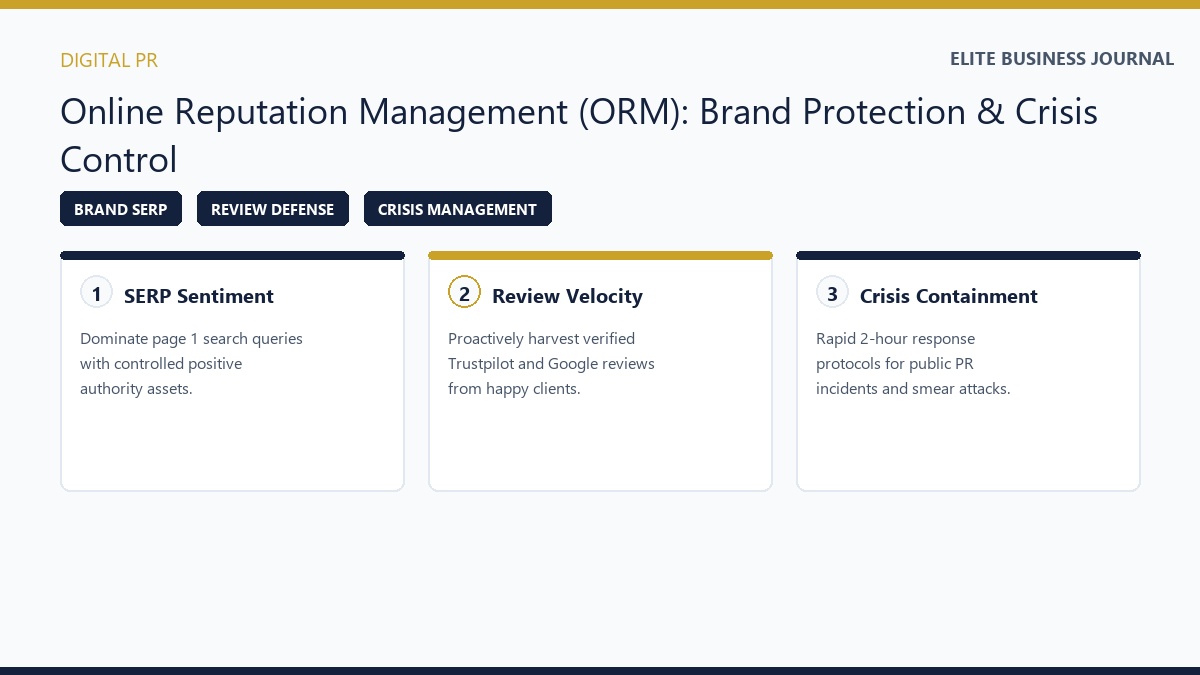
Did you know that 93% of consumers say online reviews impact their buying decisions? That means before someone calls you, visits your store, or hires you, they have already made up their mind based on what they found online. Your reputation online is working for you or against you right now, whether you know it or not.
Online reputation management, often called ORM, is the practice of monitoring, shaping, and improving how you or your business appears online. It covers everything from Google search results to social media mentions to customer reviews on sites like Yelp and Trustpilot. If you have never thought about this before, now is the time to start.
This guide will explain exactly what online reputation management is, why it matters, and what you can do to take control of your image on the internet. By the end, you will have a clear picture of how ORM works and the steps you can take today to protect and grow your reputation.
What Is Online Reputation Management, Exactly?
Online reputation management is the ongoing process of controlling what people see when they search for you or your business online. Think of it as a way to make sure the right information shows up about you, and the wrong information does not. It is not about hiding the truth. It is about making sure your best side is front and center.
When someone types your name or your business name into Google, a story unfolds on that screen. That story is made up of reviews, news articles, social media posts, forum discussions, and website content. ORM is the work you do to make sure that story is accurate, positive, and helpful to people who find it.
ORM is not a single task you do once and forget. It is a continuous effort. Online content changes daily, and new reviews, mentions, and articles can appear at any time. Businesses and individuals who pay attention to their online reputation tend to build more trust and attract more customers over time.
Why Online Reputation Management Matters More Than Ever
People trust the internet more than they trust advertisements. A study by BrightLocal found that 79% of people trust online reviews as much as personal recommendations from friends. That is a powerful number. It means a stranger’s review on Google can carry as much weight as advice from someone you know personally.
For businesses, a bad reputation online can cost real money. Harvard Business School research found that a one-star increase in a Yelp rating leads to a 5% to 9% increase in revenue. On the flip side, a series of negative reviews or a damaging news article can drive customers away fast. The internet has given every customer a megaphone, and ORM helps you manage what gets amplified.
For individuals, your online reputation affects job opportunities, professional relationships, and even personal connections. Employers routinely search candidates online before offering interviews. A single negative result on the first page of Google can cost you a job offer, a speaking engagement, or a business partnership. ORM helps individuals take control of their digital story.
The Key Parts of Online Reputation Management
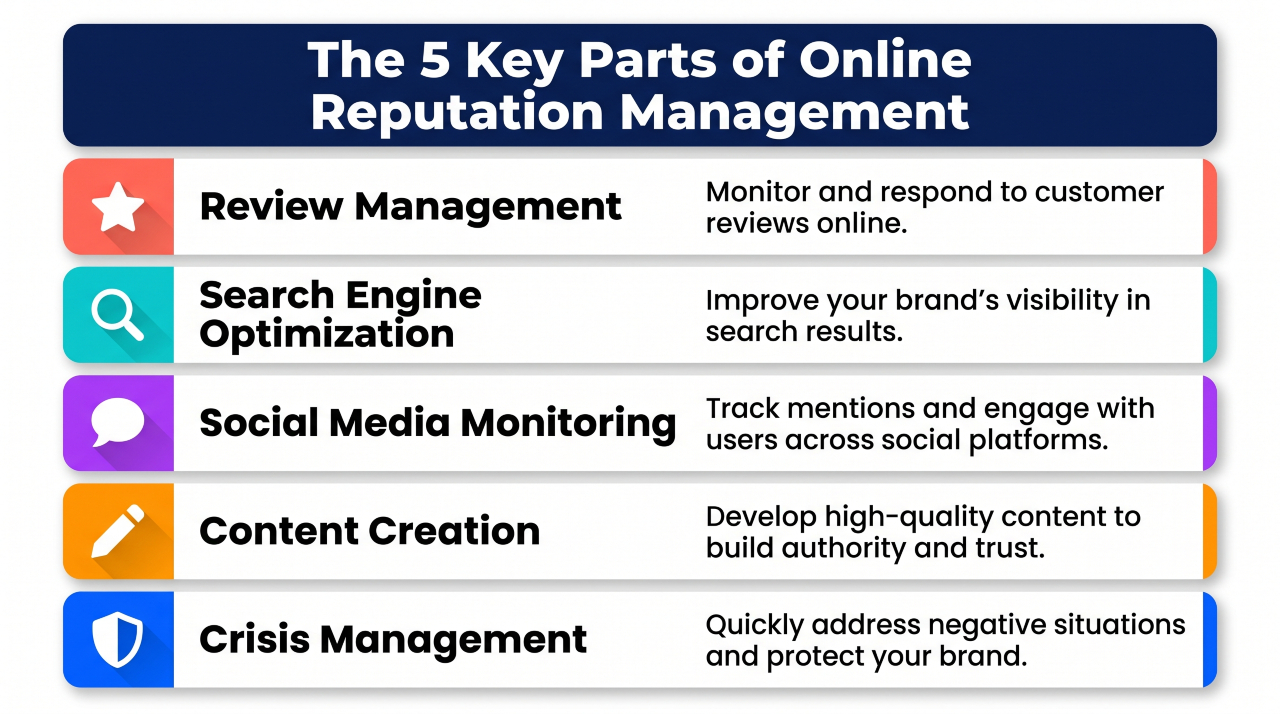
ORM is made up of several connected activities. Each one plays a role in shaping how you appear online. Here are the main areas you need to know:
Review Management
This is the practice of monitoring, responding to, and generating customer reviews. Reviews live on platforms like Google, Yelp, Amazon, Trustpilot, and industry-specific sites. Responding to reviews, both good and bad, shows that you care about your customers and are paying attention.
Search Engine Optimization (SEO)
SEO is used in ORM to push positive content higher in search results and push negative content lower. When someone searches for your name, you want the top results to be things like your official website, your LinkedIn profile, or a great press feature. ORM professionals use SEO strategies to make this happen.
Social Media Monitoring
People talk about brands and individuals on social media constantly. Monitoring what is being said about you on platforms like Facebook, Instagram, X (formerly Twitter), and LinkedIn is a core part of ORM. Catching a problem early on social media can stop a small issue from turning into a big crisis.
Content Creation
Creating positive, accurate, and helpful content about yourself or your business is one of the best long-term ORM strategies. Blog posts, press releases, interviews, and articles that highlight your expertise and values help fill search results with content you control.
Crisis Management
Sometimes things go wrong. A bad review goes viral, a news story misrepresents your business, or a social media post causes backlash. Crisis management in ORM means having a plan to respond quickly, honestly, and professionally when your reputation takes a hit.
How Online Reputation Management Works Step by Step
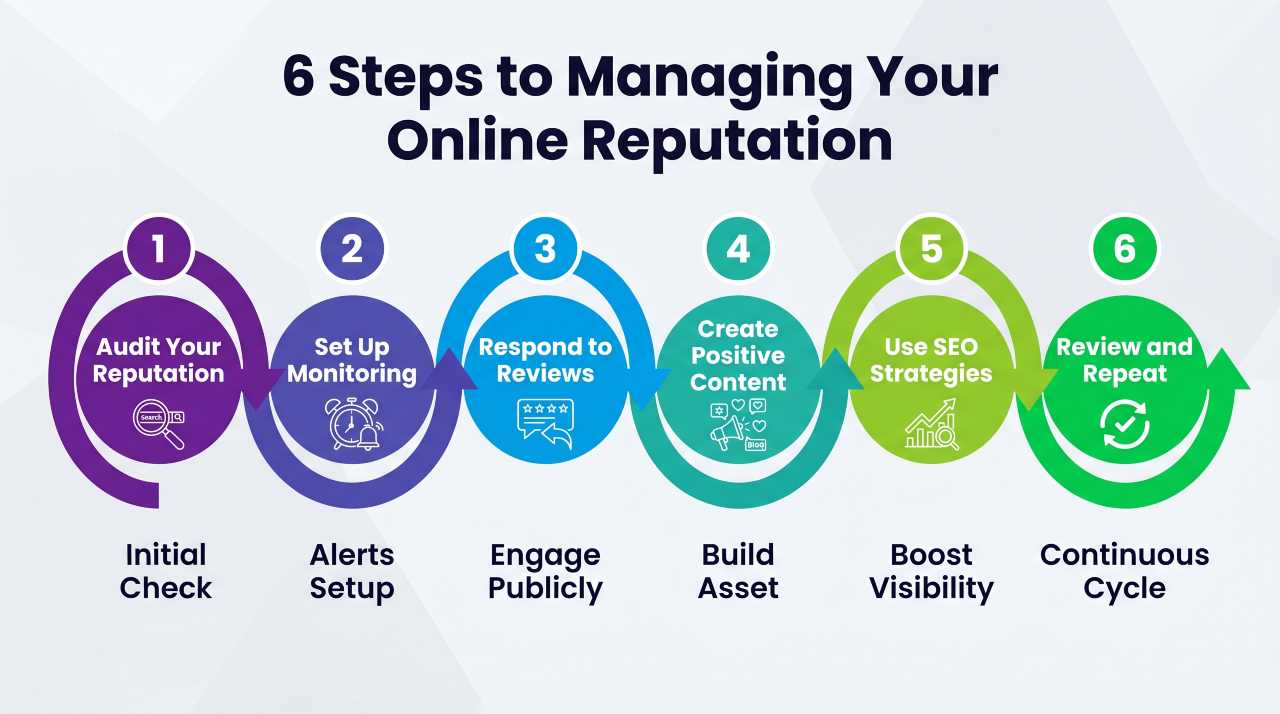
The ORM process is not complicated, but it does require consistent attention. Here is a simple breakdown of how it works in practice.
1: Audit Your Current Reputation
Start by searching for your name or business name on Google. Look at the first two pages of results. What do you see? Are the results positive, negative, or mostly neutral? Check review sites, social media, and any news articles that appear. This audit gives you a baseline of where you stand right now.
2: Set Up Monitoring
You cannot fix what you do not know about. Set up tools to alert you whenever your name or business is mentioned online. Google Alerts is a free tool that sends you an email whenever your name appears in new content. Paid tools like Mention, Brand24, or Sprout Social offer more detailed monitoring across multiple platforms.
3: Respond to Reviews and Mentions
Once you know what people are saying, start engaging. Thank customers for positive reviews. Address negative reviews calmly and professionally. Never argue online or get defensive. A well-handled negative review can actually improve your reputation because it shows future customers that you take feedback seriously.
4: Create and Promote Positive Content
Build a library of content that reflects your values and expertise. Write blog posts, create videos, get featured in industry publications, and keep your social media profiles active and professional. The more high-quality content that exists about you online, the more control you have over your own story.
5: Use SEO to Improve Your Search Results
Work to get positive content ranking higher in search results. This means optimizing your website, building links from credible websites, and making sure your social media profiles are complete and active. Strong SEO makes it harder for negative content to dominate your search results.
6: Review and Repeat
ORM is not a one-time fix. Set aside time each month to review your reputation, check your monitoring alerts, and update your content strategy. Consistency is what separates people who build strong reputations from those who are always putting out fires.
Common Online Reputation Problems and How to Fix Them
Most people and businesses face one of a handful of common reputation problems. Knowing what they are and how to address them can save you a lot of stress.
1: Negative Reviews
Negative reviews are the most common ORM issue. Every business gets them eventually. The key is not to ignore them or panic. Respond to every negative review politely. Acknowledge the issue, apologize if appropriate, and offer to make it right. Also, actively ask happy customers to leave positive reviews to balance out the negative ones.
2: Outdated or Inaccurate Information
Sometimes old articles, outdated profiles, or incorrect information shows up in search results. You can contact website owners and request corrections or removals. You can also create fresh, accurate content that pushes old results further down the page.
3: Negative News Articles or Blog Posts
A critical article from a news site or blog can be hard to remove. The best approach is usually to create a large volume of positive, credible content that can outrank the negative article over time. In serious cases, you might need to consult a lawyer or an ORM specialist.
4: Social Media Attacks
Sometimes a single unhappy customer or competitor starts a public social media campaign against you. Stay calm and do not engage in public arguments. Respond once with a clear, professional statement. If harassment continues, report the accounts to the platform.
5: A Personal Mistake Going Public
If something you did or said in the past has surfaced online, the best approach is transparency. Address it honestly, explain what you have learned or changed, and focus on producing positive content that shows who you are today. Trying to hide past mistakes often makes things worse.
Online Reputation Management for Businesses vs. Individuals
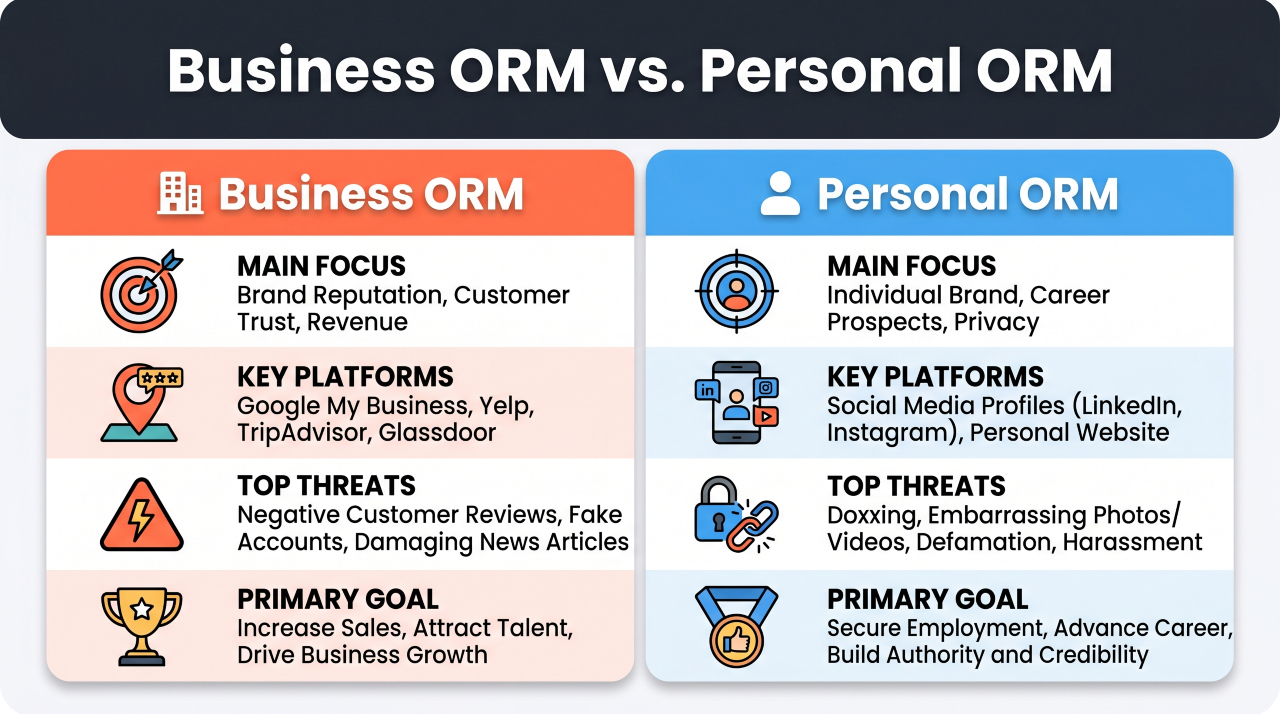
ORM works a little differently depending on whether you are managing a business reputation or a personal one. Both matter, but the strategies and priorities shift based on the situation.
| Business ORM | Personal ORM | |
|---|---|---|
| Main Focus | Customer reviews, brand trust, product/service perception | Professional image, search results for your name, social media presence |
| Key Platforms | Google, Yelp, Trustpilot, Amazon, LinkedIn | LinkedIn, Google, personal website, social media |
| Top Threats | Negative reviews, PR crises, competitor attacks | Old content, embarrassing posts, professional missteps |
| Primary Goal | Increase sales and customer trust | Improve career and professional opportunities |
Businesses often have more resources to invest in ORM, but individuals have the advantage of a smaller digital footprint to manage. Both need to take ORM seriously because the stakes are real in either case.
Tools Used in Online Reputation Management
You do not have to manage your reputation by hand. Several tools make it easier to monitor, analyze, and respond to what is being said about you online.
Google Alerts is free and easy to use. It sends you notifications whenever your chosen keywords appear in new content online. This is a good starting point for anyone who is new to ORM.
Brand24 is a paid tool that monitors social media, news sites, blogs, and forums in real time. It tracks sentiment, meaning it can tell you whether mentions of your brand are positive, negative, or neutral. This is useful for businesses that want a deeper look at their online presence.
Mention is another popular monitoring tool that works across social media and the web. It is good for teams that need to track multiple brands or keywords at once.
Yext helps businesses manage their information across hundreds of online directories. If your phone number, address, or business hours are listed differently in different places, Yext can fix that, which helps with both SEO and reputation.
ReviewTrackers is built specifically for managing customer reviews. It pulls reviews from dozens of platforms into one dashboard, making it easy to see everything in one place and respond quickly.
The Connection Between SEO and Online Reputation Management
SEO and ORM are closely related. In fact, many ORM strategies are essentially SEO strategies applied to reputation goals. When you want a positive article to show up first when someone searches your name, you are using SEO to achieve a reputation goal. When you want a negative result to fall off the first page of Google, you are using SEO to push it down.
Search engines rank content based on relevance and authority. If you want to control your search results, you need to create high-quality content on trusted platforms. Your own website, a LinkedIn profile, press features, YouTube videos, and guest articles on reputable sites all help you fill the first page of Google with content you want people to see.
The more consistent you are with creating good content and building links, the more influence you have over your search results. This is why ORM is a long-term investment. SEO takes time, but the results are lasting. A strong first-page presence is one of the best defenses against future reputation threats.
How Much Does Online Reputation Management Cost?
The cost of ORM varies widely depending on your situation. For individuals just starting out, you can do a lot for free using tools like Google Alerts and by simply being active and professional on LinkedIn and other platforms.
For businesses with more complex needs, ORM services from agencies can range from a few hundred dollars a month to tens of thousands of dollars for large corporations dealing with serious reputation crises. The cost depends on how much work needs to be done, how many platforms need to be monitored, and whether legal issues are involved.
Doing ORM yourself is possible, especially for small businesses and individuals. But if your reputation has taken a serious hit from a viral story, a legal issue, or a sustained attack, working with a professional ORM agency is usually worth the investment. Prevention is always cheaper than recovery.
How Long Does Online Reputation Management Take?
One of the most common questions people ask about ORM is how long it takes to see results. The honest answer is that it depends on how serious the problem is and how much effort you put in.
For minor issues, like a few negative reviews among mostly positive ones, you might see improvement within a few weeks of actively asking for new reviews and responding to existing ones. For more serious issues, like a damaging news article or a viral negative post, it can take several months to a year to push negative content off the first page of Google.
The best time to start ORM is before you have a problem. Building a strong, positive online presence now makes it much harder for negative content to take hold later. Think of it like building a wall before the storm, not during it.
Signs You Need Help With Your Online Reputation Right Now
Not everyone realizes when their reputation is hurting them. Here are some clear signs that it is time to take action:
- You search your name or business and the first results are negative reviews, complaints, or critical articles
- Your customer inquiries have dropped with no obvious reason
- You are losing business to competitors who have better online reviews
- A past mistake or controversy is showing up in search results
- You have received media coverage that misrepresents you or your business
- People mention seeing something negative about you online before deciding to work with you
If any of these apply to you, do not wait. Every day without action is another day that the wrong story is being told about you online.
How to Build a Strong Online Reputation from Scratch
If you are new to ORM or starting fresh, you have an advantage. It is much easier to build a good reputation than to fix a damaged one. Here is how to start strong.
First, claim and complete all your profiles. Set up a Google Business Profile, a LinkedIn profile, and accounts on any platforms that are relevant to your industry. Fill them out completely with accurate information, professional photos, and clear descriptions of what you do.
Second, create content consistently. Write blog posts, record short videos, or contribute to industry publications. Share your knowledge and experience. Content that helps people builds trust and establishes you as a credible voice in your field.
Third, ask for reviews early. Do not wait until you have hundreds of customers to start collecting reviews. Ask your first clients and customers to leave an honest review. A small number of strong reviews is a great foundation to build on.
Fourth, be consistent and professional online. Every post you make, every comment you leave, and every profile you create contributes to your digital footprint. Treat everything you put online as part of your reputation, because it is.
Take Control of Your Online Story
Your online reputation is one of your most valuable assets. It influences whether people trust you, hire you, buy from you, or recommend you to others. The good news is that with consistent effort, you can build, protect, and even repair your reputation online.
Online reputation management is not just for big corporations or celebrities. It is for every business owner, job seeker, freelancer, and professional who wants to be found and trusted online. The tools and strategies are available to everyone, and getting started does not have to be expensive or complicated.
Start today by searching your own name or business name online. See what comes up. Then make a plan to improve it, protect it, and keep it strong going forward. Your reputation is already being built, with or without you. Take control and make sure it tells the right story.