The full new State Pension pays £241.30 a week in the 2026/27 tax year, which works out at about £12,548 a year. The PLSA Retirement Living Standards put the cost of a moderate retirement for one person at £32,700 a year. That gap of roughly £20,000 a year, plus the years between stopping work and your State Pension age, decides when you can really retire.
So “when can I retire?” has two answers in the UK. One is legal: the age at which each type of pension can be paid. The other is financial: the point at which your savings can carry you until the State Pension arrives. This guide covers both, with the 2026 timetable for State Pension age, the private pension access age, what changes if you retire at age 55, 60 or 65, and a step-by-step way to set your own date.
Quick Answer
You can retire in the UK whenever you like, because there is no compulsory retirement age. What changes with age is when your pension money becomes available. Private and workplace pensions can usually be accessed from 55, rising to 57 on 6 April 2028. The State Pension starts at your State Pension age: 66 for anyone born before 6 April 1960, between 66 and 67 for people born from April 1960 to early March 1961, and 67 for those born from 6 March 1961 to 5 April 1977. Anyone born on or after 6 April 1978 reaches it at 68 under current law. The full new State Pension is £241.30 a week in 2026/27, about £12,548 a year. The real answer to “when can I retire” is the earliest date your savings can cover the years before that payment starts.
Key Takeaways
- There is no default retirement age in the UK, so an employer cannot force you to stop work because of your age.
- The State Pension age is moving from 66 to 67 between May 2026 and March 2028.
- The minimum age for taking a private or workplace pension rises from 55 to 57 on 6 April 2028.
- A full new State Pension of £241.30 a week needs 35 qualifying years of National Insurance.
- The PLSA puts a moderate retirement for one person at £32,700 a year, well above the State Pension alone.
Is There a Fixed Retirement Age in the UK?
No. The default retirement age of 65 was phased out in 2011, and since then most employers cannot make you retire because of your age. You can keep working past your State Pension age, cut your hours, or stop entirely at 50 if you can afford to. An employer can only set a compulsory retirement age if it can objectively justify it, which is rare outside a few roles such as some emergency services.
People often mix up three separate ages. The first is the age you stop working, which is your choice. The second is the earliest age you can draw a private or workplace pension. The third is your State Pension age, set by law according to your date of birth.
Retiring before your State Pension age is common. Many people bridge the gap with workplace pensions, ISAs, part-time work or the proceeds of selling a business. The question is never whether you are allowed to retire, but whether the money lasts.
Your State Pension Age: The 2026 Timetable
The State Pension age that applies to you depends only on your date of birth. It is currently 66 for both men and women, and it started rising to 67 in May 2026. The table below shows the timetable as it stands in law in November 2026.
| Date of birth | State Pension age | When it is reached |
|---|---|---|
| Before 6 April 1960 | 66 | Already reached, or on your 66th birthday |
| 6 April 1960 to 5 March 1961 | 66 plus 1 to 11 months | Between May 2026 and March 2028 |
| 6 March 1961 to 5 April 1977 | 67 | On your 67th birthday, from March 2028 |
| 6 April 1977 to 5 April 1978 | Between 67 and 68 | A set date between May 2044 and March 2046 |
| On or after 6 April 1978 | 68 | On your 68th birthday |
If you were born between 6 April 1960 and 5 March 1961, your State Pension age is 66 plus a number of months. Someone born on 6 April 1960 reaches it at 66 and 1 month, and each later monthly band adds another month until it reaches 67. The quickest way to get your exact date is the official State Pension age checker on GOV.UK, which asks only for your date of birth.
Will the State Pension Age Rise to 68 Sooner?
Under current law, the move from 67 to 68 happens between 2044 and 2046. The government must review the State Pension age regularly, and the third review was launched in July 2025, led by Dr Suzy Morrissey with input from the Government Actuary’s Department. The House of Commons Library briefing sets out the history of these reviews, including the 2017 proposal to bring 68 forward to 2037 to 2039, which was never legislated.
No decision to speed up the change has been made at the time of writing. If you were born in the 1970s, treat 68 as a realistic planning age rather than a worst case. Building a plan that still works if your State Pension arrives a year later costs little and removes a large risk.

When Can You Take a Private or Workplace Pension?
Defined contribution pensions, which cover most workplace and personal pensions, can normally be accessed from age 55. This is called the normal minimum pension age. It rises to 57 on 6 April 2028, so anyone who turns 55 after that date will have to wait two more years.
A small number of schemes give members a protected pension age, which can keep access at 55 after 2028. This depends on the scheme rules as they stood in 2021, so ask your provider in writing rather than assuming. Defined benefit schemes (final salary or career average) set their own normal retirement age, often 60, 65 or 67, and usually cut the pension if you take it early.
When you start drawing a pension, a few rules matter:
- You can usually take 25% of your pot tax-free, capped at £268,275 across all your pensions (the Lump Sum Allowance).
- The rest is taxed as income when you draw it, at your marginal rate.
- Once you take taxable income flexibly, the Money Purchase Annual Allowance limits future tax-relieved contributions to £10,000 a year.
- Offers to release pension money before 55 are almost always unauthorised payments, taxed at up to 55%.
The third point catches people who retire early, then return to work and want to rebuild their pension. Taking only the tax-free cash does not trigger the lower allowance.
Retirement Age in the UK for Women
Women and men now have the same State Pension age. Women’s State Pension age was raised from 60 to match men’s at 65 by November 2018, and both then rose to 66 by October 2020. Every rise since applies equally.
The faster changes for women born in the 1950s caused real hardship for those who were not told in time, and campaigns for compensation continue. For anyone planning now, the practical point is simple: the timetable above applies regardless of sex.
Women are more likely to have gaps in their National Insurance record from caring or part-time work. Child Benefit claims for children under 12 give National Insurance credits automatically, and carers can often claim credits too. Check your record early, because filling gaps is far cheaper in your 40s and 50s than after you have stopped working.
Can You Afford to Retire? The Money Test
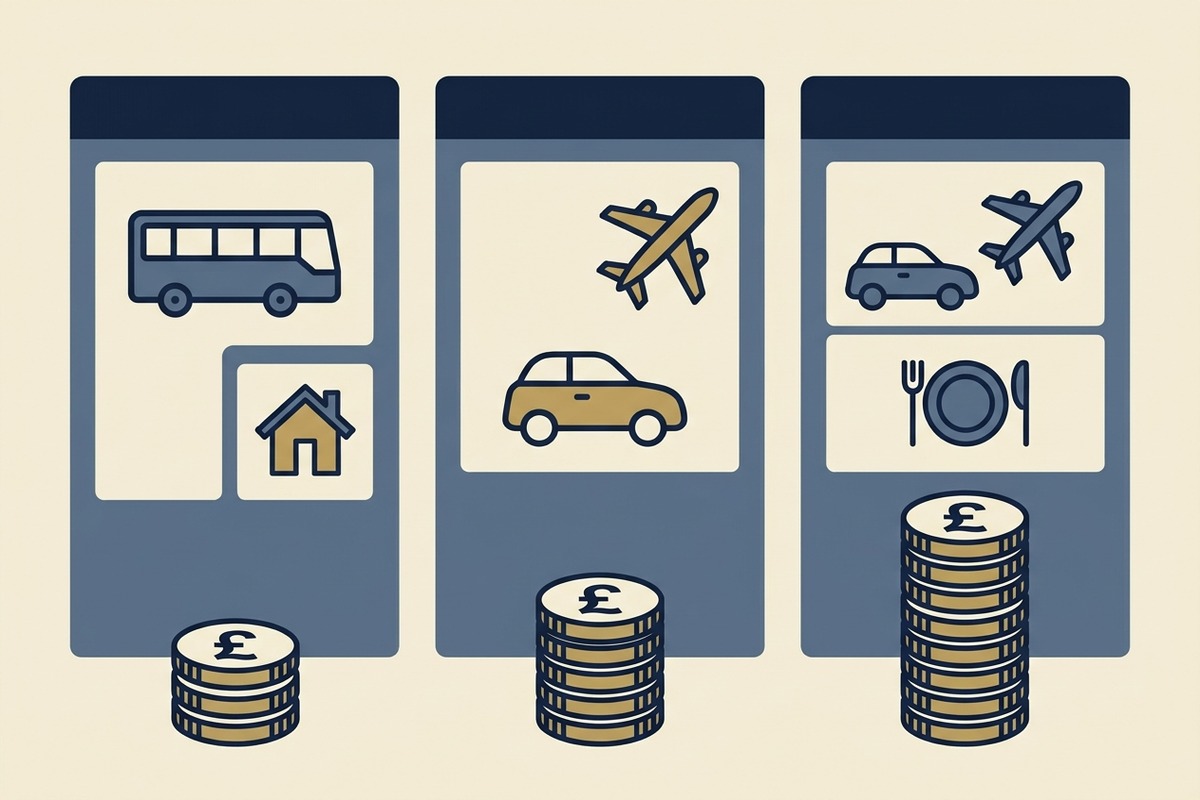
Being allowed to retire and being able to afford it are different questions. The PLSA Retirement Living Standards give a useful benchmark, based on what members of the public say is needed for each lifestyle. These are yearly spending figures after tax, for households outside London.
| Standard | One person (a year) | Two people (a year) | What it pays for |
|---|---|---|---|
| Minimum | £13,900 | £22,500 | Basic needs, no car, a UK holiday and eating out once a month |
| Moderate | £32,700 | £45,400 | A small car, one holiday abroad a year and a weekly takeaway |
| Comfortable | £45,400 | £62,700 | Extra UK breaks and more spending on eating out and social life |
A full State Pension of about £12,548 a year almost covers the minimum standard for one person. A couple who both get the full amount, about £25,095 between them, clears the two-person minimum. Anything above that has to come from workplace pensions, personal savings, property or work.
To turn a spending target into a rough pot size, many planners use a withdrawal rate of 3% to 4% a year. On that basis, closing a £20,000 annual gap needs a pot of roughly £500,000 to £670,000, before tax. Treat that as a rough guide, not a rule, since investment returns, charges and how long you live all move the figure.
Most employees build part of this through workplace pensions. If you are an employer, our guide to auto-enrolment contribution rates shows the legal minimums for 2026, which on their own will not deliver a moderate retirement for most people.
Retire at Age 55, 60, 65 or 67: What Changes
The earlier you stop, the more years your savings must fund before the State Pension begins. The table assumes a State Pension age of 67, which applies to anyone born between 6 March 1961 and 5 April 1977.
| Retire at | Private pension | State Pension | Years to bridge (if State Pension age is 67) |
|---|---|---|---|
| 55 | Usually available (57 after April 2028) | Not yet | 12 |
| 60 | Available | Not yet | 7 |
| 65 | Available | Not yet | 2 |
| 67 | Available | Starts | 0 |
| 70 | Available | Larger if deferred | None, and a deferral uplift |
Retiring at 60 with a State Pension age of 67 leaves seven years to bridge. Replacing a full State Pension for those years alone takes about £87,800, before you add anything for the lifestyle you want. Retiring at 55 nearly doubles that bridge.
Working past State Pension age has its own reward. If you defer the new State Pension, it rises by 1% for every 9 weeks you wait, just under 5.8% for a full year. You also stop paying employee National Insurance once you reach State Pension age, even if you keep working.
When Can I Retire? Work It Out in Six Steps
These six steps give you a realistic retirement date in an afternoon. You need your National Insurance number, your Government Gateway login and recent pension statements.
Step 1: Get Your State Pension Forecast
Your forecast on GOV.UK shows the State Pension age that applies to you and the weekly amount you are on track for. It also lists any years with gaps. If your forecast is below £241.30, you may be able to buy voluntary Class 3 contributions to fill the missing years.
Step 2: Find Every Pension You Have
Most people change jobs several times, and old workplace pensions are easy to lose. The free Pension Tracing Service can find a scheme’s contact details from an old employer’s name. Note each pot’s value, its access age and any guarantees, such as a guaranteed annuity rate, before you think about combining them.
Step 3: Set Your Spending Target
Start from your current spending, then remove costs that stop at retirement, such as commuting and mortgage payments. Compare the result with the PLSA standards above. Be honest about the first ten years, when most people travel more and spend more than they expect.
Step 4: Measure the Bridge
Count the years between your planned retirement date and your State Pension age. Multiply your full spending target by those years, because no State Pension is coming in yet. This figure, not your total pension pot, usually decides whether early retirement works.
Step 5: Test the Gap After State Pension Age
From State Pension age, subtract your expected State Pension from your spending target. The remainder is what your pensions and savings must provide each year for the rest of your life. Remember that tax applies, because the personal allowance of £12,570 is almost used up by a full State Pension.
Step 6: Speak to a Regulated Adviser
Free, impartial guidance is available from MoneyHelper, and anyone over 50 with a defined contribution pension can book a Pension Wise appointment. For decisions involving large sums, transfers from defined benefit schemes or business sales, a regulated financial adviser is worth the fee. This guide is general information, not personal advice.
Mistakes That Push Your Retirement Date Back
Most retirement plans fail on a handful of predictable errors. Each one is fixable if you spot it early.
- Planning around 55 when you will be 57. If you turn 55 after 5 April 2028, you cannot access your pension until 57 unless you have a protected pension age.
- Assuming a full State Pension. Years contracted out before 2016, or years abroad, can leave you short of £241.30 a week.
- Ignoring inflation. A fixed income that feels comfortable at 60 buys noticeably less at 75.
- Drawing taxable income too early. It triggers the £10,000 Money Purchase Annual Allowance and may push you into a higher tax band.
- Forgetting the bridge years. A large pot can still run short if most of it is spent before State Pension age.
- Counting on redundancy. Our guide to statutory redundancy pay shows the legal minimum is modest, so do not build a plan around a payout that may never come.
Retiring When You Run Your Own Business
Directors and sole traders face the same pension ages, but they control more of the levers. A limited company can pay employer pension contributions, which are normally an allowable business expense and free of National Insurance. For many directors, that beats taking the same money as salary or dividends, and our guide to the salary and dividend split covers how to set your pay first.
If your retirement plan depends on selling the business, the sale price is your biggest single risk. Business Asset Disposal Relief can reduce Capital Gains Tax on a qualifying sale to 18% from April 2026, up to a lifetime limit of £1 million of gains. Start succession planning three to five years ahead, because buyers pay more for businesses that run without their owner.
Steady cash flow habits matter here too. A business with predictable profits is easier to sell, and easier to keep running part-time while you ease into retirement.
Frequently Asked Questions
At what age do I retire in the UK?
You choose when to stop work, because there is no compulsory retirement age. Your State Pension starts at 66, 67 or 68 depending on your date of birth, and most private pensions can be accessed from 55, rising to 57 in April 2028.
What year does the pension age change to 67?
The rise from 66 to 67 began in May 2026 and finishes in March 2028. Anyone born on or after 6 March 1961 (and before 6 April 1977) has a State Pension age of 67.
Can I retire at 55 in the UK?
Yes, if you can afford it and your pension scheme allows access at 55. From 6 April 2028 the minimum pension age becomes 57, and you will still wait until State Pension age for your State Pension.
How much money will I lose if I retire at 62 instead of 65?
You lose three years of earnings and pension contributions, and your savings must fund three extra years before State Pension age. On a full State Pension alone, the extra bridge costs about £37,600, plus the cost of your own lifestyle for those years.
How do I calculate my retirement age?
Use the GOV.UK State Pension age checker with your date of birth for the State Pension. For private pensions, check your scheme’s rules and your age in April 2028. Then work out how many years your savings can cover before the State Pension starts.
Do I have to stop working to get my State Pension?
No. You can claim your State Pension and keep working full or part-time, and you stop paying employee National Insurance once you reach State Pension age. Income tax still applies to your earnings and pension combined.
Your Next Steps
Start with the two numbers that matter most: your State Pension age and your State Pension forecast. Both take five minutes on GOV.UK. Then gather every pension statement you have, set a yearly spending target against the PLSA benchmarks, and work out how many years you need to bridge.
If the bridge looks too wide, you have three levers: save more now, retire a little later, or plan part-time work for the first few years. Changing your target date by even two years can turn a stretched plan into a comfortable one. When the sums involve a business sale, a defined benefit transfer or a large pot, take regulated advice before you commit.