
Home insurers paid out £72 million for domestic subsidence claims between April and June 2026, and the average subsidence claim hit a record £20,000. Those are the latest figures from the Association of British Insurers’ Property Insurance Premium Tracker, which also found the average home insurance payout passed £7,000 for the first time. A bill that size lands on the owner of the building, unless the right building insurance is in place.
This guide explains what building insurance covers in the UK, who has to buy it, how much it costs in 2026, and how to set the sum insured so a claim is paid in full. It is written for homeowners, buy-to-let landlords and anyone about to exchange contracts on a property.
Quick Answer
Building insurance pays to repair or rebuild the physical structure of a property after damage from fire, flood, storms, escape of water, subsidence, theft damage and similar events. It covers walls, roof, floors, windows, permanent fixtures such as fitted kitchens and bathrooms, and usually outbuildings, fences and driveways. No UK law requires it, but every mortgage lender insists on it, normally from exchange of contracts. If you own a leasehold flat, the freeholder usually insures the block and recharges you through the service charge. The figure you insure is the rebuild cost, not the market value, and getting it wrong is the most common reason claims are cut. According to the ABI, the average buildings-only premium was £309 for April to June 2026.
Key Takeaways
- Insure for the rebuild cost of the structure, which is often well below what the house would sell for.
- Mortgage lenders require buildings cover, usually from the day contracts are exchanged.
- The average UK buildings-only premium was £309 in the second quarter of 2026, according to the ABI.
- Leasehold flat owners rarely buy their own buildings policy; the freeholder insures the whole block.
- Subsidence excesses of £1,000 or more and unoccupancy limits are where most claim disputes start.
What Building Insurance Covers in the UK
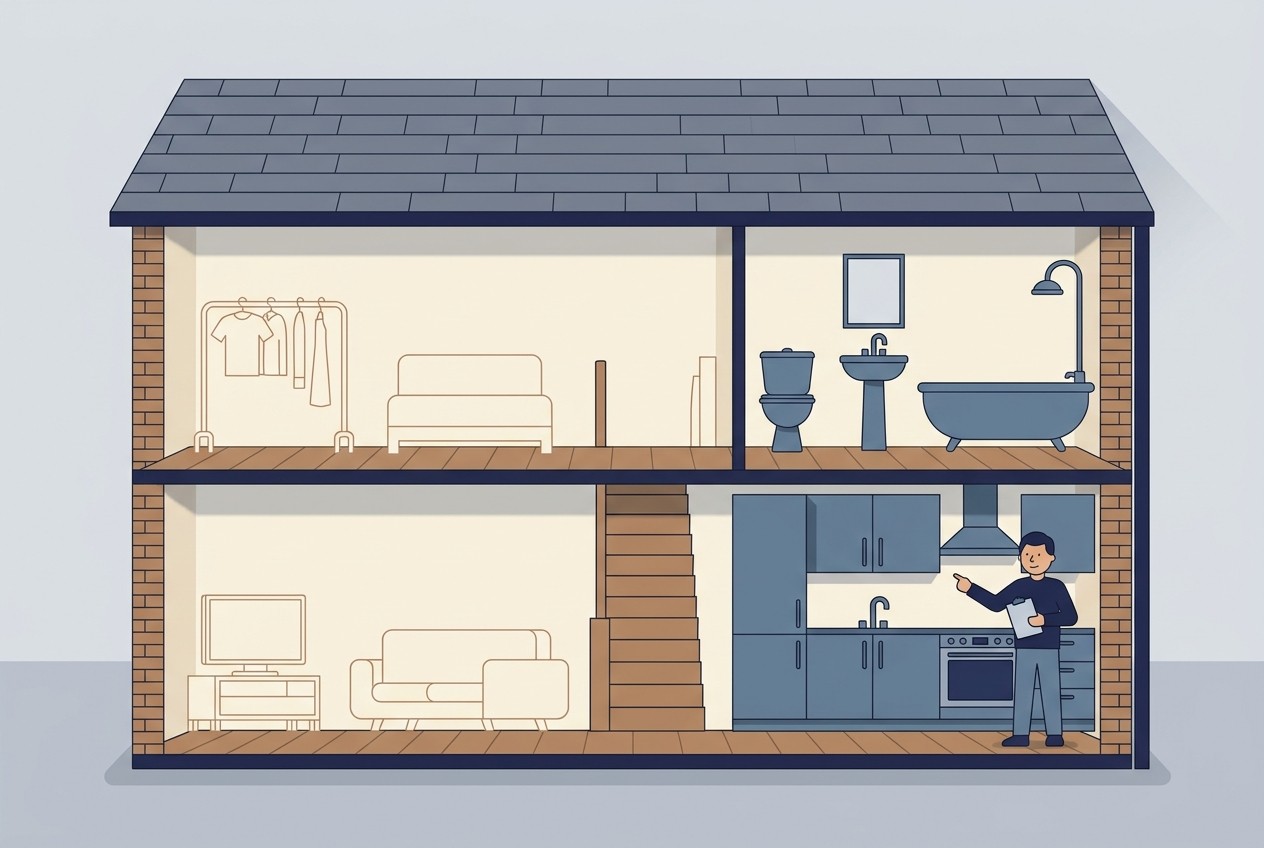
Buildings insurance pays for damage to the structure of a property. A simple test helps: if you turned the house upside down, the things that would not fall out are buildings. Walls, roof, floors, ceilings, windows, doors, pipes and wiring all count.
Permanent fixtures are included too. Fitted kitchens, bathroom suites, built-in wardrobes and fitted flooring usually sit under buildings cover, while sofas, televisions and clothes belong under contents. Most policies also extend to garages, sheds, walls, gates, fences, paths and driveways within the boundary.
The core insured events are similar across most UK insurers.
| Usually covered | Typical example |
|---|---|
| Fire, smoke and explosion | A kitchen fire that damages joists and plasterwork |
| Storm and flood | Roof tiles torn off in high winds, or river water entering the ground floor |
| Escape of water | A burst pipe that soaks ceilings and floors |
| Subsidence, heave and landslip | Foundations moving after a long dry summer |
| Theft and attempted theft damage | A forced back door or broken window frame |
| Falling trees and impact | A neighbour’s tree or a vehicle hitting a wall |
| Trace and access | Lifting floors to find a hidden leak |
| Alternative accommodation | Rent for a rental home while repairs make yours unliveable |
Alternative accommodation is easy to overlook but valuable. If a flood leaves a family out of their home for six months, rent for a similar property can run into five figures. Check the limit, which is often set as a percentage of the buildings sum insured.
What It Usually Excludes
The exclusions matter as much as the cover, because they are where claims are declined.
| Usually excluded | Why it is refused |
|---|---|
| Wear and tear | Insurance pays for sudden events, not gradual ageing |
| Damp, rot and condensation | Treated as maintenance problems |
| Faulty workmanship or design | The builder or designer is responsible, not the insurer |
| Damage while unoccupied | Many policies limit cover after 30 to 60 days empty |
| Accidental damage | Only covered if you add the optional extra |
| Storm damage to gates and fences | Commonly excluded even when storms are covered |
Accidental damage is the most useful optional extra. It covers one-off mishaps, such as drilling through a pipe or a dropped hammer cracking a sink. This extra typically adds a modest amount to the premium and saves arguments later.
Do You Legally Need Buildings Insurance?
No UK law forces a homeowner to insure their building. In practice, almost everyone with a mortgage has no choice. Lenders make buildings insurance a condition of the loan because the property is their security.
The timing catches first-time buyers out. Under a standard conveyancing contract, responsibility for the property normally passes to the buyer at exchange of contracts, not at completion. Your solicitor will usually ask for proof of cover from the exchange date, so arrange the policy before that day.
If you own outright, cover remains optional. Skipping it is a gamble few owners can afford, given that a full rebuild after a fire can cost several hundred thousand pounds.
Who Arranges It for Your Property Type
Who buys the policy depends on how you hold the property.
| Your situation | Who buys buildings cover | What to check |
|---|---|---|
| Freehold house with a mortgage | You | Lender’s minimum cover terms and start date |
| Freehold house, no mortgage | You (optional but strongly advised) | Rebuild sum and excess levels |
| Leasehold flat | Freeholder or management company | Policy schedule and how the premium is shared |
| Buy-to-let property | You, as landlord | A landlord policy, not a standard home policy |
| Renting as a tenant | Your landlord | Your own contents cover only |
| Listed or non-standard home | You, often via a specialist | Rebuild cost using traditional materials |
Landlords need a dedicated landlord policy. A standard home policy assumes the owner lives there and may be void if the property is let. Landlord cover also adds loss of rent and property owner’s liability. If you are weighing up the numbers on a rental, our buy to let mortgage calculator shows how insurance and other costs affect the stress test.
Tenants do not need buildings cover at all. They insure their own belongings, which our guide to renters insurance in the UK explains in detail.
Rebuild Cost vs Market Value
This is the single most important number in a buildings policy, and the one most people get wrong. The sum insured should equal the cost of demolishing and rebuilding the property from scratch, including professional fees and site clearance.
Rebuild cost and market value are different things. Market value includes the land, the location and local demand. Rebuild cost reflects only bricks, labour, materials and fees. A terrace in central London might sell for £900,000 yet cost far less to rebuild, while a large rural cottage can cost more to rebuild than it would sell for.
How to Work Out Your Rebuild Cost
- Check your mortgage valuation report. Most include a reinstatement cost estimate from the surveyor.
- Use an online rebuild cost calculator based on the property’s floor area, age, type and location.
- Book a specialist valuation for listed buildings, thatched homes, timber frames or anything of non-standard construction.
- Add the value of outbuildings, boundary walls and garages if they are not already included.
- Review the figure every few years, or after an extension, loft conversion or new kitchen.
Why Underinsurance Hurts
Most policies contain an average clause. If you insure the property for less than its true rebuild cost, the insurer can reduce any claim in the same proportion, even a small one.
Suppose the true rebuild cost is £300,000, but you insured for £200,000. You have cover for two thirds of the risk. A £30,000 claim after a burst pipe could then be settled at £20,000, leaving you to find the rest.
Some insurers now offer unlimited buildings cover or very high default limits for standard homes. These remove the guesswork, but read the eligibility rules carefully. Larger, listed or unusual properties are often excluded.
How Much Does Building Insurance Cost?
The ABI tracker records prices customers actually pay, across around 15.5 million policies a year, rather than quoted prices. That makes it the most reliable benchmark in the UK.
| ABI average premium (April to June 2026) | Price paid | Change on a year earlier |
|---|---|---|
| Buildings only | £309 | Down 5% (£16) |
| Contents only | £118 | Down 9% (£11) |
| Combined buildings and contents | £383 | Down 2% (£9) |
Premiums rose sharply through 2023 and 2024, then eased through 2025. The second quarter of 2026 brought the first quarterly rise since the start of 2025, so the long run of falling prices may be ending. Comparison site medians tend to be lower than the ABI average because they include many smaller, low-risk homes.
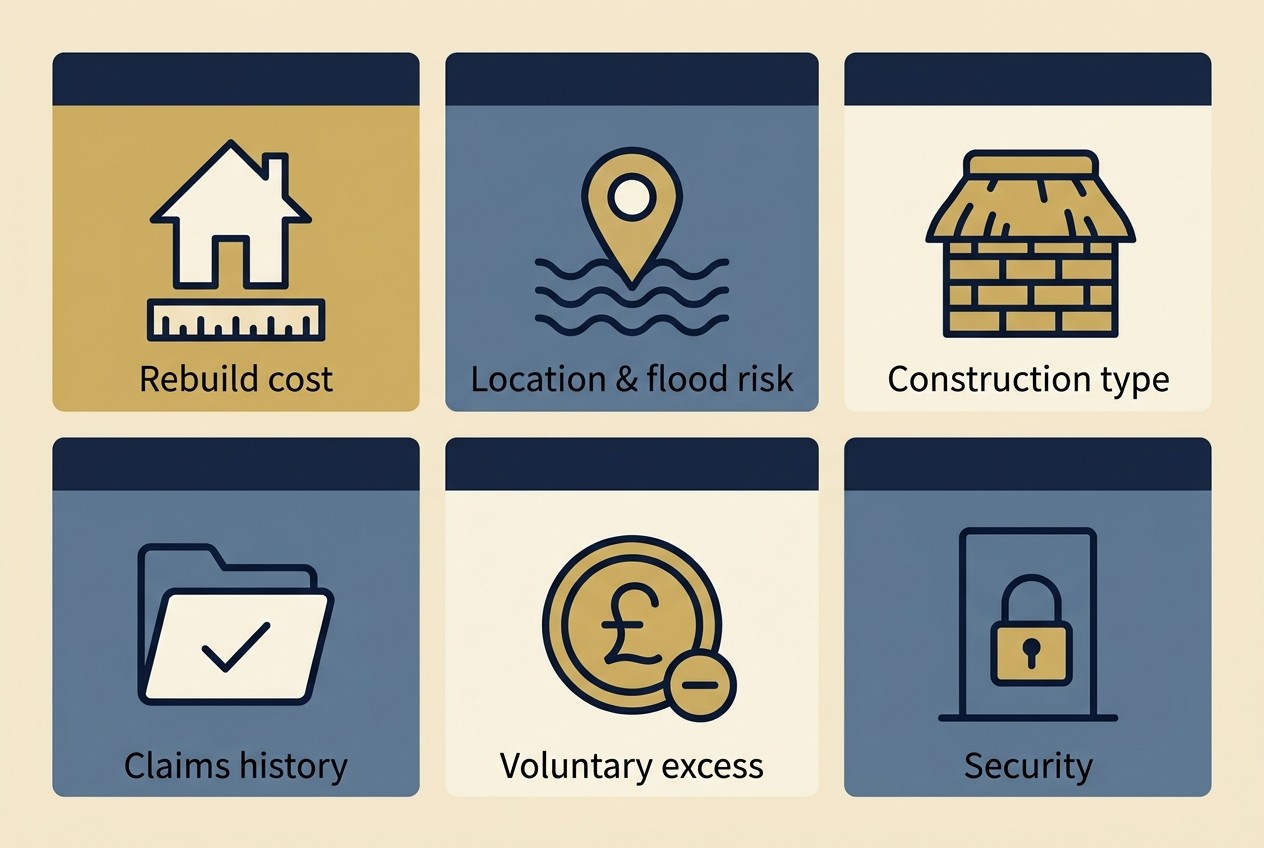
What Pushes Your Premium Up or Down
- Location: flood zones, subsidence-prone clay soils and high-crime postcodes cost more.
- Rebuild cost: a bigger or more expensive build means a bigger potential claim.
- Construction: thatch, timber frame and other non-standard materials narrow the market.
- Claims history: recent claims, especially for escape of water or subsidence, raise prices for several years.
- Voluntary excess: agreeing to pay more of each claim lowers the premium.
- Security and maintenance: approved locks, a sound roof and modern wiring all help.
Insurance Premium Tax at the standard rate of 12% is included in the price you are quoted. It does not appear as a separate line on most renewals.
Flood, Subsidence and Non-Standard Homes
Some properties struggle to get cover at a normal price. Knowing where you sit before you buy can change the decision.
Flood Risk and Flood Re
the Flood Re scheme is a joint initiative between government and insurers. It lets insurers pass the flood element of a household policy into a shared pool, which keeps premiums affordable for homes at high flood risk. Owners do not apply to it directly; they buy through an insurer that uses it.
There is a catch for newer homes. Properties built on or after 1 January 2009 are not eligible, on the basis that they should have been built with flood risk in mind. Buy-to-let properties and most blocks of flats fall outside the scheme too.
Subsidence
Subsidence claims rise after hot, dry summers, when clay soils shrink. The ABI reported that the spring of 2026 was the warmest on record in England and Wales, and claims followed.
Standard policies cover subsidence, but most set a compulsory excess of £1,000 or more for it. A property with a past subsidence claim can still be insured, although you may need a specialist insurer and a structural engineer’s report. Warning signs include diagonal cracks wider than 3mm, cracks that appear suddenly, and doors or windows that start to stick.
Listed and Non-Standard Properties
Listed homes must usually be repaired with matching materials and traditional methods. That pushes the rebuild cost well above a modern equivalent. Mainstream policies may decline them, so a specialist broker is often the faster route.
Leasehold Flats: Who Pays and What Has Changed
In a block of flats, the freeholder or management company normally insures the whole building. Each leaseholder pays a share through the service charge, as set out in the lease. You should still buy your own contents policy.
Leaseholders have historically had little say over the policy, and commissions paid to freeholders and managing agents pushed costs up. Two sets of reforms address this.
- FCA rules: since 31 December 2023, the FCA rules on multi-occupancy buildings insurance have required insurers and brokers to treat leaseholders as customers. They must act in leaseholders’ interests and disclose commission and remuneration information on request.
- The Leasehold and Freehold Reform Act 2024: this replaces commissions with a transparent, defined “permitted insurance fee”. Its detail has gone through government consultation, so check whether the rules apply to your block before you challenge a charge.
You are entitled to ask for a summary of the insurance and a copy of the policy. If the premium looks out of line, raise it with the managing agent first and keep everything in writing.

Common Mistakes When Buying Buildings Cover
These are the problems that most often turn a straightforward claim into a dispute.
- Insuring for market value. It wastes money if the value is higher than the rebuild cost and causes underinsurance if it is lower.
- Leaving the property empty too long. Probate homes, renovations and long trips can breach unoccupancy terms. Tell your insurer before the limit is reached.
- Not declaring building work. Extensions and structural work change the risk. Undeclared work can give the insurer grounds to reduce or refuse a claim.
- Getting the construction details wrong. Answer questions about roof type, wall materials and flat roof percentages accurately. Misrepresentation can void the policy.
- Buying the cheapest policy on headline price. Compare excesses, alternative accommodation limits and accidental damage cover side by side.
- Auto-renewing without checking. The FCA ban on price walking means renewal prices should not exceed what a new customer would pay. A fresh quote still often finds better cover.
Owners who also run a business from the property should check that business use is declared. Commercial premises need their own cover, which our guide to commercial property insurance explains.
This article gives general information, not personal advice. For a high-value, listed or unusual property, speak to an independent broker regulated by the FCA before you buy.
Frequently Asked Questions
What does building insurance cover in the UK?
It covers damage to the permanent structure of a property and its fixtures. That includes walls, roof, floors, windows, pipes, fitted kitchens and bathrooms, plus outbuildings and fences in most cases. Typical insured events are fire, flood, storm, escape of water, subsidence, theft damage and impact.
How much does buildings insurance cost in the UK?
The ABI reported an average buildings-only premium of £309 for April to June 2026, down 5% on a year earlier. Combined buildings and contents cover averaged £383. Your own price depends on location, rebuild cost, construction type and claims history.
Is buildings insurance compulsory in the UK?
It is not a legal requirement. Every mortgage lender requires it as a condition of the loan, usually from exchange of contracts. If you own outright, it is optional, but a single serious fire could cost far more than decades of premiums.
Do I need buildings insurance for a leasehold flat?
Usually not. The freeholder or management company insures the whole block and recovers the cost through your service charge. Check your lease to confirm, and buy your own contents insurance.
How much should I insure my house for?
Insure for the full rebuild cost, not the market value. Your mortgage valuation usually gives a reinstatement figure, and online rebuild cost calculators can help. Listed or non-standard homes need a professional valuation.
Does buildings insurance cover subsidence?
Most standard policies do, but with a higher compulsory excess, often £1,000 or more. A previous subsidence claim can make cover harder to find. Specialist insurers will often quote after reviewing a structural engineer’s report.
Your Next Actions
Start with the rebuild cost, because every other part of the policy rests on it. Find the reinstatement figure in your valuation report or run a rebuild calculation, then check it against your current sum insured.
Next, read the exclusions and excesses rather than the headline price. Look closely at subsidence, escape of water, unoccupancy and accidental damage. If you are buying, have cover in place from exchange of contracts.
Landlords should confirm they hold a proper landlord policy and factor the premium into their returns. Our article on landlord tax hikes for 2027 covers the other costs coming for rental owners. If you own a leasehold flat, ask your managing agent for the policy summary and a breakdown of any fees.
A sensible buildings policy is one of the cheapest ways to protect what is usually your largest asset. Spend an hour on it now and you avoid a five-figure shortfall later.