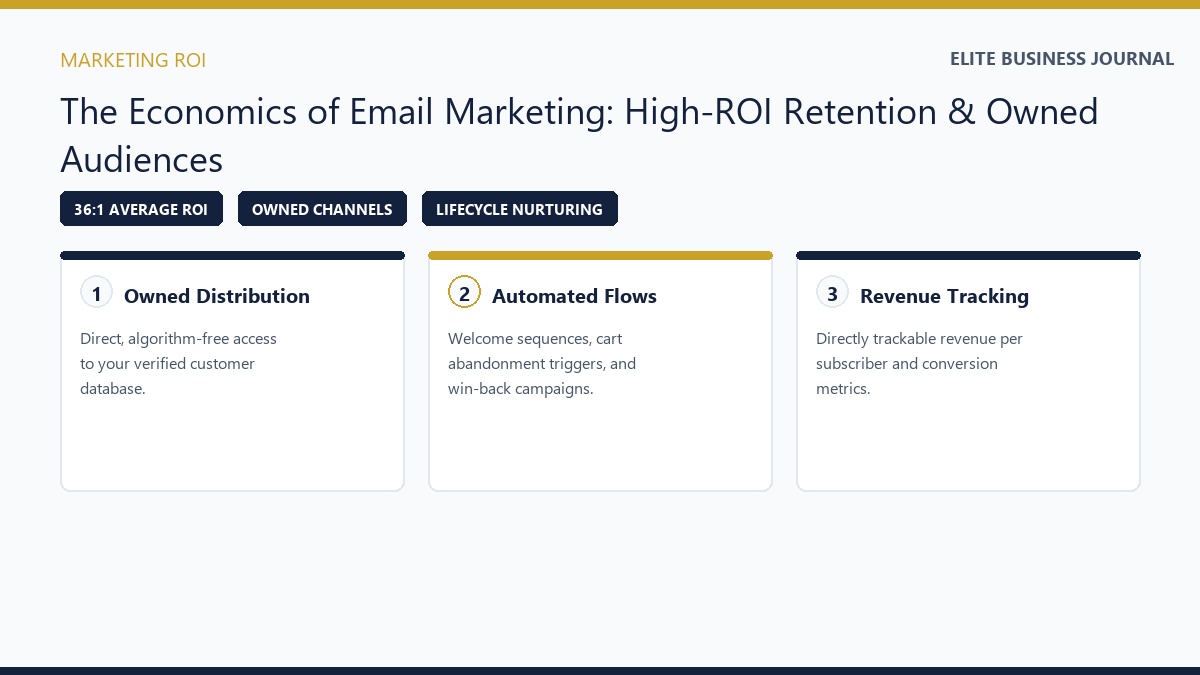
For every $1 spent on email marketing, businesses earn an average of $36 back. That is not a typo. No other digital marketing channel consistently delivers that kind of return. Not social media. Not paid ads. Not even search engine optimization on its own.
Email marketing has been around for decades, and people keep expecting it to die out. Instead, it keeps growing. There are over 4.3 billion email users in the world right now, and that number is expected to reach 4.6 billion by 2025. Businesses that ignore email are leaving a serious amount of money on the table.
This article breaks down the real benefits of email marketing. Whether you run a small business, manage a brand, or work in sales, you will find clear and practical reasons to start taking email seriously. No fluff. No buzzwords. Just the facts.
1: Email Marketing Delivers an Incredible Return on Investment
Let’s start with money because that is usually what matters most. Email marketing has one of the highest returns on investment of any marketing channel available. The numbers back this up consistently, year after year.
The average ROI for email marketing sits between $36 and $42 for every dollar spent, depending on the industry. For e-commerce businesses, that number can be even higher. This makes email one of the smartest places to put your marketing budget, especially if you are working with limited resources.
The reason the ROI is so high comes down to cost. Sending an email costs almost nothing compared to running a print ad, buying billboard space, or paying for social media ads. Once you have your email list and a basic tool set up, the overhead stays low while the results keep building. That combination is rare in marketing.
2: You Own Your Email List
This is one of the most important benefits of email marketing that most people overlook. When you build an email list, you own it. You control it. No algorithm can take it away from you overnight.
Compare that to social media. A business can spend years building a following on Instagram or Facebook, then wake up one morning to find that the platform changed its rules. Reach drops. Engagement disappears. Years of work can lose value in days because the platform made a decision you had no control over.
Your email list belongs to you. If an email platform shuts down or raises prices, you can export your list and move it somewhere else. The relationship between you and your subscribers goes with you. That kind of stability is worth a lot in marketing.
Building your own list also means you are building a direct line of communication with people who have already said they want to hear from you. These are warm contacts, not cold strangers. That makes every message you send more effective from the start.
3: Email Reaches People Where They Already Are
People check their email constantly. Studies show that the average person checks email about 15 times per day. Many people check it first thing in the morning before they even get out of bed. Email is already part of their daily routine.
Social media platforms fight for attention in a noisy feed. Search ads show up only when someone is actively searching for something. But email lands directly in a personal inbox. Moreover, it is a one-on-one interaction, not a broadcast into a crowded room.
This makes email feel more personal than most other forms of marketing. When someone opens your email, they are giving you their attention in a focused way. That moment of attention is valuable, and email gives you that opportunity at a very low cost.
4: Email Marketing Builds Real Customer Relationships
Good marketing is about more than making a sale one time. It is about keeping people coming back. Email marketing is one of the best tools available for building long-term relationships with customers.
When you send regular emails that provide value, you stay top of mind. Customers remember you. They start to trust you. Over time, that trust turns into loyalty, and loyalty turns into repeat purchases. A customer who buys from you three times is far more valuable than three different customers who each buy once.
Email also lets you show the human side of your brand. You can share stories, give behind-the-scenes looks, celebrate milestones with your audience, and respond to what your subscribers care about. This creates a connection that a banner ad simply cannot replicate. People buy from businesses they feel a connection to, and email helps build that connection consistently.
5: Email Marketing is Easy to Personalize
Personalization in marketing is not just about adding someone’s first name to a subject line. It goes deeper than that. Email makes real personalization possible in a way that few other channels can match.
With email, you can segment your list based on what people have bought, what pages they visited on your website, where they live, how long they have been a subscriber, or even how often they open your emails. Then you can send each group a message that actually applies to them. Someone who just signed up gets a welcome series. A longtime customer gets a loyalty offer. Someone who abandoned a shopping cart gets a gentle reminder.
This level of targeting makes your emails more relevant to the person reading them. More relevant emails get opened more often and clicked more often. Better results come from messages that match what the reader actually cares about at that moment. Personalization is how email marketing moves from good to great.
6: Automation Makes Email Marketing Work While You Sleep
One of the biggest advantages of email marketing is automation. Once you set up an automated email sequence, it runs on its own. You do not have to manually send every message. The system handles it for you.
Here is a simple example. Someone visits your website and signs up for your free guide. Automatically, they receive a welcome email right away. Three days later, they get a follow-up email with more helpful tips. A week after that, they get a soft offer for one of your products. All of that happens without you lifting a finger after the initial setup.
Automation works for almost every part of the customer experience. You can automate birthday emails, re-engagement campaigns for inactive subscribers, post-purchase follow-ups, review requests, and renewal reminders. These automated messages can run 24 hours a day, 7 days a week, reaching customers at exactly the right moment without extra effort from your team.
This efficiency is a major benefit for small businesses especially. You get the impact of a large marketing operation without the need for a large marketing team. Automation levels the playing field.
7: Email Marketing Drives Traffic to Your Website
Every email you send is an opportunity to bring people back to your website. This is a benefit that often gets overlooked when businesses think about email, but it is a powerful one.
You can include links to blog posts, product pages, landing pages, videos, and more. When subscribers click those links, they land on your website where they can learn more, shop, or take another action you want them to take. Email acts like a bridge between your audience and your content.
This also has a positive effect on your search engine performance over time. More visitors to your website, especially engaged visitors who spend time on your pages, sends positive signals to search engines. Email does not directly affect your search rankings, but the traffic it drives can support your overall SEO strategy in a meaningful way.
8: You Can Measure Everything
One of the most useful things about email marketing is that almost everything is measurable. However, you can see exactly who opened your email, who clicked a link, who bought something after clicking, and who unsubscribed. This data is available in real time and easy to read.
With most other forms of advertising, measuring results can be complicated. You might run a radio ad and have no idea how many people actually heard it or how many came to your store because of it. With email, the data is clear. You know your open rate, your click rate, your conversion rate, and your unsubscribe rate.
This makes it easy to test and improve your campaigns over time. You can test two different subject lines to see which one gets more opens. You can try different call-to-action buttons to see which one drives more clicks. This process of testing and refining is called A/B testing, and email makes it simple to do without a big budget or a team of analysts.
Data-driven marketing is smarter marketing. Email gives you the data you need to make better decisions and stop wasting money on things that are not working.
9: Email Marketing Works for Every Stage of the Buying Process
Not everyone on your email list is ready to buy right now. Some people are just learning about your brand. Some are comparing you to competitors. Some are ready to buy today. Others have already bought and might buy again.
Email marketing is flexible enough to meet people at every one of those stages. You can send educational content to new subscribers who need more time to build trust. Moreover, you can send comparison guides or case studies to people who are closer to making a decision. You can send exclusive deals to hot leads who are almost ready to buy. After a purchase, you can send onboarding emails, how-to guides, and upsell offers.
This is called lead nurturing, and email is the best tool available for doing it at scale. A well-planned email strategy guides people through the buying process naturally, without being pushy. The result is more conversions, fewer lost leads, and a better overall customer experience.
10: Email Marketing Keeps Customers Coming Back
Getting a new customer is great. Keeping that customer is better. Research shows that it costs five to seven times more to acquire a new customer than to keep an existing one. Email marketing excels at customer retention.
After someone makes a purchase, email lets you stay in touch in ways that feel helpful rather than annoying. You can send product tips to help them get more value from what they bought. You can let them know about new products they might like based on their purchase history. You can offer loyalty rewards and exclusive deals just for existing customers.
These kinds of emails make customers feel valued. When customers feel valued, they stick around. They buy again. They tell their friends. Repeat customers are also more likely to spend more per order than first-time buyers. The math works strongly in favor of investing in customer retention through email.
11: Email Works Well With Your Other Marketing Channels
Email marketing does not have to operate alone. It works best when it connects with your other marketing efforts. This is called an integrated marketing strategy, and email is often the glue that holds it together.
You can use email to promote your social media accounts and grow your following there. You can drive traffic to your blog content through weekly newsletters. You can use email to amplify a product launch that you are also promoting through paid ads. When someone sees your brand on social media and then gets an email from you, the repeated exposure builds more trust faster.
Email also complements search marketing well. Someone might find your website through a Google search, sign up for your email list, and then buy from you weeks later after receiving a few helpful emails. Without email, that person might have visited once and never come back. Email is the follow-up system that makes your entire marketing strategy more effective.
12: Email Marketing Levels the Playing Field for Small Businesses
Large companies spend millions on advertising. Small businesses cannot match that. But with email marketing, size matters much less than strategy.
A small local bakery can build an email list of 500 loyal customers and send them a weekly newsletter with new flavors, special deals, and behind-the-scenes stories. Those 500 people already love the bakery, and a well-written email keeps them coming back regularly. The cost of sending that email each week might be less than $20 per month using basic email tools.
That same principle applies to any small business, freelancer, or creator. You do not need a huge budget to run effective email campaigns. You need a good list, a clear message, and consistency. These are things any business can achieve with a little effort and the right tools.
13: Email Builds Brand Awareness Over Time
Brand awareness is about being the first name that comes to mind when someone needs what you offer. Email marketing builds that awareness steadily over time through repeated, consistent contact.
Every time someone sees your name in their inbox, even if they do not open the email, they are reminded that you exist. When they do open and read your emails, they absorb your tone, your values, and your expertise. Over weeks and months, this builds a clear picture of who you are and what you stand for.
This kind of brand building is usually associated with big advertising budgets and widespread media presence. Email lets smaller brands do it in a more focused and affordable way. Consistency matters more than budget here, and email makes consistency easy.
14: Email Marketing Supports Crisis Communication
When something goes wrong, you need to communicate fast and clearly. Email is one of the best tools for reaching your customers quickly in a crisis.
Whether it is a product recall, a service outage, an important policy change, or a response to public events, email lets you speak directly to your audience without filters or delays. You control the message. You decide the tone. You choose who receives it and when.
Social media can spread news fast, but it also invites public responses that you cannot control. An email goes directly to your customer in a private, professional format. This makes email a better choice for sensitive communications where clarity and trust are essential.
15: The Technology Has Never Been More Accessible
Ten years ago, setting up email marketing required technical knowledge and significant resources. That is no longer true. Today, there are dozens of email marketing platforms that make it easy to get started, even with zero technical background.
Tools like Mailchimp, ConvertKit, ActiveCampaign, and Klaviyo offer simple drag-and-drop editors, pre-built templates, and built-in automation. Many of them have free plans that let you start building your list and sending campaigns before you spend a single dollar. As your list grows, you can upgrade to paid plans with more features.
The barrier to entry for email marketing is lower than it has ever been. There is no good reason for any business to avoid it. The tools are affordable, the learning curve is manageable, and the results speak for themselves.
Common Mistakes to Avoid in Email Marketing
Knowing the benefits of email marketing is one thing. Getting results from it requires avoiding a few common pitfalls that many businesses fall into.
Sending too many emails is a fast way to lose subscribers. People will unsubscribe if they feel overwhelmed or spammed. Find a sending frequency that works for your audience and stick to it. Most businesses do well with one to three emails per week, but this varies by industry and audience.
Ignoring your data is another big mistake. If your open rates are dropping, something needs to change. Maybe your subject lines need work. Maybe you are sending at the wrong time. Maybe your content is not connecting. The data will tell you what is happening if you pay attention to it.
Not cleaning your email list regularly is a problem that grows over time. Inactive subscribers hurt your deliverability rates and can cause your emails to land in spam folders. Remove or re-engage people who have not opened your emails in several months. A smaller, engaged list outperforms a large, inactive one every time.
How to Get Started With Email Marketing
Starting with email marketing does not have to be complicated. A few clear steps can get you going quickly.
First, choose an email marketing platform. For beginners, Mailchimp or ConvertKit are good starting points because they are simple and have free options. Second, set up a sign-up form on your website. This can be a pop-up, a form in your footer, or a dedicated landing page. Make it clear what people will get when they sign up.
Third, create a welcome email sequence. This is the first series of emails a new subscriber receives. Use it to introduce yourself, deliver on whatever you promised when they signed up, and give them a reason to look forward to future emails. Fourth, plan your regular emails. Decide what you will send, how often you will send it, and what the goal of each email will be. Stick to a schedule because consistency builds trust.
From there, you can build complexity over time. Add automation. Test subject lines. Segment your list. But start simple. The most important step is the first one.
Email Marketing Is Worth Your Time and Attention
The benefits of email marketing are clear and supported by real data. It delivers one of the highest returns on investment of any marketing channel. It builds genuine relationships with customers. It works for businesses of every size and every budget. However, it runs automatically once you set it up. It gives you data to make smarter decisions. It keeps customers coming back and helps turn first-time buyers into loyal fans.
Email is not glamorous. It does not trend on social media. Nobody is talking about it at conferences the way they talk about short-form video or AI-generated content. But the businesses that take email seriously keep seeing results, year after year, regardless of what else is happening in the marketing world.
If you are not building an email list right now, you are making a choice that costs you money every day. The good news is that starting is easy. Pick a platform, set up a sign-up form, and send your first email this week. You will not regret it.