Quick Answer: Director’s Loan Account Rules UK 2026
A Director’s Loan Account (DLA) records all money borrowed from or paid into a limited company by a director, outside of standard salary, dividends, or expense reimbursements. If a director withdraws more money than they have contributed, the DLA becomes overdrawn. Under HMRC rules, if an overdrawn DLA is not fully repaid within 9 months and 1 day of the company’s accounting year-end, the company must pay a temporary Section 455 Corporation Tax charge of 33.75% on the outstanding balance via supplementary form CT600A. If the overdrawn loan exceeds £10,000 at any point, it also triggers a personal Benefit-in-Kind (BiK) tax charge and Employer Class 1A NIC unless interest is charged at or above the official rate (3.75% in 2026/27).
Key Takeaways
- Overdrawn director loans unpaid 9 months and 1 day after the financial year-end trigger a 33.75% Section 455 Corporation Tax charge.
- Section 455 tax is fully refundable by HMRC after the loan is permanently repaid or written off, claimed via Form L2P.
- HMRC bed and breakfasting anti-avoidance rules nullify repayments of £5,000 or more if re-borrowed within 30 days.
- Loans exceeding £10,000 without interest incur personal Benefit-in-Kind tax at HMRC’s 3.75% official rate of interest.
According to compliance data from the Association of Chartered Certified Accountants (ACCA), over 40% of small UK limited companies maintain an overdrawn director’s loan account at some stage during their trading lifecycle. While borrowing money from your own business offers valuable short-term personal liquidity, mismanaging the strict statutory deadlines set by HMRC can trigger severe Corporation Tax surcharges, personal income tax assessments, and insolvency risks.
Under official statutory frameworks published on GOV.UK Director’s Loans guidance and Part 10 of the Corporation Tax Act 2010 on legislation.gov.uk, company directors must maintain precise accounting records of all transactions between themselves and the corporate entity.
This authoritative guide details the legal mechanics of director’s loan accounts in 2026, explains Section 455 tax calculations, details the 30-day anti-avoidance rules, and outlines the exact procedure for reclaiming corporate tax from HMRC.
1. What Is a Director’s Loan Account (DLA)?
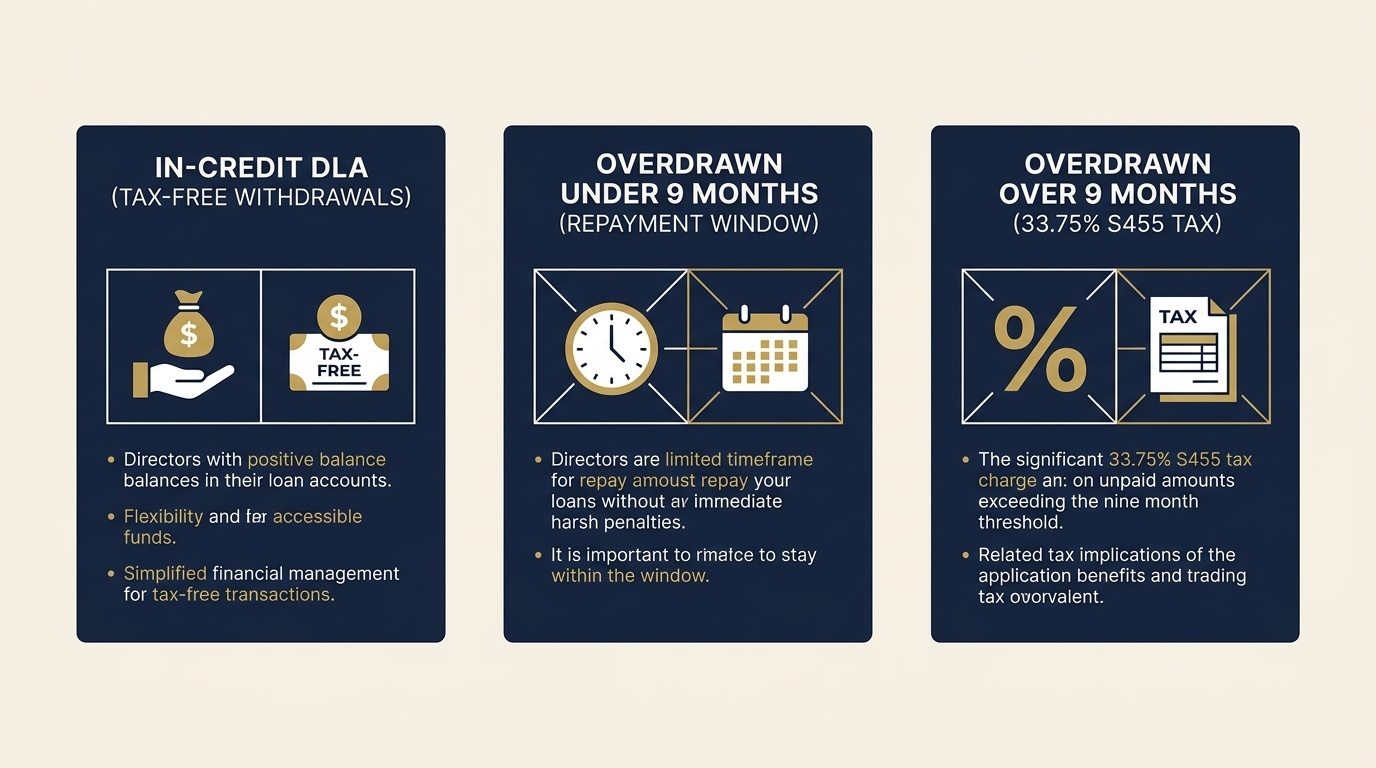
A Director’s Loan Account is an accounting ledger that tracks the net financial balance between a limited company and its director-shareholders. At any given moment, a DLA exists in one of three states:
| DLA Balance State | Financial Meaning | Tax & Legal Implications |
|---|---|---|
| In Credit | The company owes money to the director | Director can withdraw funds tax-free anytime; company can pay commercial interest to director. |
| Nil / Zero Balance | Neither party owes money | No tax disclosures or accounting adjustments required. |
| Overdrawn | The director owes money to the company | Triggers potential 33.75% S455 Corporation Tax, P11D Benefit-in-Kind, and reporting on form CT600A. |
If you are registering a new corporate entity or setting up initial director shareholdings, read our step-by-step walkthrough on how to register a company in the UK.
2. Section 455 Tax: Rates, Deadlines & Calculations
When a close company (a company controlled by five or fewer participators/directors) makes a loan to a participator that remains overdrawn at the financial year-end, Section 455 of the Corporation Tax Act 2010 comes into effect.
Key Statutory Deadlines:
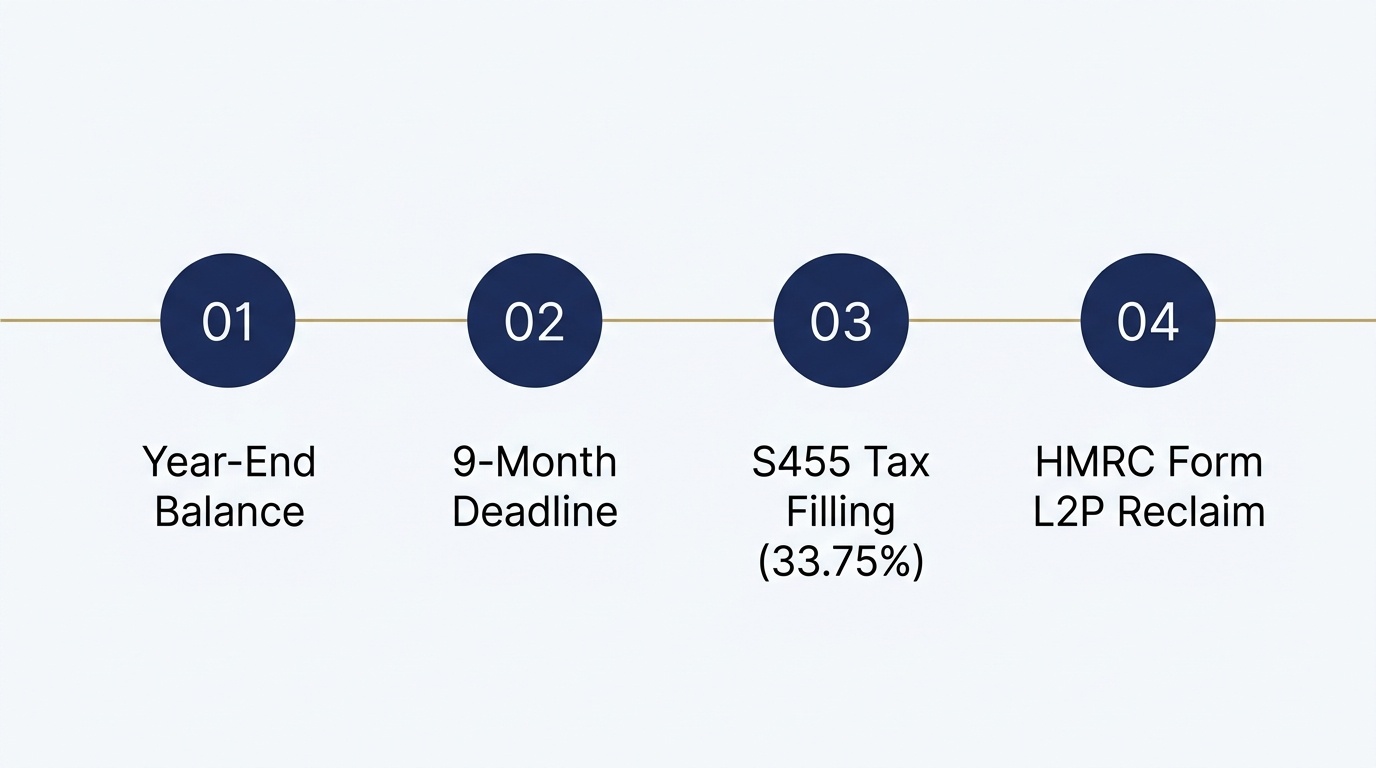
- The 9-Month Grace Period: You have exactly 9 months and 1 day following the end of your company’s Corporation Tax accounting period to repay the overdrawn balance in full.
- The Tax Rate (33.75%): If the loan is not repaid by this deadline, the company must pay Section 455 Corporation Tax at 33.75% on the outstanding amount. (This rate directly mirrors the dividend higher rate).
- Reporting Mechanism: The overdrawn balance must be formally declared on supplementary form CT600A submitted alongside the company’s annual CT600 tax return.
Overdrawn DLA Balance: £40,000
S455 Corporation Tax Liability (33.75%): £13,500 (Paid by company to HMRC)
For company directors comparing director loan withdrawals against structured dividend distributions, consult our in-depth analysis on the optimal salary and dividend split for UK directors.
Learn how S455 liabilities interact with your overall corporate profits in our comprehensive guide to UK corporation tax rates 2026.
3. The “Bed and Breakfasting” Anti-Avoidance Rules
In the past, directors attempted to circumvent the Section 455 tax charge by repaying their overdrawn loan just before the 9-month deadline and immediately re-borrowing the funds days later. HMRC prevents this practice through strict anti-avoidance legislation:
1. The 30-Day Rule (£5,000+ Threshold):
If a director makes a repayment of £5,000 or more, and within 30 days before or after that repayment borrows £5,000 or more from the company, the repayment is legally disregarded for tax purposes. The original loan is treated as unpaid, and the full 33.75% S455 tax charge applies.
2. The Intentions and Arrangements Rule (£15,000+ Threshold):
If an overdrawn loan exceeds £15,000, and at the time of repayment there were arrangements or an intention to re-borrow any amount, the repayment is matched against the new borrowing rather than the old debt, even if the new withdrawal occurs outside the 30-day window.
Maintaining clear cash flow projections prevents accidental trigger of these anti-avoidance traps. Use the framework in our guide to small business cash flow forecasting in 2026.
4. Benefit-in-Kind (BiK) & The £10,000 Threshold
If a director’s total overdrawn loan balance exceeds £10,000 at any point in the tax year, HMRC classifies the arrangement as a cheap or interest-free employment-related loan:
- Official Rate of Interest: For 2026/27, the HMRC official rate of interest is 3.75%.
- Tax Treatment: If the company does not charge the director interest at or above 3.75%, the interest shortfall is treated as a taxable Benefit-in-Kind (BiK).
- Reporting & NI Duties: The company must declare the benefit on form P11D, pay 15% Employer Class 1A National Insurance, and the director pays Income Tax on the benefit via Self Assessment.
Ensure your company accounts for employee benefit tax liabilities properly by reviewing our breakdown of employer national insurance contributions 2026 rates.
5. How to Reclaim Section 455 Tax from HMRC
Section 455 tax is not a permanent penalty. It is a holding tax designed to prevent permanent untaxed withdrawals. When the loan is permanently repaid, written off, or released, your company can reclaim 100% of the S455 tax paid (excluding any late-payment interest charges):
- Reclaim Timing: The refund is payable by HMRC 9 months and 1 day after the end of the accounting period in which the loan was settled.
- Reclaiming Within 2 Years: Use form CT600A when filing or amending the Company Tax Return for that period online.
- Reclaiming After 2 Years: Complete HMRC Form L2P and submit it alongside your latest Company Tax Return or post it to HMRC Corporation Tax Services.
6. Frequently Asked Questions
Can an overdrawn director’s loan be written off?
Yes. If a company formally writes off or releases an overdrawn DLA, the debt is treated as deemed dividend income for the director, taxed at dividend income tax rates via Self Assessment. The company must also account for Class 1 National Insurance on the value through payroll.
What happens to an overdrawn DLA if the company goes into liquidation?
An overdrawn director’s loan is a corporate asset. In liquidation, the insolvency practitioner will demand immediate personal repayment of the entire outstanding balance to settle creditor claims, which can result in personal bankruptcy if funds are unavailable.
Your Next Actions
- Audit Current DLA Balances: Review your balance sheet ledgers to identify whether your account is overdrawn and by what margin.
- Track the 9-Month Year-End Deadline: Calendar the exact repayment date (9 months + 1 day post year-end) to avoid incurring 33.75% S455 tax.
- Ensure Official Interest Is Charged: If balances exceed £10,000, ensure the company charges 3.75% interest to prevent P11D Benefit-in-Kind penalties.
- Explore Tools: Use resources in our Business Tools Hub.