Quick Answer: Optimal 2026 Director Pay Structure
For the 2026 UK tax year, the most tax-efficient salary for a single director company without employees is £9,100 per year (£758.33 monthly) or £5,000 per year if avoiding employer National Insurance following recent threshold reductions. Taking a £12,570 salary is optimal only for companies eligible for the £10,500 Employment Allowance (those with two or more paid employees or directors). Profits above salary are paid as company dividends up to the £50,270 basic rate threshold, utilizing the £500 tax-free dividend allowance and 8.75% basic dividend tax rate. This structure minimizes total Income Tax, National Insurance, and Corporation Tax obligations while securing UK State Pension qualifying years.
Key Takeaways
- Companies House processed over 200,000 new incorporations in early 2026, making director pay structure a primary concern for new UK business owners.
- The 2026 Personal Allowance remains frozen at £12,570, while the dividend tax-free allowance is capped at £500.
- Employer Class 1 National Insurance secondary threshold reduced to £5,000 per year at a 15% rate, changing low-salary calculations for single-director firms.
- Employment Allowance increased to £10,500, benefiting multi-employee businesses taking a £12,570 director salary.
According to data published by Companies House and the Office for National Statistics, over 800,000 active UK private limited companies operate with a single director. For every director owner, deciding how to extract profits from a business is one of the first major financial choices of the tax year.
Extracting money as a director is fundamentally different from working as a sole trader or traditional employee. Rather than receiving a standard paycheck, directors have the legal flexibility to split earnings between a director’s salary and shareholder dividend payments. Choosing the correct combination can save thousands of pounds in combined Income Tax, Corporation Tax, and National Insurance contributions each year.
The 2026 tax year brings several regulatory shifts introduced by HMRC and the Treasury. The Employer National Insurance secondary threshold dropped to £5,000, while the Employer NI rate rose to 15%. Simultaneously, the Employment Allowance expanded to £10,500, creating two distinct salary strategies depending on your company’s headcount.
This guide details the exact mathematics, legal boundaries, and tax thresholds for 2026 so you can set your pay structure with total confidence.
1. Why Directors Combine Salary and Dividends
Extracting income from a limited company through a combination of a low salary and high dividends is a standard, fully legal tax planning strategy in the UK.
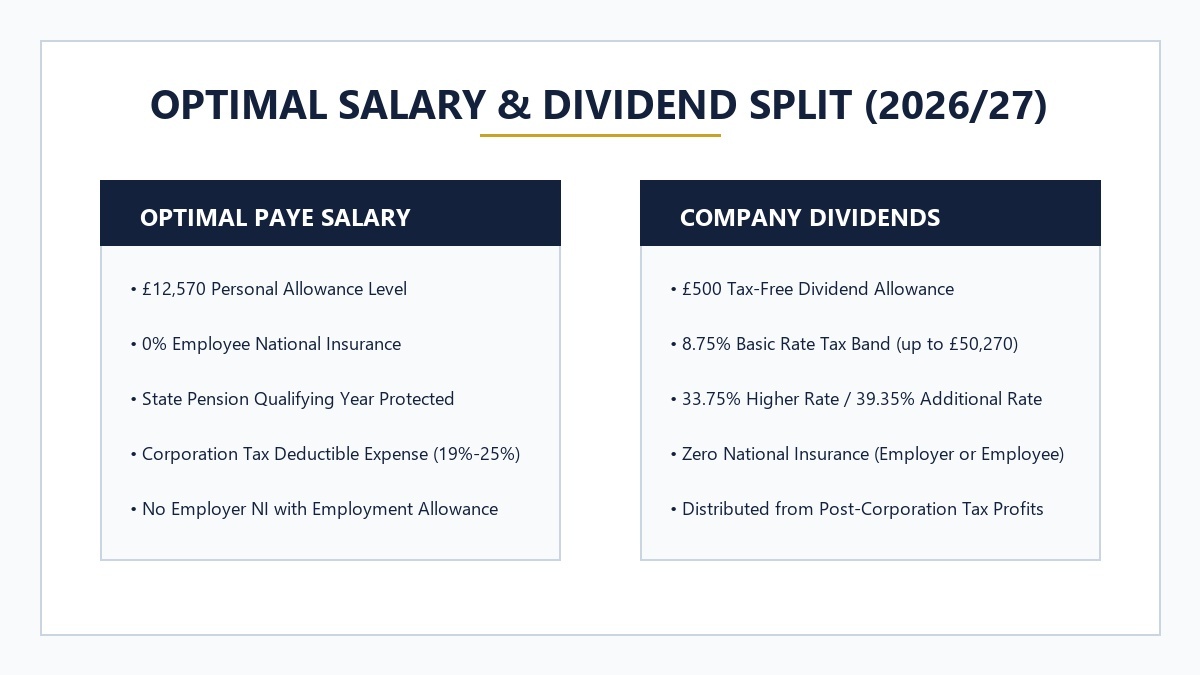
A salary is treated as an allowable business expense for Corporation Tax purposes. Every pound your company pays you in salary reduces your company’s taxable profit, saving Corporation Tax at either the 19% small profits rate or up to the 25% main rate.
Dividends, by contrast, are paid out of post-tax company profits. Dividends are not subject to National Insurance contributions (neither employee nor employer NI). Dividend Income Tax rates are also significantly lower than standard Income Tax rates on salaries.
Tax Rate Comparison 2026
| Income Type | Basic Rate Band (£12,571 to £50,270) | Higher Rate Band (£50,271 to £125,140) | Additional Rate Band (Above £125,140) |
|---|---|---|---|
| Salary (Income Tax) | 20% | 40% | 45% |
| Salary (Employee NI) | 8% | 2% | 2% |
| Dividends (Tax Rate) | 8.75% | 33.75% | 39.35% |

By taking a low salary up to key National Insurance thresholds, you achieve three goals at once:
1. You secure a qualifying year for your UK State Pension and benefit entitlement.
2. You create an allowable expense to reduce Corporation Tax.
3. You extract remaining profits as dividends without paying any National Insurance on those funds.
For a broader evaluation of company structures and profit extraction, see our guide on sole trader or limited company taxation.
2. Key HMRC Tax Thresholds for 2026
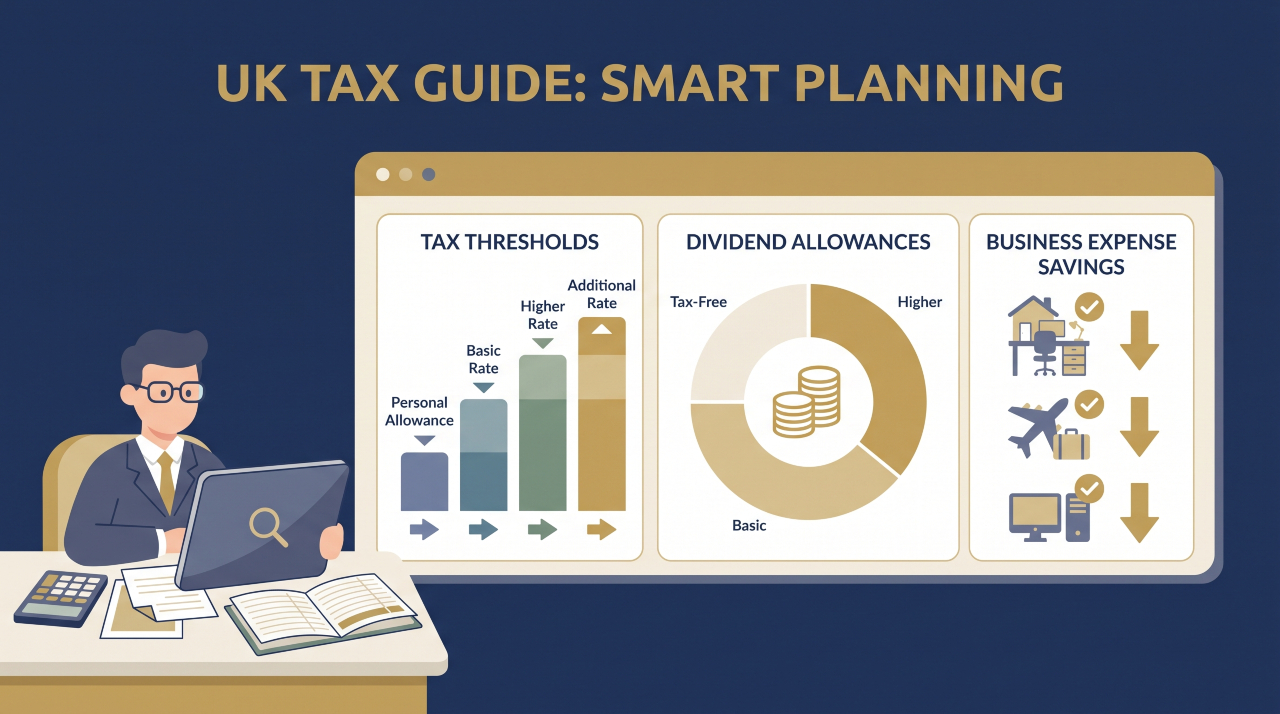
To understand the optimal numbers, you must review the core thresholds established by GOV.UK Income Tax guidance for the 2026 tax year:
Personal Allowance (£12,570): The amount of personal income you can earn tax-free across all sources.
Lower Earnings Limit for NI (£6,396 per year / £533 per month): Earnings above this level record a qualifying year for your State Pension, even if no actual National Insurance is owed.
Primary Threshold for Employee NI (£12,570 per year / £1,047 per month): You pay 0% employee National Insurance on earnings below this amount.
Secondary Threshold for Employer NI (£5,000 per year / £416 per month): Employers pay 15% National Insurance on earnings above this threshold (reduced from £9,100 in previous tax years).
Dividend Allowance (£500): The first £500 of dividend income received in the tax year is tax-free.
Basic Rate Tax Band (£50,270 total income): Income between £12,570 and £50,270 is taxed at basic rates.
3. The Two Optimal Salary Strategies for 2026
Because the Employer National Insurance secondary threshold fell to £5,000 while the Employment Allowance grew to £10,500, directors must choose between two primary salary benchmarks based on their business structure.
Option A: The £12,570 Salary Strategy (Best for Multi-Employee Companies)
If your company qualifies for the £10,500 Employment Allowance, taking a director’s salary of £12,570 is the most tax-efficient route.
To qualify for the Employment Allowance, your company must have at least two employees or directors earning above the secondary threshold. Single-director companies with no other staff cannot claim this allowance.
How Option A Works:
Gross Salary: £12,570 per year (£1,047.50 per month).
Income Tax: £0 (covered by your £12,570 Personal Allowance).
Employee NI: £0 (salary equals the Primary Threshold).
Employer NI: £1,135.50 (15% on £7,570 above the £5,000 threshold).
Employment Allowance: Covers the £1,135.50 Employer NI bill completely.
Corporation Tax Saving: The full £12,570 salary is a tax-deductible expense, saving £2,388.30 in Corporation Tax at the 19% small profits rate.
Option B: The £9,100 or £5,000 Low Salary Strategy (Best for Solo Directors)
If you are the sole director and sole employee of your limited company, you cannot claim the Employment Allowance. Paying a £12,570 salary would trigger an out-of-pocket Employer NI liability of £1,135.50.
Solo directors typically choose one of two low-salary levels:
1. The £9,100 Salary Level
Gross Salary: £9,100 per year (£758.33 per month).
Income Tax & Employee NI: £0.
Employer NI: 15% on £4,100 (amount above £5,000) = £615.
Corporation Tax Deduction: Salary plus Employer NI (£9,715 total) is deductible, saving £1,845.85 in Corporation Tax at 19%.
Net Benefit: The Corporation Tax saving on the extra salary (£680.20) exceeds the Employer NI bill (£615), leaving a net positive gain of £65.20 compared to a £5,000 salary.
2. The £5,000 Secondary Threshold Level
Gross Salary: £5,000 per year (£416.66 per month).
Income Tax, Employee NI & Employer NI: £0 across all categories.
State Pension Credit: Because £5,000 is below the £6,396 Lower Earnings Limit, you must ensure you have qualifying NI contributions from another source (such as previous employment) to maintain State Pension years.
To test both options against your actual profit numbers, run your figures through our Salary vs Dividends Calculator.
4. Calculating Dividends: Step-by-Step Example
Once your salary is set, all remaining company income after business expenses and Corporation Tax can be distributed as dividends to shareholders.
Dividends can only be legally paid out of retained post-tax profits. Paying dividends when the company has insufficient profit is classed as an unlawful dividend by HMRC and can lead to tax penalties.
Real Example: £50,000 Company Profit (Solo Director, £9,100 Salary)
Let’s walk through a full calculation for a single-director company generating £50,000 in net trading profit before director pay:
1. Company Gross Profit: £50,000
2. Deduct Director Salary: £9,100
3. Deduct Employer NI: £615
4. Net Profit Before Corporation Tax: £40,285
5. Corporation Tax at 19%: £7,654.15
6. Retained Profit Available for Dividends: £32,630.85
Now let’s examine the personal tax owed by the director on this income:
Personal Salary Received: £9,100 (Tax: £0)
Dividends Taken: £32,630.85
Total Personal Income: £41,730.85 (Well within the £50,270 basic rate threshold)
Unused Personal Allowance: £12,570 minus £9,100 = £3,470
First £3,470 of Dividends: Tax-free (uses remaining Personal Allowance)
Next £500 of Dividends: Tax-free (Dividend Allowance)
Remaining Taxable Dividends: £28,660.85
Dividend Tax at 8.75%: £2,507.82
Final Summary:
Total Cash Extracted to Bank: £39,223.03
Effective Personal Tax & NI Rate: 6.01%
Total Combined Tax (Corp Tax + Personal Tax): £10,776.97 (21.55% of original £50k profit)
Comparing this to a sole trader earning £50,000 net profit (who pays over £12,800 in Income Tax and NI), the limited company director saves more than £2,000 in annual tax. You can review full structural comparisons in our guide to advantages of a corporation.
5. Higher Rate Tax Planning (£50,270 to £125,140)
When company profits push your personal income above £50,270, dividend tax rates jump from 8.75% to 33.75%. This 25 percentage point increase makes timing your dividend distributions critical.
│
├── £0 to £12,570 ────────► 0% Tax (Personal Allowance)
├── £12,571 to £50,270 ────────► 8.75% Dividend Tax (Basic Rate)
├── £50,271 to £125,140 ────────► 33.75% Dividend Tax (Higher Rate)
└── Above £125,140 ────────► 39.35% Dividend Tax (Additional Rate)
Key Strategies for High Earners:
- Retain Profits in the Business: You are not required to draw all profit as dividends each year. Retaining cash inside the business keeps it taxed at the 19% or 25% Corporation Tax rate, avoiding the 33.75% personal dividend tax until drawn in future lower-income years.
- Executive Pension Contributions: The company can pay direct contributions into your personal pension scheme. Pension contributions are allowable business expenses for Corporation Tax, saving up to 25% Corporation Tax while avoiding personal Income Tax and NI entirely.
- Share Structure Optimization: If your spouse or business partner works in the business and has unused basic rate tax bands, issuing alphabet shares (Class A and Class B shares) allows dividend payments to be tailored to each shareholder’s personal tax allowance.
Maintaining health check records of your business cash reserves is essential before making large dividend payments. Review our recommendations on cash flow tips to ensure your operational capital remains secure.
6. Common Dividend Rules and Legal Risks
HMRC and Companies House monitor dividend distributions closely. Mistakes can trigger tax audits or invalidate your dividend payments.
Crucial Compliance Rules:
Dividends Must Follow Profit: You cannot draw dividends based on projected sales or revenue. Profits must be realized and documented in management accounts.
Dividend Vouchers Are Required: Every dividend declaration requires a formal board minute and a dividend voucher stating the company name, date, shareholder name, and dividend amount.
Maintain Separate Bank Accounts: Never pay personal expenses directly from company accounts. All salary and dividend payments must flow cleanly from your business account to your personal bank account.
Beware IR35 Rules: If your client contracts fall inside IR35, income must be processed as employment salary subject to full PAYE tax and NI, removing the dividend tax advantage.
7. Frequently Asked Questions
Can I take dividends monthly like a regular salary?
Yes. You can declare and pay interim dividends monthly, quarterly, or annually. However, each payment must be backed by management accounts showing sufficient post-tax profit and supported by board minutes and dividend vouchers.
What happens if I pay a dividend when the company has no profit?
An unpaid or unearned dividend is illegal under the Companies Act 2006. HMRC will reclassify the payment as a Director’s Loan. If the loan is not repaid within 9 months and 1 day of your accounting year-end, your company will pay Section 455 tax at 33.75%.
Does taking a low salary affect my State Pension?
No, provided your salary meets or exceeds the Lower Earnings Limit (£6,396 per year for 2026). Salaries between £6,396 and £12,570 award a full qualifying year for the UK State Pension without requiring you to pay employee National Insurance.
Should I register for PAYE even if I take a salary below £12,570?
Yes. To pay yourself a legal salary, your company must register as an employer with HMRC and operate a PAYE scheme. You must submit Real Time Information (RTI) filings to HMRC on or before each pay date.
Your Next Steps
1. Calculate Your Target Income: Use our free Salary vs Dividends Calculator to model your optimal split for 2026.
2. Review Payroll Setup: Register your company for PAYE with HMRC if you haven’t already, setting your monthly salary at £9,100 (£758.33/mo) for solo directors or £12,570 (£1,047.50/mo) for eligible multi-employee firms.
3. Establish Dividend Documentation: Download standard board minute and dividend voucher templates to log every profit distribution.
4. Consult Your Accountant: Tax rules vary based on secondary income, student loans, and pension contributions. Review your proposed strategy with a qualified UK accountant before the end of the tax year.
Editorial Team & Signature
Written by Oliver Carpenter, Lead Business & Tax Analyst at Elite Business Journal. Published for the 2026 UK Tax Year. Updated February 2026.