Data from the Global Entrepreneurship Monitor UK report, produced by the Enterprise Research Centre at Warwick Business School, shows that early-stage entrepreneurial activity in the UK has reached its highest level since tracking began in 1999. Approximately 36% of the UK working-age population is currently engaged in or planning to start a business. A substantial portion of these new founders have never owned a business, managed a balance sheet, or written a formal strategy document. Lack of prior business experience is no longer the barrier it once was, provided you follow a structured approach to learning, validation, and risk management.
The misconception that you need a business degree or decades of corporate management to build a profitable company leads many capable people to defer their ambitions indefinitely. In practice, modern UK entrepreneurs build experience while operating, starting with low-risk models, testing demand before spending capital, and using free digital infrastructure to handle operations. This guide sets out the exact step-by-step process for becoming a UK entrepreneur with zero prior business experience in 2026, from initial skill auditing to your first HMRC tax filing.
Key Takeaways
- Lack of business experience can be an asset, preventing legacy habits and encouraging lean, direct testing of market demand
- The safest route for first-time UK founders is starting as a sole trader alongside existing employment to validate revenue before taking financial risk
- Service-based and digital business models require minimal startup capital, allowing you to build operational confidence without debt
- Registering as a sole trader with HMRC costs nothing and requires minimal admin until your earnings exceed the £1,000 Trading Allowance
- Focusing on a specific, narrow problem for a defined audience outperforms broad generalist offers every time for first-time founders
What You’ll Need
- An existing skill, trade knowledge, or personal interest that solves a real problem for others
- A laptop with reliable internet access
- A separate UK bank account dedicated to your business transactions
- A basic spreadsheet app to track expenses and revenue from day one
- Free registration as a sole trader with HMRC once earnings exceed £1,000 in a tax year
- Two hours per day of dedicated, uninterrupted focus time
1: Audit your existing skills instead of looking for revolutionary ideas
First-time founders frequently stall because they believe they must invent a brand new product or disruptive concept. In reality, most successful small businesses in the UK are improved executions of existing services. Look at your daily work history, hobbies, technical competencies, and the administrative or practical tasks friends and colleagues routinely ask you to help with.
If you have spent three years working in office administration, you already understand scheduling, customer communication, and workflow tracking. That is the operational core of a virtual assistant firm or corporate organization consultancy. If you work in trades, education, retail, or creative fields, your domain knowledge is your primary business asset.
UK-specific detail: The UK service sector accounts for over 80% of total UK economic output. Starting a service-based business based on your current practical skills requires near-zero capital investment, unlike manufacturing or retail inventory models.
Common mistake: Attempting to launch a complex business in an industry where you have neither domain knowledge nor personal interest. If you have never worked in hospitality, opening a cafe as your first venture exposes you to massive operational risk.
What done correctly looks like: You can write down three distinct services you are competent to perform today without needing additional technical training.
2: Validate market demand before spending a single pound

Experience teaches veteran founders never to build a product or service until customers have proven they will pay for it. As a beginner, you must adopt this habit immediately. Validation means securing real commercial interest, such as pre-orders, deposit payments, or signed letters of intent, before investing money in branding, inventory, or expensive websites.
To test a service idea, reach out directly to 20 people in your existing professional or local network who fit your target customer profile. Describe the specific outcome you offer, state your preliminary price, and ask if they would test the service at an early-stage rate in exchange for an honest testimonial. If 20 conversations produce zero interested buyers, your offer or target market needs adjustment before you go further. If pricing confidently still feels new, our guide on testing a business idea covers practical validation frameworks worth running before you spend money.
UK-specific detail: You can use free UK platforms like LinkedIn for B2B services or local community boards like Nextdoor and local Facebook groups for consumer services to gauge demand without paid advertising.
Common mistake: Relying on feedback from friends and family who tell you your idea sounds great. Compliments are free; only financial commitments or detailed time investments count as validation.
What done correctly looks like: You have at least two prospective clients committed to paying for your service or product before you buy equipment or register a company name.
3: Keep your day job while building initial momentum
Quitting your job to go all-in on a new business creates intense financial pressure that leads to poor decision-making. You are far more likely to make clear-headed strategic choices when your personal living costs are covered by a predictable primary income. Treat your new business as a structured side project during mornings, evenings, and weekends until revenue is consistent.
Set fixed, non-negotiable working hours for your business, such as 7:00 AM to 8:30 AM every weekday or four hours every Saturday morning. Use this time exclusively for client outreach, service delivery, and core setup rather than passive reading or logo tweaks. Once your business revenue matches 60% to 70% of your salary consistently for three consecutive months, you can evaluate transitioning to full-time trading. If you are preparing for that transition, reading our breakdown of turning a side hustle into a full-time business will help you structure your financial runway.
UK-specific detail: Check your existing employment contract for restrictive covenants or conflict of interest clauses before starting a side business, particularly if your business operates in the same sector as your employer.
Common mistake: Working on your business during your employer’s time or on company-issued laptops. This can create legal ownership disputes over your intellectual property and risk immediate termination.
What done correctly looks like: You have a dedicated weekly schedule for your business that does not conflict with your employment responsibilities or financial stability.
4: Choose the simplest legal structure for your launch
Many beginner entrepreneurs waste weeks researching complex corporate structures, holding companies, and equity splits before earning their first £100. In the UK, the overwhelming majority of first-time entrepreneurs should register as a sole trader. It is free to set up, requires minimal annual compliance, and keeps your administrative overhead extremely low.
As a sole trader, you and your business are a single legal entity for tax purposes. You report your income once a year through a Self Assessment tax return. If your business grows significantly or takes on commercial liabilities, you can easily convert to a private limited company (Ltd) later.
UK-specific detail: HMRC allows you to earn up to £1,000 gross income per tax year from self-employment under the Trading Allowance without needing to register or pay tax on that income. Once you cross the £1,000 threshold, you must register as self-employed with HMRC by 5 October following the end of the tax year in which you traded. If you decide a company structure is required from day one, review our breakdown of the advantages of a corporation to understand the additional reporting duties involved.
Common mistake: Incorporating a limited company prematurely, which incurs annual confirmation statement fees, requires formal director filings at Companies House, and necessitates corporate accounting software long before you have meaningful revenue.
What done correctly looks like: You register with HMRC as a sole trader online only when your revenue crosses the £1,000 threshold, keeping your focus on sales rather than paperwork.
5: Separate your personal and business finances completely

Mixing personal spending with business transactions is a primary cause of legal and tax headaches for first-time founders. Even if you operate as a sole trader, open a dedicated bank account for your business from day one. Every client payment must go into this account, and every business expense must come out of it.
You do not necessarily need a paid commercial account immediately; many UK digital banks offer free business accounts with no monthly fees for sole traders. Transfer a fixed percentage of your profits into a secondary savings bucket within that account every time you receive a client payment to cover your future Income Tax and National Insurance liabilities.
UK-specific detail: UK sole traders pay Income Tax based on their net profits above the personal allowance (£12,570), alongside Class 4 National Insurance contributions. Setting aside 25% to 30% of all net earnings into a tax reserve account ensures you are never surprised by your January HMRC Self Assessment bill. If you are comparing banking providers, our review of the best business bank account UK options outlines the top fee-free choices for sole traders.
Common mistake: Spending gross incoming client payments as personal disposable income without reserving funds for tax liabilities and operating expenses.
What done correctly looks like: 100% of your business revenues and allowable expenses flow through a single dedicated business account, with tax reserves set aside automatically.
6: Focus on direct outreach over paid marketing
Without previous business experience, spending money on digital ads, agency retainers, or print flyers is an expensive way to learn marketing. Direct, personalized outreach is the most effective and cost-free way for a new entrepreneur to secure early clients. Identify your ideal target customer, locate where they hang out online or locally, and initiate helpful, non-spammy conversations.
If you offer copywriting for e-commerce brands, send personalized video site audits or tailored recommendations directly to business owners on LinkedIn or via email. Highlight a specific problem you noticed, explain how you would resolve it, and offer a short phone call to discuss details. Direct outreach builds your sales skills fast because you receive immediate, real-world feedback on your positioning and pricing.
UK-specific detail: When sending cold outreach emails to business contacts in the UK, ensure you comply with PECR (Privacy and Electronic Communications Regulations) by contacting corporate entities or business email addresses, offering a clear opt-out, and maintaining a legitimate business interest.
Common mistake: Waiting passively for clients to find a newly created website or social media profile without conducting proactive daily outreach.
What done correctly looks like: You contact 5 to 10 specific, researched potential clients every working day with personalized communications until your client capacity is full.
7: Build a network of mentors and peer founders
No successful entrepreneur operates in isolation. When you lack formal business experience, access to experienced mentors and fellow founders accelerates your learning curve faster than any textbook. Peer founders share practical advice on pricing standards, client management, reliable UK suppliers, and local regulatory requirements.
Look for structured peer learning programs supported by local UK Growth Hubs, your local Chamber of Commerce, or organizations like Enterprise Nation and the Federation of Small Businesses (FSB). Many of these programs are government-funded or low-cost, providing structured guidance without requiring expensive coaching fees.
UK-specific detail: Local Enterprise Partnerships (LEPs) and regional Growth Hubs across England, Scotland, Wales, and Northern Ireland provide free access to experienced business advisers funded through regional development schemes.
Common mistake: Paying thousands of pounds to online “gurus” for generic courses when free, government-backed UK business support programs exist in your local area.
What done correctly looks like: You participate in at least one regular peer founder group or mentorship initiative where you can discuss operational challenges openly.
Common Mistakes to Avoid
- Over-investing in visual identity early. Spending hundreds of pounds on custom logos, business cards, and branded merchandise before you have a single paying client wastes capital. Use clean standard fonts and simple free templates until revenue justifies an upgrade.
- Underpricing out of insecurity. Charging unrealistically low prices because you lack business experience attracts difficult clients and leaves no margin for business costs. Price at 60% to 70% of standard market rates initially, then adjust upward after securing your first three testimonials.
- Ignoring basic record-keeping. Failing to save digital receipts for allowable business expenses means paying more tax than necessary. Snap photos of every receipt immediately using a mobile app or save electronic invoices in a dedicated drive folder.
- Trying to serve everyone. Offering a general service to “all small businesses” makes your marketing invisible. Specialize tightly, such as “bookkeeping for independent trade contractors in Yorkshire,” to stand out immediately.
- Fearing sales conversations. Viewing sales as pushy or dishonest holds many new founders back. Reframe selling as a helpful consultation designed to determine whether your service can solve a real problem for the prospect.
Frequently Asked Questions
Can I really start a business in the UK with no prior business experience?
Yes. Millions of UK business owners start without formal business qualifications or management backgrounds. By starting as a sole trader with a service-based business model, you sell existing personal or technical skills while learning operations, pricing, and marketing step by step.
How much money do I need to start a business with no experience?
Many digital and service-based businesses can be launched for under £100 if you already own a laptop and internet connection. Registering as a sole trader with HMRC is free, and basic digital tools for invoicing, communication, and scheduling offer free plans for early-stage operations.
Should I set up a limited company or sole trader for my first business?
Most first-time UK founders should start as sole traders. It requires zero registration fees, minimal paperwork, and basic annual tax reporting via Self Assessment. You can easily transition your business to a private limited company later once your turnover and profits justify the higher accounting and reporting costs.
How do I know if my business idea is actually good?
An idea is validated only when real prospective clients demonstrate a willingness to pay for it. Conduct direct conversations with target customers, offer early-stage trial packages, or collect advance deposits. Positive verbal feedback from friends and family does not count as commercial validation.
What is the Trading Allowance and how does it help new UK entrepreneurs?
The UK Trading Allowance is an automatic tax exemption that allows individuals to earn up to £1,000 of gross self-employment income per tax year without paying tax or registering with HMRC. It provides a risk-free window for aspiring entrepreneurs to test business ideas and earn initial revenue legally.
Do I need business insurance when starting out from home?
If your business involves advising clients, managing customer data, or delivering work with financial consequences, securing Professional Indemnity insurance is strongly recommended. For home businesses involving physical interactions or local services, Public Liability insurance is essential. Policies for small sole traders often cost under £150 per year.
How long does it take to turn a new business into a full-time income?
While timelines vary by sector and business model, consistent daily outreach and focused service delivery typically generate predictable initial revenue within three to six months. Most founders maintain part-time employment or side-hustle status until business profits reliably cover basic living expenses.
What to Do Next
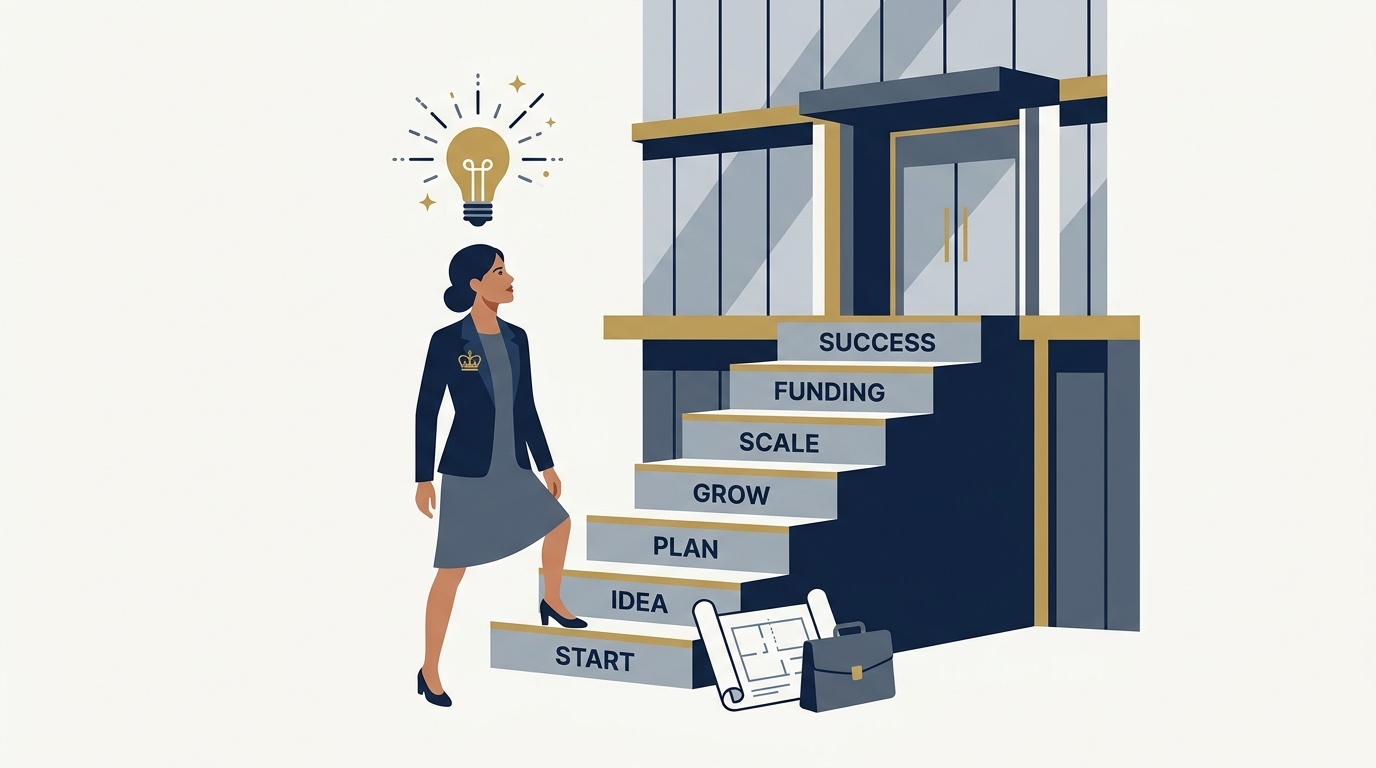
Becoming an entrepreneur without prior experience is a sequence of small, manageable execution steps rather than a single high-risk leap. Start today by writing down a clear audit of your existing practical skills. Select one specific service you can offer, identify ten potential clients in your network, and send your first direct outreach message this week.
Once your initial client conversations begin, focus entirely on delivering exceptional results and securing detailed written testimonials. Those early client outcomes will form the proof required to win future business, raise your rates, and build a sustainable UK enterprise. Set a calendar reminder for Friday afternoon to review your progress, refine your outreach strategy, and prepare your action plan for the following week.