More than 1.8 million new corporations are formed in the United States every year. That number is not random. Business owners choose to incorporate because it gives them real, proven advantages that other business structures simply cannot match.
If you run a business or plan to start one, you have probably heard about corporations. Maybe you run a sole proprietorship or a partnership right now. Those structures work fine in the beginning, but they come with serious risks and limits as your business grows.
A corporation is a legal business entity that exists separately from its owners. That one fact alone changes everything. It changes how you pay taxes, how you protect your money, and how other people see your business. This article breaks down every major advantage of forming a corporation so you can decide if it is the right move for your future.
Limited Liability Means Your Personal Assets Are Protected
One of the biggest advantages of a corporation is limited liability protection. This means that if your business gets sued or cannot pay its debts, your personal bank accounts, house, and car are safe. Creditors and plaintiffs can only go after the assets owned by the corporation, not you personally.
Think about what that means in real life. If your business owes $200,000 and cannot pay it back, no one can take your home to cover that debt. This protection is one of the main reasons people choose to incorporate over running a sole proprietorship or general partnership.
In a sole proprietorship, you and your business are the same legal entity. Every debt your business owes is your debt too. If you want to compare all your options before deciding, the SBA guide on choosing a business structure breaks it down in plain language. Every lawsuit against your business is a lawsuit against you personally. A corporation removes that risk and creates a clear legal wall between you and your business.
This protection is not perfect. If you personally guarantee a loan or commit fraud, you can still be held responsible. But for everyday business risks, the liability shield is strong and reliable.
Corporations Offer Tax Benefits You Cannot Get Elsewhere
Corporations, especially C corporations, can take advantage of a wide range of tax deductions that individuals and sole proprietors cannot. These include deductions for employee benefits, retirement plans, health insurance, and business expenses. These deductions reduce the taxable income of the corporation and save real money.
The current federal corporate tax rate is 21% for C corporations. You can read more about how the IRS applies this rate by visiting the IRS corporate tax information page directly. Some business owners use a strategy called income splitting, where they pay themselves a reasonable salary and leave the rest of profits inside the corporation at the lower corporate rate.
S corporations are another option. They allow profits and losses to pass directly to the shareholders’ personal tax returns. This avoids the issue of double taxation that comes with a C corporation. You pay taxes once on your personal return, not twice at the corporate and personal level.
There are also ways to defer income, write off equipment faster, and fund employee health plans with pre-tax dollars. These tax tools add up to serious savings over time. A good tax advisor can help you find the best setup for your specific situation.
Corporations Can Raise Capital by Selling Stock
If you want to grow your business fast, you need money. Banks will lend to corporations more easily than to sole proprietorships. Investors feel more comfortable putting their money into a corporation because the legal structure is familiar and trustworthy.
A corporation can raise money by issuing shares of stock. You can sell those shares to investors in exchange for capital. This is something a sole proprietorship or partnership simply cannot do. It opens the door to a much larger pool of funding options.
Venture capital firms, angel investors, and even the general public through an IPO all prefer to invest in corporations. If you want to learn the rules around raising money through stock, the SEC small business capital raising guide is a reliable place to start. The structure gives them a clear ownership stake, defined rights, and an exit strategy. These things make investing feel safer and more professional.
Even small corporations benefit from this. You do not need to go public to issue stock. You can offer shares privately to friends, family, or early investors. That flexibility gives you options that other business types do not have.
Corporations Keep Going Even After Owners Leave
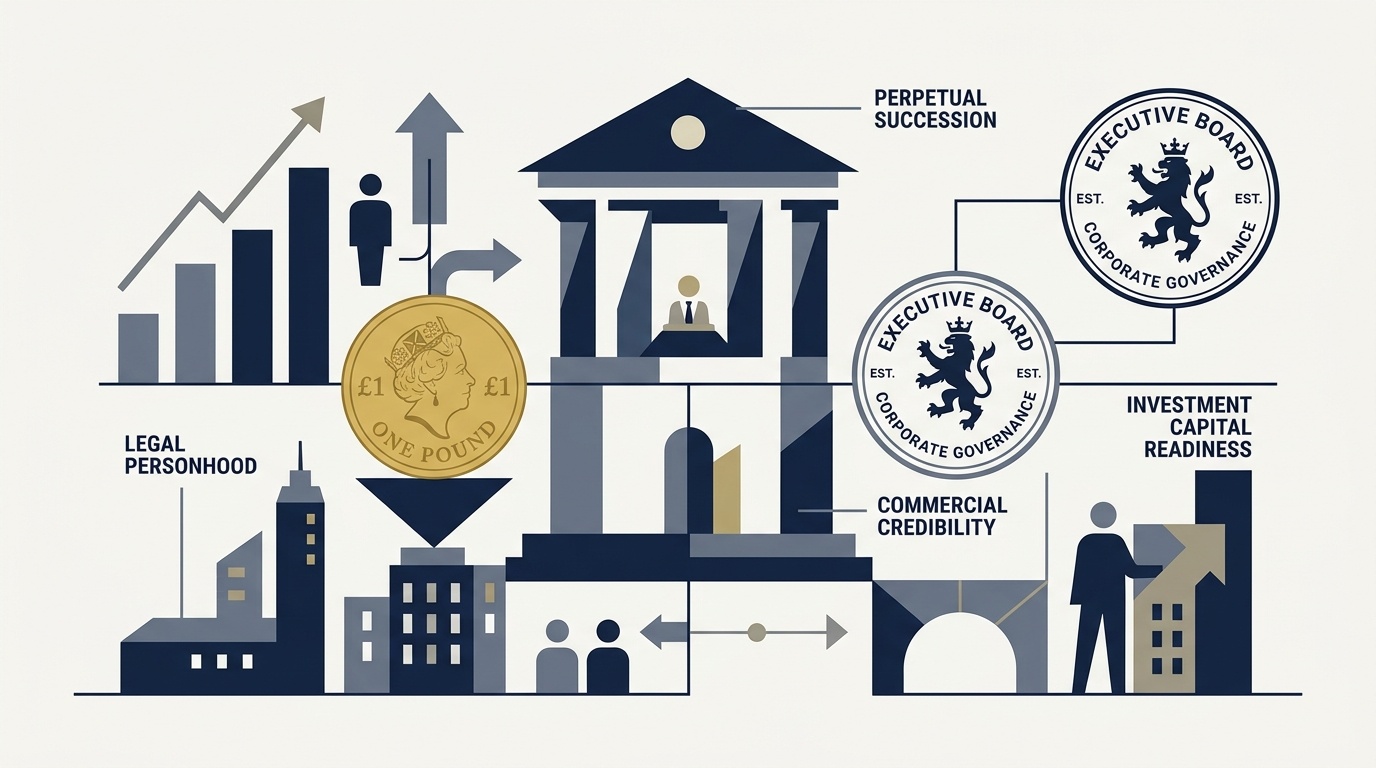
A corporation has what is called perpetual existence. This means the business keeps operating even if an owner dies, sells their shares, or leaves the company. The corporation is its own legal person, so it does not depend on any one individual to survive.
Compare that to a sole proprietorship or partnership. If the owner of a sole proprietorship dies, the business often dies with them. A partnership can dissolve if one partner walks away. These structures are fragile in ways that corporations are not.
Perpetual existence makes it easier to plan for the future. You can bring in new investors without restructuring the whole company. You can sell your shares and walk away while the business continues. You can even pass ownership to your children without shutting down operations.
For businesses that plan to grow, build a brand, or eventually be sold, this stability is incredibly valuable. Buyers and investors look for businesses that can survive changes in ownership. A corporation checks that box immediately.
A Corporation Looks More Professional and Builds Trust
When you have “Inc.” or “Corp.” at the end of your business name, people notice. Customers, vendors, banks, and partners often see corporations as more established and trustworthy than sole proprietorships or informal business structures.
This credibility matters more than people realize. A large company may refuse to work with a sole proprietorship because they see it as too risky or too small. A bank may decline a loan to an unincorporated business but approve one for a corporation. Your business structure affects how the outside world treats you.
Having a corporate structure also signals that you take your business seriously. It shows you have done the legal work, set up proper governance, and are committed to long-term growth. That kind of signal builds confidence in the people you work with.
Even your employees respond differently. People want to work for companies that have structure and stability. A corporation can offer stock options, formal benefit plans, and a sense of permanence that attracts better talent. Those things help you build a stronger team over time.
Selling or Transferring Shares in a Corporation Is Simple
One of the practical advantages of a corporation is how easy it is to transfer ownership. In most cases, an owner just sells or transfers their shares. The business itself does not need to shut down, restructure, or go through a complicated legal process.
This ease of transfer has a big impact on the value of your business. Buyers want to know they can take over cleanly. If ownership is hard to transfer, some buyers will walk away. A corporation removes that friction and makes your business more attractive on the market.
Family businesses benefit from this too. Parents can pass shares to their children gradually over time, which can also help with estate planning. Each share transfer can be documented clearly without disrupting daily operations.
Investors also appreciate this feature. If they want to cash out their investment, they can sell their shares to another buyer without needing your permission in many cases. That liquidity makes investing in your corporation more appealing from the start.
Corporations Can Offer Stronger Benefits to Employees and Owners
A corporation can deduct the cost of employee benefits as a business expense. This includes health insurance, life insurance, disability coverage, and retirement plans. These deductions reduce the company’s taxable income while giving employees real value.
As an owner of a C corporation, you can also receive these benefits as an employee of your own company. That means your corporation can pay for your health insurance with pre-tax dollars. The company deducts the cost, and you do not pay personal income tax on the benefit. That is a significant financial advantage.
Retirement plans are another area where corporations shine. A corporation can set up a 401(k) plan with matching contributions. These contributions are tax-deductible for the corporation and grow tax-deferred for employees. Over decades, that adds up to substantial retirement savings.
Offering strong benefits also helps you compete for skilled workers. People choose jobs based on the full compensation package, not just the salary. A corporation that offers health coverage, retirement plans, and other perks has a clear edge over businesses that cannot match those offerings.
Your Corporation Can Build Its Own Credit Profile
A corporation is a separate legal entity, which means it can build its own credit score and credit history. This is separate from your personal credit. Over time, a corporation can qualify for loans, credit lines, and vendor terms based on its own financial track record.
Building business credit protects your personal credit score. If you run a sole proprietorship and your business borrows money, that debt often shows up on your personal credit report. With a corporation, the business debt stays with the business unless you personally guarantee it.
Strong business credit opens doors. You can get better loan terms, higher credit limits, and more favorable vendor payment terms. These financial tools help you manage cash flow and grow without putting all the financial risk on your personal finances.
Building business credit takes time, but starting as a corporation puts you in the best position. Open a business bank account, get a business credit card, and pay your bills on time. Over a few years, your corporation will have its own solid financial reputation.
The Corporate Structure Makes You a Better Partner for Others
Serious investors do their homework before they put money into a business. They look for clear ownership records, formal governance, and a business structure that gives them legal protections. A corporation checks all of those boxes in a way that other structures cannot.
When you are incorporated, you can issue preferred stock, common stock, and different classes of shares. This flexibility lets you structure deals in ways that work for both you and your investors. You can give investors certain rights while keeping control of your company. That kind of flexibility builds better partnerships.
Strategic partners and vendors also prefer working with corporations. A large vendor may require a formal entity before extending a large credit line. A strategic partner may want to formalize an agreement with a legal entity rather than an individual. Your corporate status makes those conversations easier and faster.
Even government contracts often require businesses to be incorporated. If you want to work with federal, state, or local agencies, having a corporate structure may be a basic requirement. Being incorporated keeps more opportunities available to you.
If You Plan to Scale, a Corporation Is Built for Growth
Every element of the corporate structure is designed to support growth. The ability to raise capital through stock, the professional credibility, the tax advantages, and the liability protection all work together to help a business expand in a sustainable way.
Scaling a business means hiring more people, entering new markets, investing in equipment, and managing more complex operations. All of those things require capital, trust, and a structure that can handle increasing complexity without falling apart. A corporation is built to handle all of that.
| Growth Factor | Sole Proprietorship | Corporation |
|---|---|---|
| Raise outside capital | Very limited | Yes, through stock |
| Liability protection | None | Strong |
| Business credit | Tied to personal credit | Separate entity |
| Transfer ownership | Difficult | Simple |
| Attract top talent | Hard | Easier with stock options |
When you plan to build something that lasts, the structure you choose matters from day one. Starting as a corporation signals that you are serious about growth. It sets you up to take advantage of every opportunity that comes your way without needing to restructure later.
Formal Structure Helps You Run a Better Business
A corporation requires formal governance. That means a board of directors, annual meetings, shareholder records, and documented decisions. Some people see this as extra work. But in practice, it makes your business run better.
When you have to document decisions, hold regular meetings, and report to a board, you are forced to think strategically. You cannot make impulsive decisions without review. You have people around you who hold you accountable. That accountability leads to better outcomes for the business.
Formal governance also protects you legally. If your corporation is ever sued, having clean records shows that you ran the business properly. Courts look at whether you followed corporate formalities. If you did, your liability protection stays intact. If you did not, a court can “pierce the corporate veil” and hold you personally liable.
The discipline that comes with corporate governance is something many small business owners underestimate. It slows down reckless decisions and creates a culture of accountability. Over time, that culture becomes a competitive advantage in itself.
Offering Stock Options Gives You an Edge in Hiring
One of the most powerful tools a corporation has is the ability to offer stock options to employees. A stock option gives an employee the right to buy shares of the company at a set price in the future. If the company grows and the stock value goes up, those options become very valuable.
This is how many startups compete with larger companies for top talent. They cannot always pay the highest salaries, but they can offer a piece of the company. That promise of future value motivates employees to work hard and stay loyal.
Stock options also align the interests of employees with the interests of the company. When employees own a piece of the business, they think and act like owners. They care more about the company’s success because their financial future is tied to it.
Only corporations can offer equity compensation in this way. It is a major advantage that sole proprietorships and partnerships simply cannot replicate. If you want to attract driven, talented people who will grow with your company, equity is one of your best tools.
The Advantages of a Corporation Are Hard to Ignore
A corporation gives you limited liability, tax advantages, access to capital, professional credibility, and the ability to grow without limits. These are not small perks. They are structural advantages that protect your wealth and build a stronger business over time.
Choosing the right business structure is one of the most important decisions you will make as a business owner. The advantages of a corporation are concrete, proven, and available to anyone willing to do the work of setting one up. From the moment you incorporate, you put your business in a better position to succeed.
If you are serious about building something that lasts, take the next step. Talk to a business attorney or CPA about incorporating your business. The cost of setting up a corporation is small compared to the financial protection and growth opportunities it brings. Start the process today and give your business the foundation it deserves.