The UK e-learning market is expected to surpass £7 billion by 2026, yet most people who try to sell online courses quit before making their first sale — not because their knowledge is poor, but because nobody told them how it actually works in the UK.
This guide covers everything you need: how to pick your topic, which platform to use, how UK tax applies to digital product sales, how to price your course, and how to attract paying students. By the end, you’ll have a clear, realistic plan to sell online courses in the UK — whether you’re starting from zero or already have an audience.
Online education is one of the fastest growing businesses to start right now, and the opportunity for individual creators has never been more accessible.
What Makes Online Course Selling Different in the UK
Selling online courses in the UK isn’t the same as selling them anywhere else. UK buyers expect professionalism, clear pricing in GBP, and a sense of credibility before they hand over money.
You’re also operating under UK law, HMRC rules, and — once you hit certain thresholds — VAT regulations that apply specifically to digital products. Most guides written for a US audience skip this entirely.
Getting this right from the start saves you from nasty surprises later.
Step 1 — Choose a Topic People Will Pay For
Your course topic needs to solve a specific problem or teach a clear skill. General topics don’t sell well; specific ones do.
“Social media marketing” is too broad. “How to grow a local business on Instagram in the UK” is specific enough to attract buyers who feel it was made for them. The more precisely your topic matches what someone is already searching for, the easier marketing becomes.
Use tools like Google Trends UK and AnswerThePublic to check whether people are actively searching for your topic. Real demand beats a good idea every time.
Step 2 — Validate Before You Build
One of the biggest mistakes beginners make is spending weeks building a course nobody wants to buy. Validate first — build later.
Post about your topic on LinkedIn or in a Facebook group, and offer a beta version at a reduced price to your first 10–20 students. If people pay you for a promise, they’ll pay you for the finished product. If nobody bites, you’ve saved yourself months of wasted effort.
This approach also gives you real testimonials before you formally launch, which dramatically increases your conversion rate.
Step 3 — Choose the Right Platform for UK Sellers
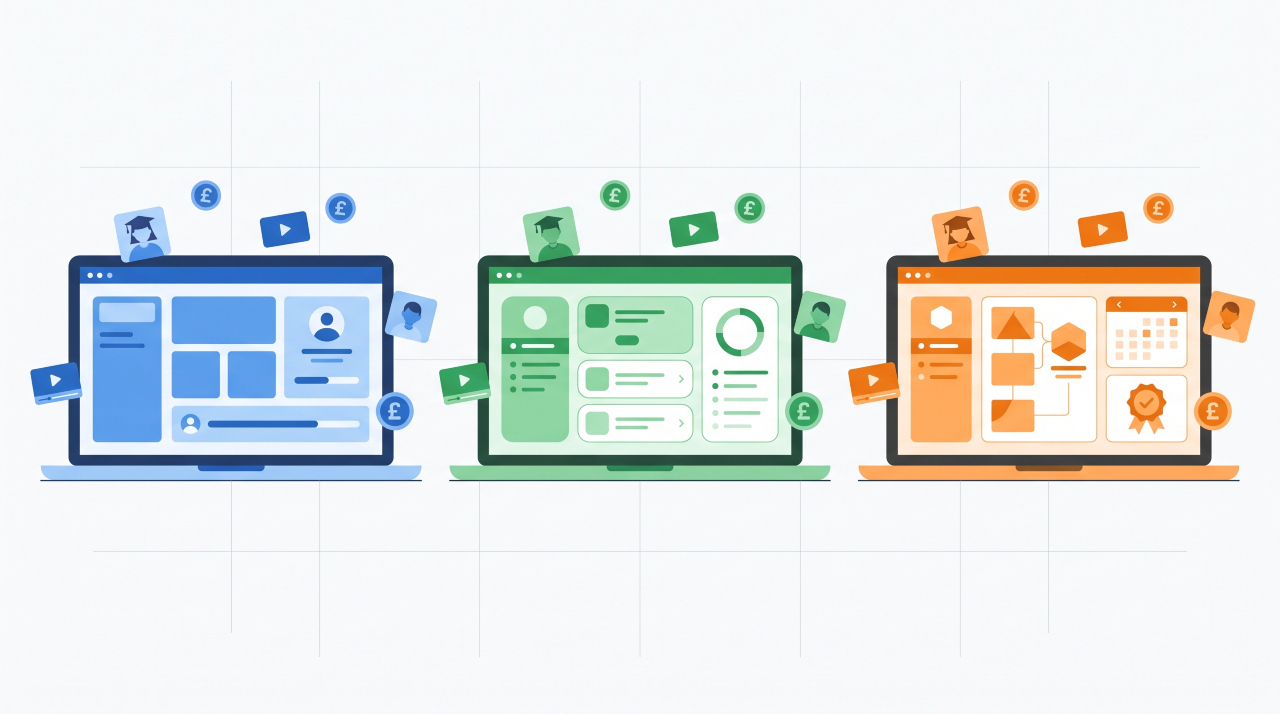
Your platform choice affects your fees, your student experience, and how much control you keep over your audience. Here’s a clear breakdown:
| Platform | Transaction Fee | Best For | GBP Support |
|---|---|---|---|
| Teachable | 0–5% (plan dependent) | Beginners | Yes |
| Thinkific | 0% (paid plans) | Growing creators | Yes |
| Kajabi | 0% | All-in-one solution | Yes |
| Gumroad | 10% + payment fees | Simple digital products | Yes |
| Udemy | 37–63% revenue share | Marketplace exposure | Yes |
| Podia | 0% | Memberships + courses | Yes |
Udemy gives you access to a massive built-in audience, but you give up most of your revenue and pricing control. Teachable and Thinkific give you more control but require you to drive your own traffic. Most UK creators who scale past £5,000/month use their own platform rather than relying on a marketplace.
Step 4 — Create Your Course Content
You don’t need expensive equipment to start. A decent USB microphone (around £50–£80), natural window lighting, and free screen recording software like OBS Studio are enough to produce professional-quality content.
Structure your course with a clear outcome in mind. Every module should move the student one step closer to the result they paid for. Keep lessons between 5 and 15 minutes — research from Udemy’s 2024 Workplace Learning Trends Report shows shorter, focused lessons have significantly higher completion rates.
You don’t need to film everything at once. Build your first module, test it with beta students, and improve as you go.
Step 5 — Price Your Course Correctly for UK Buyers
Pricing is where most beginners get it wrong — usually by pricing too low. Cheap pricing actually hurts your sales because it signals low value to UK buyers.
For the UK market in 2026, realistic pricing benchmarks look like this:
- Introductory / mini courses: £27–£97
- Core courses (4–8 hours of content): £197–£497
- Premium or coaching-included programmes: £497–£2,000+
Don’t price based on how long it took you to make the course. Price based on the value of the outcome you’re delivering. A course that helps someone get a promotion, start a freelance career, or pass a professional exam is worth significantly more than its runtime suggests.
Test your pricing. Many creators find that raising their price actually increases sales because it removes the “too cheap to be good” perception.
Step 6 — Understand UK Tax Rules for Course Sellers
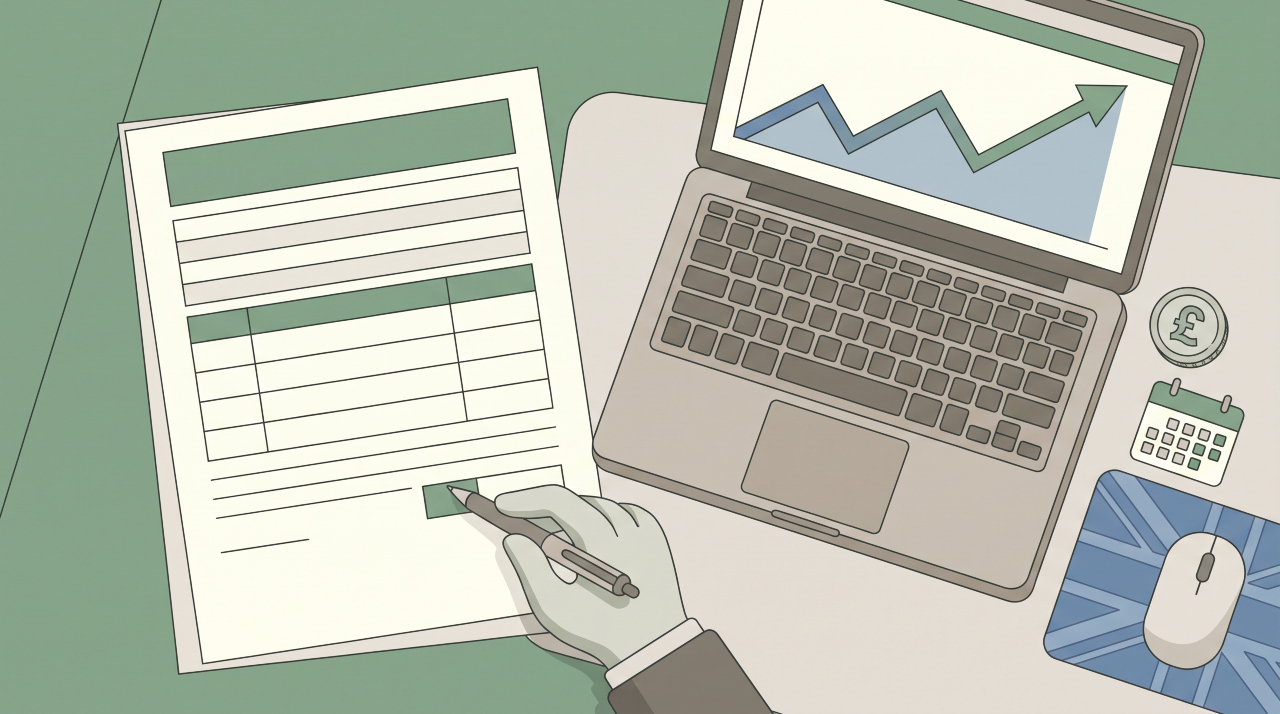
This is the section competitors don’t cover — and it’s the one that matters most if you’re serious about selling courses in the UK.
You’ll need to register as self-employed when selling courses if your income from courses exceeds the £1,000 trading allowance in a tax year. You’ll pay Income Tax and National Insurance on your profits through a Self Assessment tax return.
VAT on digital products is a separate consideration. If your annual taxable turnover exceeds £90,000 (the 2025/26 VAT threshold), you must register for VAT. Online courses are classified as digital services by HMRC. You can check the current threshold on GOV.UK’s VAT registration guide.
If you sell to customers in EU countries, the EU’s digital services VAT rules may also apply — even if you’re UK-based. This is worth discussing with an accountant once your revenue grows internationally.
Keep records from day one. A simple spreadsheet tracking income and expenses is enough to start.
Step 7 — Build an Audience Before You Sell
You don’t need a huge following to sell your first course. But you do need some kind of audience — even a small, engaged email list of 200 people can generate your first £1,000–£5,000 in sales.
Start building your email list 4–8 weeks before your course launches. Offer a free resource (a checklist, a short video, a template) in exchange for an email address. Then send weekly emails that teach something genuinely useful related to your course topic.
When you launch, email your list first. Email consistently outperforms social media for course sales — conversion rates for email are typically 3–5 times higher than social media posts, according to data from Mailchimp’s Email Marketing Benchmarks.
Step 8 — Market Your Course After Launch
Most courses don’t fail at creation — they fail at marketing. You need a consistent strategy, not a one-off launch post.
The most effective marketing channels for UK course sellers in 2026 are:
- SEO-driven blog content that ranks for what your audience searches
- YouTube tutorials that demonstrate your expertise for free
- LinkedIn content if your course targets professionals
- Paid Meta or Google ads once you’ve validated organic sales
Don’t try to use every channel at once. Pick one, get consistent results, then add another. Most successful UK course creators built their first £10,000 in revenue from a single channel before diversifying.
Online courses generate true passive income once created — but the passive part only happens after you’ve done the active marketing work to get initial traction.
Step 9 — Retain Students and Generate Reviews
Your existing students are your best marketing asset. A genuine 5-star review from a UK student converts browsers into buyers faster than any ad campaign.
Follow up with students at key points in the course — after module 1, at the halfway point, and after completion. Ask for feedback, fix any issues quickly, and request a review when a student shares a positive result.
Consider adding a private community (Facebook group, Discord, or Circle.so) to your course. Students who feel supported complete courses at a higher rate, leave better reviews, and are far more likely to buy your next product.
Word of mouth remains one of the most powerful sales tools in the UK market. Make your students look good, and they’ll do your marketing for you.
How Much Can You Realistically Earn?
Be honest with yourself about timelines. Most new course creators don’t generate significant income in their first month.
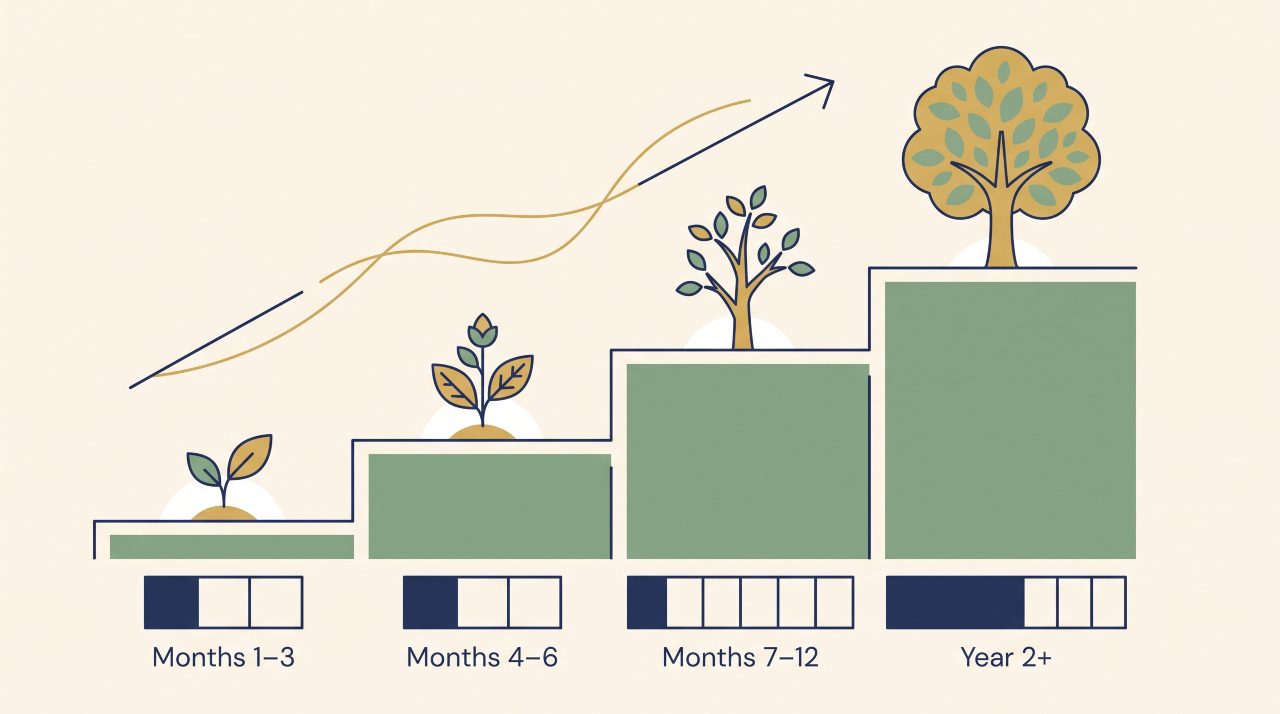
A realistic progression for a UK course creator looks like this:
- Months 1–3: Building content, validating, gathering beta students. Income: £0–£500
- Months 4–6: First formal launch, email list growth, first reviews. Income: £500–£2,000
- Months 7–12: Consistent marketing, word of mouth, potentially ads. Income: £2,000–£8,000/month
- Year 2+: Established reputation, multiple products, passive sales. Income: £5,000–£20,000+/month
These figures are achievable — but they’re not guaranteed. Your income depends on the quality of your content, how precisely your topic matches real demand, and how consistently you market. Creators who treat this like a real business, not a side project, see results significantly faster.
Do You Need a Qualification to Sell Courses in the UK?
You do not need a formal qualification to sell online courses in the UK. There is no law requiring you to hold a degree or certificate in order to teach a skill online.
What you do need is genuine expertise and the ability to get results for your students. UK consumers are savvy — they’ll check your background, look for social proof, and read reviews before buying. Your credibility comes from demonstrable results, not paper qualifications.
That said, if you’re teaching in regulated areas like financial advice, medical topics, or legal guidance, you must be appropriately qualified and comply with FCA, CMA, or other regulatory frameworks. Selling a course that implies professional advice in these areas without proper authorisation carries serious legal risk.
FAQs: How to Sell Online Courses in the UK
Do I need to pay tax on online course sales in the UK?
Yes. Income from selling online courses is taxable in the UK. If your earnings exceed the £1,000 trading allowance in a tax year, you must register for Self Assessment with HMRC and declare your profits. You’ll pay Income Tax and Class 4 National Insurance on your net profit.
What is the best platform to sell online courses in the UK?
Teachable and Thinkific are the most popular choices for UK creators who want full control over their pricing and student data. Udemy suits creators who want marketplace exposure and don’t mind lower revenue per sale. The best platform depends on whether you already have an audience or need to build one from scratch.
Is selling online courses profitable in the UK?
Yes — but it takes time and consistent effort. The UK e-learning market is large and growing. Creators who identify a specific niche, validate their topic, and market consistently can build profitable course businesses, often generating £2,000–£10,000+ per month after their first year of focused work.
How long does it take to create an online course?
A typical 4–6 hour course takes most creators between 40 and 80 hours to research, script, record, and edit. Mini courses (1–2 hours) can be produced in 10–20 hours. Building in extra time for technical setup, feedback rounds, and platform configuration is wise.
Can I sell online courses with no audience?
Yes, but it’s harder. Your first step should be building even a small email list or social media following before you launch. Alternatively, list your course on a marketplace like Udemy for initial exposure while you build your own audience simultaneously.
Do I need to charge VAT on online courses sold in the UK?
Only if your taxable turnover exceeds the VAT registration threshold (£90,000 for 2025/26). Below that threshold, you don’t need to register for or charge VAT. Once you cross the threshold, online courses are treated as digital services and standard VAT rules apply.
Start Selling — Here’s Your Clear Next Step
The UK online course market is genuinely one of the best opportunities for anyone with real knowledge to build a meaningful income in 2026. You don’t need a huge budget, a film studio, or a massive following to get started.
The one thing that separates creators who succeed from those who don’t is starting. Pick your topic this week, validate it with five real conversations, and sign up for a free trial on Teachable or Thinkific. Your first course doesn’t have to be perfect — it has to exist.
Register with HMRC as self-employed, keep your records clean, and treat your course like the business it is. The financial and creative rewards are real, but they belong to the people who put in the consistent work.
Start this week. Your future students are already searching for what you know.