The Department for Science, Innovation and Technology’s Cyber Security Breaches Survey 2025/2026 found that 43% of UK businesses identified a cyber security breach or attack in the past year, a figure that scales to roughly 612,000 companies nationwide. Most business owners can name public liability or professional indemnity without hesitation, yet far fewer know that cyber cover, once treated as optional, now sits close to the top of the list for a large share of UK businesses. This guide sets out exactly what’s legally required, what’s expected by clients and landlords even without a legal mandate, and what each type of cover actually costs in 2026, so you can decide what your business genuinely needs rather than buying a generic bundle.
Key Takeaways
- UK law requires only two types of business insurance: employers’ liability if you have staff, and commercial motor insurance if you or employees drive for business purposes
- Public liability and professional indemnity are not legal requirements, but most clients, landlords, and contracts will not work with you without them
- Cyber insurance has grown fastest of any cover, with UK government data showing 62% of small businesses now hold it, up from 49% the year before
- Core business insurance for a small UK business typically costs between £150 and £1,500 a year, depending on staff, premises, and sector
- Underinsuring is a false economy; a single uninsured claim can cost more than a decade of premiums
Quick Answer
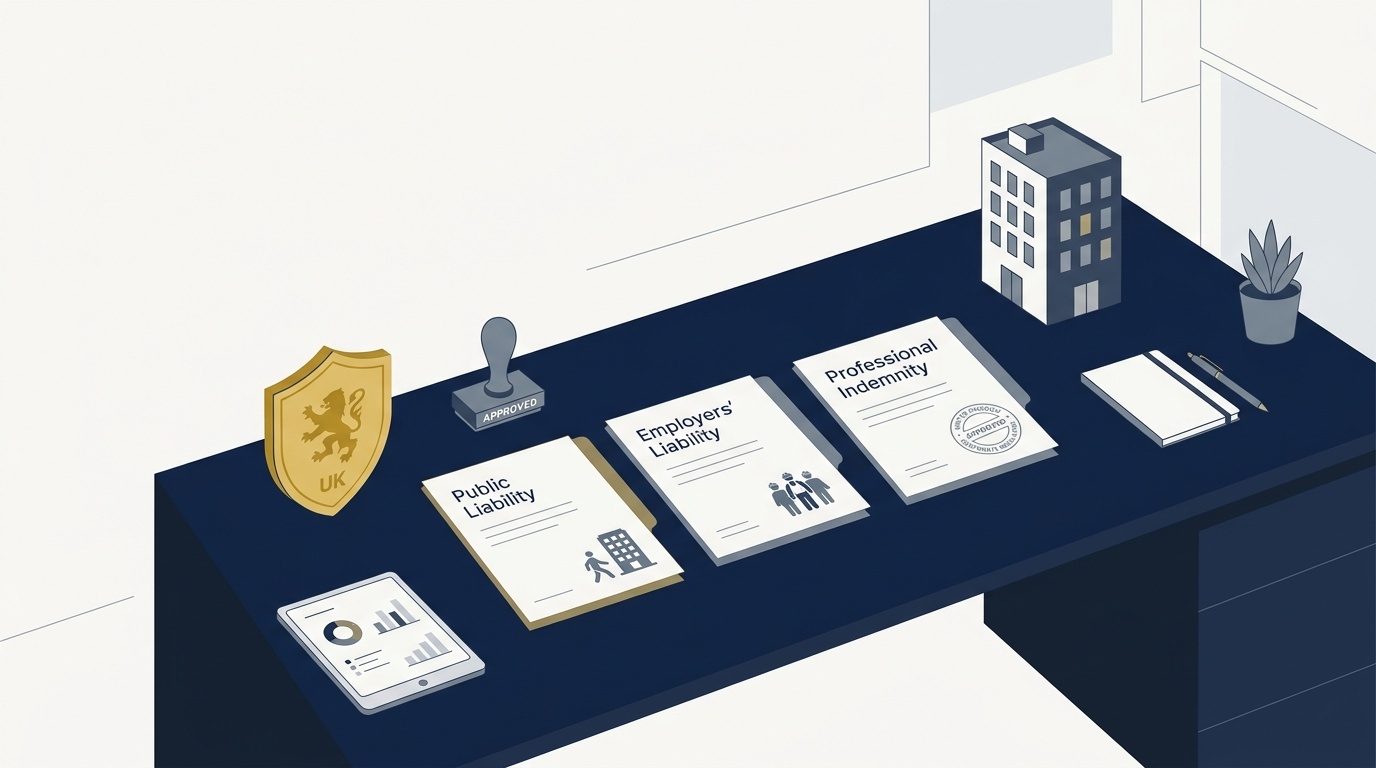
Most UK small businesses need employers’ liability insurance (legally required with staff), public liability insurance (expected by almost every client or venue), and increasingly cyber insurance given how common breaches have become. Professional indemnity is essential if you give advice or deliver a professional service. Beyond that, what you need depends on your premises, sector, and whether you hold stock, equipment, or company vehicles.
The Only Two Legally Required Covers in the UK
Everything else in this guide is a business decision. These two are not.
Employers’ liability insurance is compulsory the moment you employ anyone who is not a close family member, including part-time, casual, and temporary staff. UK law sets a minimum of £5 million of cover, though most insurers only sell policies starting at £10 million as standard, since the price difference is small and the risk of a serious claim, such as an industrial illness that surfaces years later, can be very expensive. Operating without it can mean a fine of up to £2,500 for every day you are uninsured, plus a further £1,000 for failing to display your certificate when the Health and Safety Executive asks for it.
Commercial motor insurance applies if you use any vehicle, whether a single van or a small fleet, for business purposes. A personal car or van policy will not cover you or an employee driving that vehicle for work, even occasionally, so this catches out more sole traders and small firms than most people expect.
Every other type of cover in this guide is optional in the strict legal sense, but “optional” does not mean “unnecessary.”
Public Liability Insurance: Not Required by Law, Required by Almost Everyone Else
Public liability protects your business when your activities injure a member of the public, a customer, or a client, or damage their property: a customer slipping in your shop, a contractor damaging a client’s property, a delivery causing an accident. No UK law forces most businesses to hold it.
In practice, it is close to mandatory anyway. Landlords typically require it before signing a commercial lease. Trade bodies often require it for membership. Many clients, particularly larger companies and public sector bodies, will not sign a contract with a supplier who cannot show proof of public liability cover.
What it costs: a low-risk sole trader working largely from home or online can expect to pay roughly £70 to £180 a year for public liability alone. Trades with more physical risk, such as electricians, plumbers, and builders, typically pay £150 to £600 a year.
Professional Indemnity Insurance: For Anyone Giving Advice or Delivering a Service
Professional indemnity insurance covers claims that your advice, design, or service caused a client financial loss, even if no physical injury or property damage occurred. This matters for consultants, accountants, designers, marketers, IT contractors, and anyone whose work could be the subject of a claim that “you got it wrong and it cost us money.” If you are only starting to build a client base, our guide on starting a consulting business covers where insurance fits into the wider setup process.
Some professional bodies and regulators require a minimum level of professional indemnity cover as a condition of membership or practice, so check your sector’s requirements rather than assuming a generic policy is sufficient.
Honest risk: skipping professional indemnity to save a few hundred pounds a year is a common false economy among new consultants and freelancers. A single client dispute over a costly mistake, even one you believe was not really your fault, can run to legal fees alone that exceed years of premiums.
Cyber Insurance: The Fastest-Growing Cover and Why
Until recently, most owners treated cyber insurance as something only larger or tech-heavy businesses needed. That has changed. UK government survey data shows 41% of micro businesses and 50% of small businesses identified a breach or attack in 2025, and cyber insurance adoption among small UK businesses rose to 62%, up sharply from 49% the year before. A separate industry estimate puts the average cost of a cyber attack on a business with fewer than 50 employees at roughly £3,400.
Cyber cover typically pays for the direct costs of a breach (system recovery, forensic investigation, legal advice) along with business interruption losses and, depending on the policy, regulatory fines and third-party claims if the breach involves customer data. Any business holding customer payment details, personal data, or relying on digital tools to trade (which is nearly every business in 2026) should treat this as a serious consideration rather than an afterthought.
Common mistake: assuming a general business insurance package automatically includes meaningful cyber cover. Many standard policies exclude or sharply limit cyber-related claims, so check the policy wording rather than assuming the policy bundles it in.
Other Covers Worth Knowing
| Cover | What It Protects | Who Typically Needs It |
|---|---|---|
| Business interruption | Lost income if an insured event stops you trading | Businesses with premises, stock, or equipment dependent on physical operation |
| Buildings and contents | Your premises, fixtures, stock, and equipment | Anyone renting or owning commercial premises |
| Goods in transit | Stock or equipment in transit | Businesses that deliver products or carry tools/equipment |
| Directors’ and officers’ (D&O) | Personal liability of company directors for management decisions | Limited companies, particularly those with external investors |
| Legal expenses | Costs of defending or pursuing certain legal disputes | Any business wanting to avoid large one-off legal bills |
Two businesses with identical turnover can end up with very different premiums because they need different combinations of these add-ons, so a generic “small business package” is rarely the most cost-effective route once you look closely at what it actually includes.
What Business Insurance Actually Costs in the UK
| Business Type | Typical Annual Cost |
|---|---|
| Sole trader, low-risk, home-based (public liability only) | £70 to £180 |
| Tradesperson (electrician, plumber, builder) | £150 to £600 |
| Small business with employees (employers’ liability plus public liability) | £150 to £1,500 |
| Consultant or professional service (public liability plus professional indemnity) | £100 to £250 for basic cover, rising with claim history and turnover |
Costs vary by sector, claims history, turnover, and location, and these ranges are indicative rather than a quote. Bundling employers’ liability, public liability, and other covers with a single insurer can typically save 10 to 20% compared with buying separate policies, and tax relief on business insurance premiums generally reduces the effective cost by 20 to 40% depending on your business structure and tax position. This is general guidance, not financial or tax advice specific to your situation, so confirm the treatment of premiums with an accountant before you file.
How to Decide What You Actually Need
Start with the two legal requirements, then work outward based on real exposure rather than what a generic checklist suggests.
- If you have any staff at all, confirm employers’ liability first; this is non-negotiable and the penalties for skipping it are severe relative to the cost of cover
- If you deal with the public, clients, or work on other people’s premises, add public liability, since most contracts and leases will require proof of it regardless of legal obligation
- If you give advice, design something, or deliver a professional service where a mistake could cost a client money, add professional indemnity
- If your business holds customer data or depends on digital systems to trade, take cyber insurance seriously rather than treating it as optional
- If you hold significant stock, equipment, or rent commercial premises, look at business interruption and buildings/contents cover before assuming your landlord’s policy protects your business too, since it usually only covers the building itself
Note: this guide gives general orientation, not a substitute for a broker or insurance adviser reviewing your specific risks. A construction firm, a home-based consultant, and an e-commerce retailer holding stock face genuinely different exposures, and the right combination of covers reflects that rather than a single default package.
Frequently Asked Questions
Is business insurance a legal requirement in the UK?
UK law requires only employers’ liability insurance (if you have staff) and commercial motor insurance (if you use a vehicle for business). Clients, landlords, and contracts frequently require other covers, including public liability and professional indemnity, even though the law does not mandate them.
What happens if I don’t have employers’ liability insurance?
The Health and Safety Executive can fine you up to £2,500 for every day you operate without it, plus up to £1,000 if you fail to produce your certificate on request. The fine applies regardless of whether an employee has actually made a claim.
Do sole traders need business insurance in the UK?
UK law does not require sole traders to hold public liability or professional indemnity insurance, but many clients and venues will not work with an uninsured sole trader, and the financial exposure from an uninsured claim can be significant relative to the modest cost of a basic policy.
How much does business insurance cost for a small UK business?
Costs typically range from £150 to £1,500 a year for core cover, depending on whether you employ staff, your sector’s risk level, and which additional covers you add. Low-risk, home-based sole traders sit at the lower end; businesses with employees, premises, or higher-risk trades sit higher.
Do I need cyber insurance if I’m a small business?
If your business holds any customer data or relies on digital tools and systems to trade, which describes nearly every business today, cyber insurance is worth serious consideration. UK government survey data shows half of small businesses identified a breach or attack in the past year, and adoption of cyber cover among small businesses has risen sharply as a result.
Does my landlord’s building insurance cover my business contents?
Usually not. A landlord’s policy typically covers the structure of the building itself, not your stock, equipment, or fixtures inside it. Business contents insurance is a separate policy worth arranging if you rent commercial premises.
Conclusion
Two covers are non-negotiable in the UK: employers’ liability if you have staff, and commercial motor if a vehicle is used for business. Everything else, from public liability to cyber insurance, depends on how your business actually operates, not a generic checklist. Start with your real exposure: who you deal with, what data or equipment you hold, and what a single serious claim would cost you without cover. Get quotes from at least two brokers or insurers before committing, and review your cover annually as your business changes.
If launching with minimal initial capital, explore viable low-overhead ventures in our guide to the cheapest businesses to start from home in the UK.
Scaling a commercial venture demands elite personal execution; discover the daily routines in our breakdown of productivity habits of top entrepreneurs.
Strategic growth planning requires understanding macro headwinds; read our forecast in UK economic outlook 2026.
Digital retail represents one of the fastest-expanding sectors; learn the launch playbook in how to start an e-commerce business in the UK.