Quick Answer: Small Business Rates Relief Thresholds 2026
In England, eligible small businesses occupying a single property with a rateable value of £12,000 or less qualify for 100% Small Business Rates Relief (SBRR), paying zero business rates. Properties with a rateable value between £12,001 and £15,000 receive tapered relief scaling down from 100% to 0%. Properties with a rateable value below £51,000 also benefit from the lower small business multiplier (49.9p rather than the standard 54.6p). In Wales, 100% relief applies to properties up to £6,000 rateable value (tapered to £12,000), while Scotland operates the Small Business Bonus Scheme granting 100% relief for rateable values up to £12,000. Relief is administered by your local council and must be claimed directly.
Key Takeaways
- Over 5.7 million UK private sector businesses operate under local commercial rate obligations, making business rates a major fixed overhead.
- Single main property occupiers in England with a rateable value under £12,000 pay £0 business rates.
- Tapered relief applies between £12,001 and £15,000 rateable value, saving business owners hundreds of pounds annually.
- Taking a second commercial property is allowed without losing relief if the second premises has a rateable value under £2,899.
According to commercial property figures published by the Valuation Office Agency (VOA) and the Department for Levelling Up, Housing and Communities, local councils in England collect over £26 billion in business rates annually. For independent retailers, office occupiers, workshop operators, and local service providers, commercial business rates represent one of the largest fixed costs alongside rent and payroll.
Business rates are a local tax charged on commercial properties such as shops, offices, warehouses, factories, and workshops. However, the UK government provides a tax reduction scheme known as Small Business Rates Relief (SBRR) to protect small enterprises from excessive property tax burdens.
If your business occupies a single commercial property with a low rateable value, SBRR can reduce your annual business rates bill by up to 100%, effectively eliminating your property tax liability.
This guide details the exact rateable value thresholds, regional differences across England, Wales, and Scotland, eligibility criteria for multi-property businesses, and step-by-step instructions on how to claim your relief.
1. What Are Business Rates and How Are They Calculated?
Business rates are calculated by taking your property’s Rateable Value (RV) and multiplying it by a government-set decimal figure called the multiplier.
1. Rateable Value (RV)
The Valuation Office Agency (VOA), an agency of HMRC, assigns every commercial property a rateable value. The rateable value represents the estimated open market annual rental value of the property on a specific valuation date.
2. The Multiplier
The government sets two annual business rates multipliers for England:
- Standard Multiplier: Applied to commercial properties with a rateable value of £51,000 or higher.
- Small Business Multiplier: Applied to qualifying commercial properties with a rateable value under £51,000.
│
Minus Applicable SBRR Relief
For a company calculating initial operating expenses before acquiring premises, review our itemised breakdown in the Start-Up Cost Estimator.
2. Small Business Rates Relief Thresholds in England (2026)
In England, Small Business Rates Relief is determined strictly by the rateable value of your commercial property and the number of properties your business occupies.
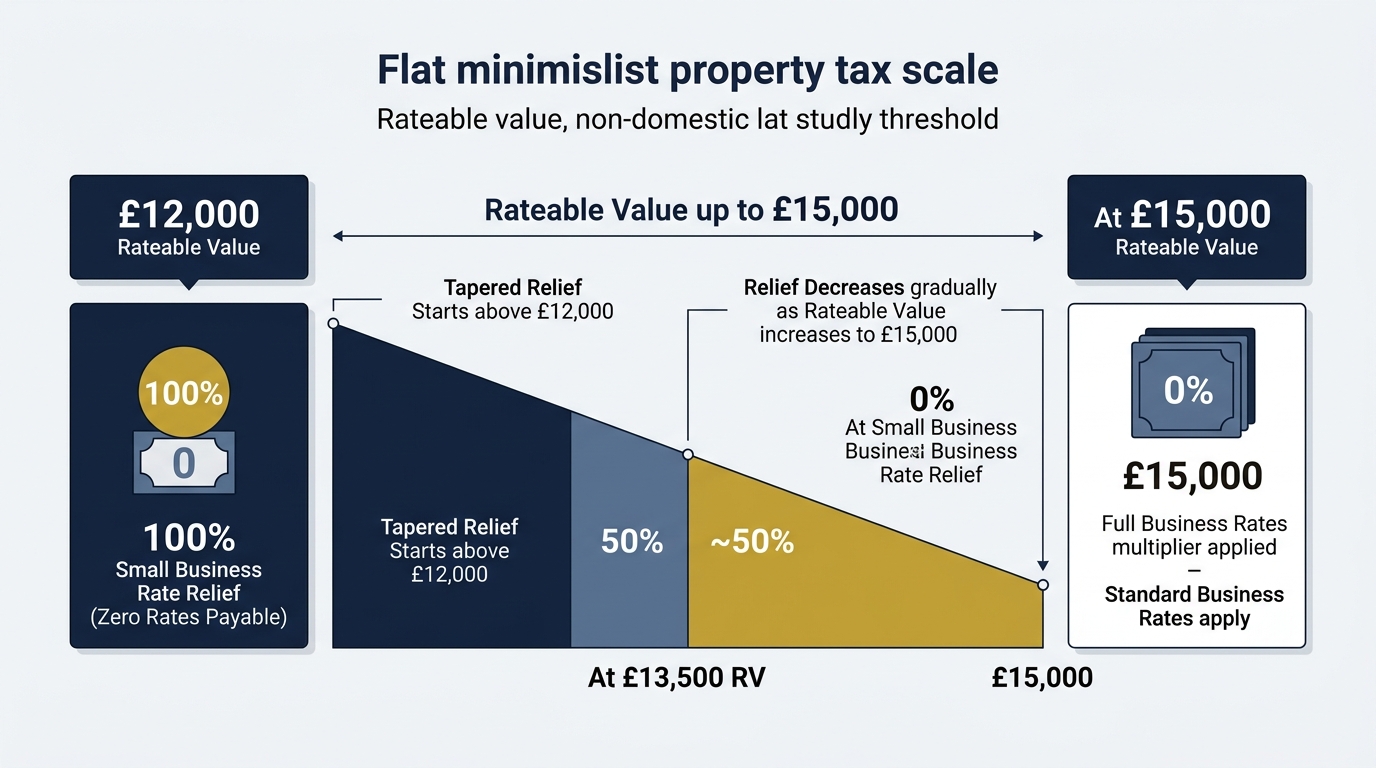
| Rateable Value (RV) | SBRR Relief Percentage | Annual Business Rates Payable |
|---|---|---|
| £12,000 or less | 100% Relief | £0 (Full Exemption) |
| £12,001 to £15,000 | Tapered Relief (100% down to 0%) | Pro-rata percentage based on RV |
| £15,001 to £51,000 | 0% Relief (No SBRR) | Calculated using lower small business multiplier |
| Over £51,000 | 0% Relief | Calculated using standard multiplier |
How Tapered Relief Works (Example Calculation)
If your commercial property in England has a rateable value between £12,001 and £15,000, your relief decreases on a sliding scale of roughly 5.5% for every £100 of rateable value above £12,000.
- The property sits exactly halfway between £12,000 and £15,000.
- The business receives a 50% discount on its business rates bill.
- Instead of paying the full bill of approximately £6,736 (using the 49.9p small business multiplier), the company pays only £3,368 per year.
Official eligibility rules can be confirmed on the GOV.UK small business rate relief guidance page.
3. Rules for Businesses Occupying Multiple Properties
A common misconception among small business owners is that taking on a second property automatically cancels Small Business Rates Relief across all locations.
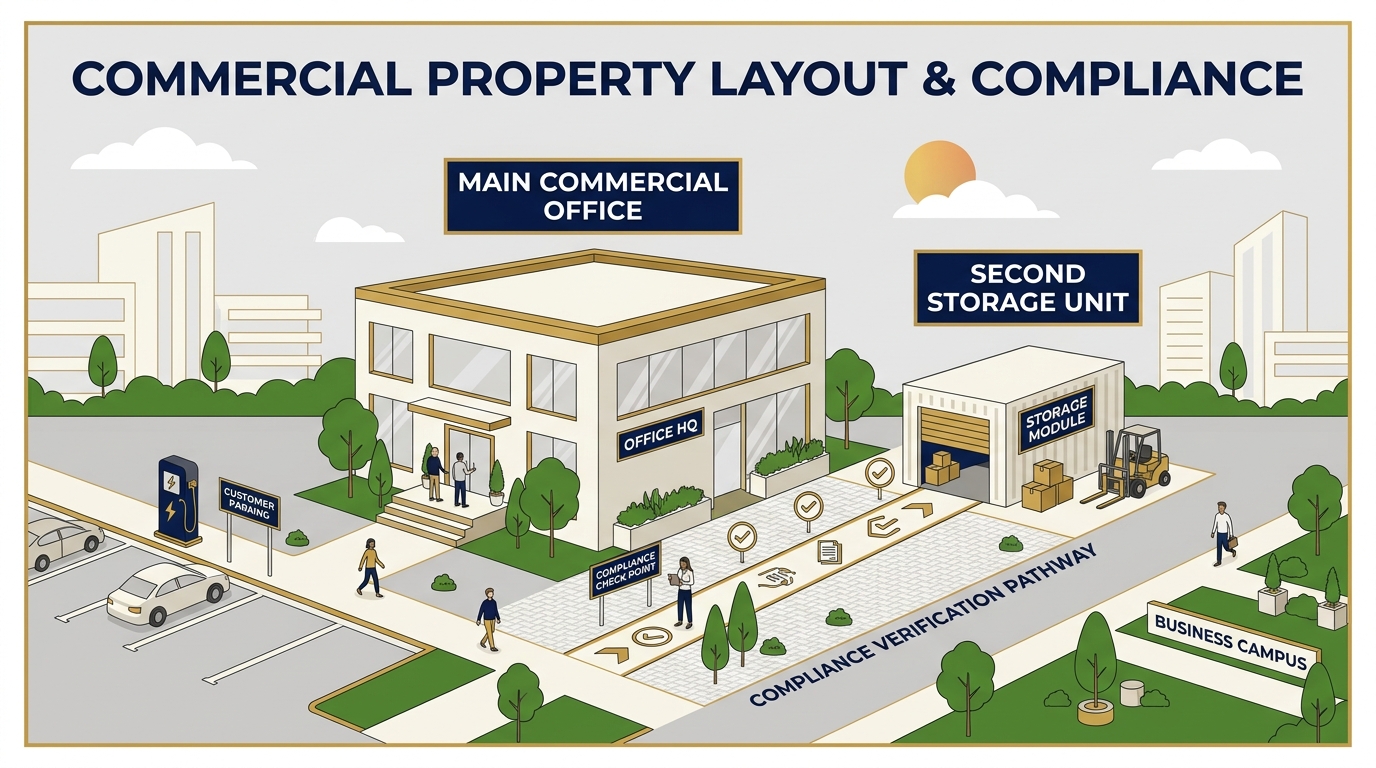
Under current HMRC and local council rules, you can retain your main Small Business Rates Relief if your business expansion meets specific criteria:
- The rateable value of each of your additional properties is under £2,899.
- The total rateable value of all your properties combined remains under £20,000 (or £28,000 in Greater London).
↓
Total RV = £12,200 (Under £20k Limit) | Second Unit RV = £2,200 (Under £2,899 Limit)
↓
RESULT: 100% SBRR Maintained on Main Unit!
Grace Period for Larger Second Properties
If you acquire a second commercial property with a rateable value above £2,899, the local council allows a 12-month grace period. You will continue to receive SBRR on your main property for 12 calendar months from the date you take on the second lease, giving your expanded business time to adjust cash flow.
For additional guidance on foundational operational steps when expanding premises, refer to our article on how to start a business in the UK.
4. Regional Differences: Wales and Scotland
Business rates are a devolved policy area. If your commercial premises are located in Wales or Scotland, different rules and relief names apply.
Wales Small Business Rates Relief
- 100% Relief: Properties with a rateable value of £6,000 or less.
- Tapered Relief: Properties with a rateable value between £6,001 and £12,000.
- Property Cap: Relief is limited to a maximum of two properties per business in any single local authority area.
Scotland Small Business Bonus Scheme (SBBS)
- 100% Relief: Single properties with a rateable value of £12,000 or less.
- Tapered Relief (100% to 25%): Properties with a rateable value between £12,001 and £15,000.
- Tapered Relief (25% to 0%): Properties with a rateable value between £15,001 and £20,000.
- Combined Limit: The combined rateable value of all premises owned or leased by your business in Scotland must not exceed £35,000.
5. Other Business Rates Relief Schemes to Combine
Small Business Rates Relief is not the only property tax discount available to UK commercial tenants. Depending on your sector and property type, you may qualify for additional relief:
1. Retail, Hospitality and Leisure Relief (RHL)
Qualifying retail shops, restaurants, cafes, pubs, hotels, and gyms receive dedicated percentage discounts on their business rates bills. Check with your local authority for current sector discount caps.
2. Rural Rate Relief
Available for small businesses in designated rural settlements with populations under 3,000. Full 100% relief applies to sole post offices and general stores with a rateable value up to £8,500, and sole public houses or petrol stations up to £12,500.
3. Empty Property Relief
If your commercial premises become vacant, you pay zero business rates for the first 3 months (or 6 months for industrial warehouses and factories). After this period, full business rates resume unless a new tenant is secured or another exemption applies.
When budgeting commercial property overheads alongside legal protections, make sure to evaluate your business insurance requirements.
6. How to Apply for Small Business Rates Relief
Small Business Rates Relief is not always applied automatically to your bill. You must ensure your local council has received your formal application.
- Find Your Rateable Value: Check your annual business rates bill or search your address on the VOA online register at GOV.UK.
- Contact Your Local Council: Business rates are collected by local billing authorities (district, borough, or city councils), not HMRC.
- Complete the SBRR Application Form: Download the application form from your local council’s website. You will need your business rates account number, property address, and details of any other commercial properties you occupy in the UK.
- Submit Declaration: Sign the declaration confirming that your business meets the single property or small additional property criteria.
- Receive Revised Bill: Once approved, your local council will issue a revised business rates bill showing 100% or tapered relief applied.
If you have overpaid business rates in previous years while eligible for SBRR, local councils can backdate relief claims up to six years, resulting in a substantial cash refund.
For further advice on funding and local economic development programs, check our complete guide to UK business grants.
7. Frequently Asked Questions
Do home-based businesses pay business rates?
Generally, no. Working from home using a bedroom, study, or kitchen does not trigger business rates. However, if you modify your home significantly for business use (such as converting a garage into a customer hair salon, building a dedicated workshop, or employing staff at home), the VOA may assess that specific area for business rates.
What happens if my rateable value increases above £12,000 after revaluation?
If a VOA property revaluation pushes your rateable value above £12,000, your 100% relief will drop to tapered relief. If your RV exceeds £15,000, SBRR stops. However, the government provides Supporting Small Business (SSB) relief to cap maximum annual bill increases for businesses losing SBRR due to revaluations.
Can a Limited Company claim Small Business Rates Relief?
Yes. SBRR eligibility depends on the rateable value of the commercial property and the number of properties occupied, not whether the occupier trades as a sole trader, partnership, or private limited company.
How often are business rates rateable values revalued?
The VOA revalues commercial property rateable values every three years to reflect changes in the commercial rental property market.
Your Next Actions
- Check Your Rateable Value: Search your commercial property address on the Valuation Office Agency (VOA) portal to verify your current RV figure.
- Review Your Local Bill: Inspect your current business rates invoice to confirm whether Small Business Rates Relief is actively applied.
- Submit an Application to Council: If you occupy a property under £12,000 RV and are paying business rates, contact your local council’s business rates department immediately to apply and claim backdated refunds.
- Calculate Total Operating Costs: Use our interactive Start-Up Cost Estimator to model overall commercial property, legal, and software overheads.
Editorial Team & Signature
Written by Oliver Carpenter, Lead Business Analyst at Elite Business Journal. Published February 2026.