Quick Answer: Sole Trader Insurance UK 2026
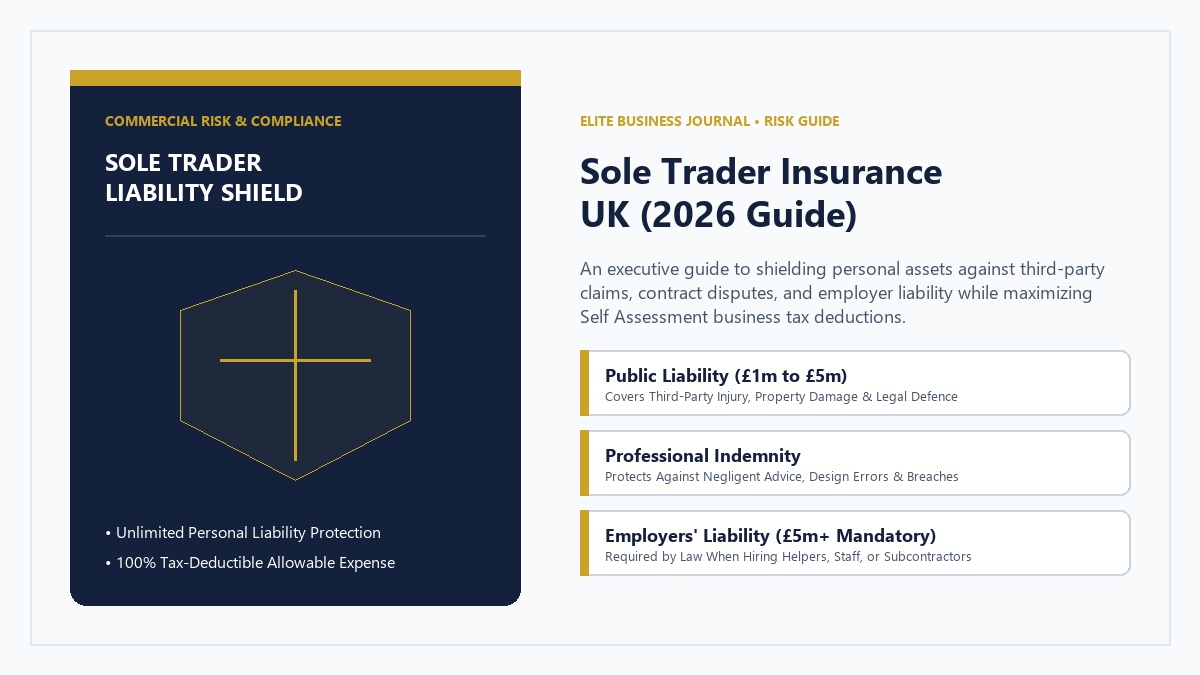
Sole trader insurance is a specialized commercial risk package designed to protect self-employed individuals against personal financial ruin resulting from business claims, accidents, or legal disputes. Because sole traders have unlimited personal liability, personal assets (savings, vehicles, family home) are directly exposed to compensation awards. The foundational policy is Public Liability Insurance (£1m to £5m cover), costing between £5 and £15 per month. If a sole trader provides professional advice or design services, Professional Indemnity Insurance is essential. Under the Employers’ Liability (Compulsory Insurance) Act 1969, hiring any helper, assistant, or apprentice legally mandates Employers’ Liability Insurance (£5m+ cover) under threat of a £2,500 daily fine. All sole trader insurance premiums are 100% tax-deductible allowable expenses on Self Assessment.
Key Takeaways
- Sole traders operate without limited liability protection, making commercial insurance the primary safeguard for personal assets.
- Public Liability Insurance protects against third-party bodily injury and accidental client property damage.
- Employers’ Liability Insurance is legally compulsory when hiring staff, with statutory penalties of up to £2,500 per day for non-compliance.
- All commercial insurance premiums reduce taxable self-employed trading profits, lowering Income Tax and Class 4 National Insurance.
According to market research published by the Association of British Insurers (ABI) and the Department for Business and Trade, over 3.1 million sole traders operate across the United Kingdom. While self-employment offers operational autonomy and low administrative overhead, it carries a fundamental legal vulnerability: unlimited personal liability.
Unlike limited company directors shielded by corporate personhood, a sole trader is legally indistinguishable from their business entity. If a client slips on work equipment, a subcontractor damages commercial property, or a professional report contains costly design errors, legal judgments can be enforced directly against the sole trader’s personal bank accounts and residential equity.
According to business compliance guidelines from GOV.UK Employers’ Liability Insurance and the Financial Conduct Authority (FCA), maintaining appropriate commercial cover protects business solvency and fulfills strict procurement requirements for corporate and public sector contracts.
This comprehensive guide details the key insurance policies available to UK sole traders in 2026, compares coverage limits, outlines typical industry costs, and explains how to claim full tax relief on your annual Self Assessment return.
Core Insurance Types for Sole Traders
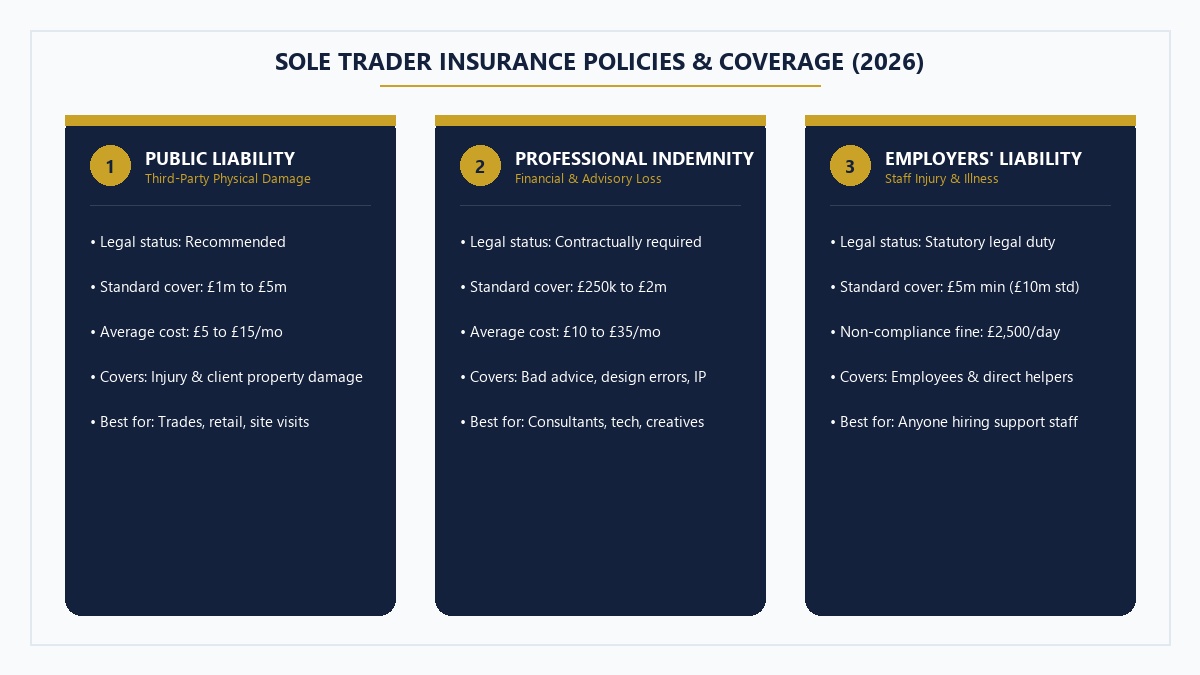
Commercial insurance policies for self-employed professionals address three distinct categories of risk: physical third-party harm, advisory errors, and statutory employer duties.
| Policy Type | Primary Protection | Standard UK Limit | Average Monthly Cost |
|---|---|---|---|
| Public Liability (PLI) | Third-party injury, death, and accidental property damage caused during trading. | £1,000,000 to £5,000,000 | £5 to £15 / month |
| Professional Indemnity (PII) | Client financial loss resulting from negligent advice, faulty design, or breach of duty. | £250,000 to £2,000,000 | £10 to £35 / month |
| Employers’ Liability (ELI) | Compensation and legal costs if an employee or helper falls ill or is injured at work. | £5,000,000 min (£10m std) | £5 to £12 / month |
| Business Tools & Equipment | Loss, theft, or destruction of commercial tools, laptops, and plant in transit or on site. | £2,000 to £20,000+ | £8 to £20 / month |
If you are considering incorporating to secure limited liability protection rather than relying solely on insurance policies, read our guide on how to register a company in the UK.
Public Liability Insurance: Coverage & Contract Mandates
Public Liability Insurance is the cornerstone of risk management for any self-employed trader who interacts with clients, visits customer sites, or operates in public spaces.
What Public Liability Covers:
- Third-Party Bodily Injury: If a customer trips over extension cords in your workshop or is struck by a falling ladder, PLI covers legal defense costs, medical damages, and court-mandated compensation.
- Accidental Property Damage: If an electrician accidentally drills through a water pipe, flooding a client’s commercial facility, PLI reimburses repair and replacement expenses.
- Legal Defense Costs: Covers expert legal representation and court fees, even if a third-party claim is ultimately proven unfounded.
Standard Consumer Work: £1,000,000 to £2,000,000 Limit
Local Authority & Commercial Prime Contractors: £5,000,000 to £10,000,000 Limit
For sole traders operating commercial vehicles or transporting tools between sites, ensure vehicle policies align with commercial use by reviewing our guide to business vehicle finance and leasing tax relief.
Statutory Employers’ Liability: When Is It Legally Required?
Many sole traders assume Employers’ Liability Insurance applies only to incorporated businesses with formal payroll departments. Under the Employers’ Liability (Compulsory Insurance) Act 1969, this is a dangerous misconception.
Statutory Compliance Rules:
- Who Counts as an Employee: If you hire a part-time assistant, a temporary apprentice, work-experience students, or labour-only subcontractors who work under your direct supervision and use your tools, HMRC and the Health & Safety Executive (HSE) classify them as employees for insurance purposes.
- The £5,000,000 Legal Minimum: You must hold at least £5 million in cover with an FCA-authorised insurer (standard policies provide £10m).
- Statutory Penalties: Failure to hold valid EL insurance carries fines of up to £2,500 for every single day you operate uninsured. Failing to display or produce your EL insurance certificate to inspectors carries a further £1,000 fine.
- The Family Exemption: Sole traders are exempt from EL insurance only if they employ exclusively immediate family members (spouse, parents, children, siblings).
If you engage staff or subcontractors, ensure your working terms are documented by following our guide to employment contracts in the UK.
Employers must also ensure compliance with pension regulations detailed in our guide on workplace pension compliance and auto-enrolment.
Tax Relief: Claiming Insurance on Self Assessment
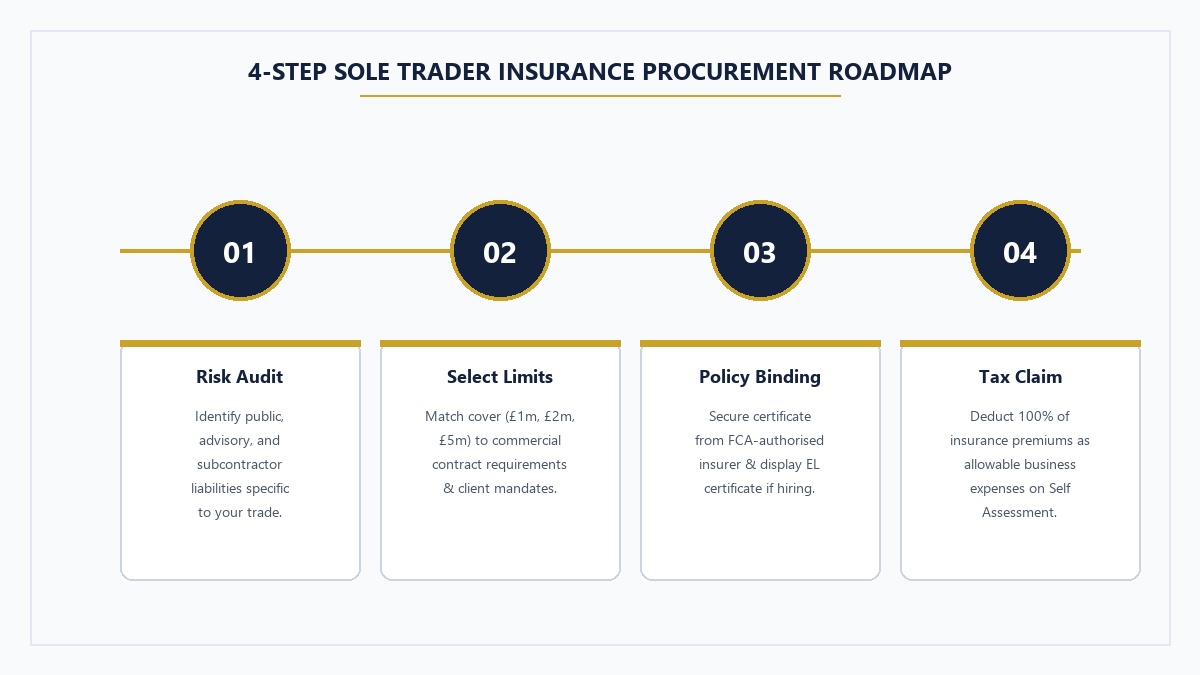
Every commercial insurance policy purchased exclusively for business purposes is classified as an allowable business expense by HMRC:
- Self Assessment Box Entry: Report total insurance premiums in the “other allowable business expenses” or “allowable expenses” box on form SA103S (Short) or SA103F (Full).
- Direct Tax Reduction: Insurance expenses reduce your net taxable trading profit. For a higher-rate taxpayer (40% Income Tax + 2% Class 4 NIC), a £300 annual insurance premium reduces your total tax liability by £126.
- Dual-Purpose Policies (Vehicles & Home): If you use a personal vehicle or home office for business, you must apportion the insurance cost between personal and commercial use based on logged business mileage or floor area.
For self-employed professionals comparing sole trader tax rates against corporate director dividend structures, consult our guide to the optimal salary and dividend split for UK directors.
Track your business deductions and protect operating margins by implementing the principles in our guide on small business cash flow forecasting in 2026.
Frequently Asked Questions
Is sole trader insurance mandatory by law in the UK?
Public Liability and Professional Indemnity are not legally mandated by statute, though commercial clients, main contractors, and trade associations (e.g., Gas Safe, NICEIC) often make them contractually compulsory. Employers’ Liability Insurance is legally mandatory if you employ any staff or helpers.
Can I bundle multiple insurance policies into a single package?
Yes. Most commercial brokers and direct insurers offer tailored “Sole Trader Business Packages” that combine Public Liability, Professional Indemnity, Tool Cover, and Legal Expenses under a single monthly direct debit, reducing combined premium costs by 15% to 25%.
Your Next Actions
- Audit Client Contractual Requirements: Review client agreements to ensure your Public Liability cover meets required limits (£2m or £5m).
- Assess Subcontractor Status: If you hire labour-only subcontractors, bind Employers’ Liability cover immediately to avoid £2,500/day fines.
- Log Premiums for Tax Return: Retain policy schedules and premium invoices to claim 100% tax relief on your upcoming Self Assessment.
- Explore Tools: Use resources in our Business Tools Hub.
Editorial Team & Signature
Written by Oliver Carpenter, Founder & Editor-in-Chief at Elite Business Journal. Published August 2026.